












- WIADOMOŚCI
- KOMENTARZ
India and China: A limited but advancing thaw

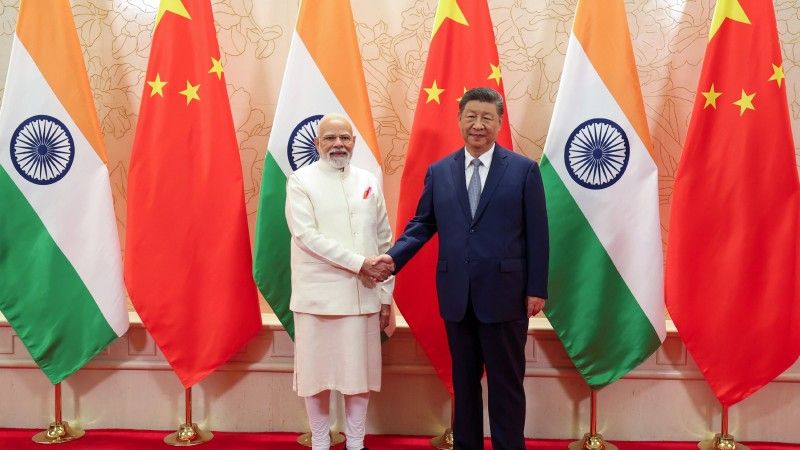
Photo. PMINDIA / Photo gallery
On the sidelines of a meeting of BRICS defence advisors, Indian and Chinese officials held bilateral talks – the latest step in a cautious rapprochement between the two Asian giants.
Following the serious border incidents in the Himalayas – the 2017 Doklam standoff and the deadly 2020–2021 clashes in Galwan – India and China effectively froze their political relationship. The situation was further exacerbated by the COVID-19 pandemic, which led to the suspension of direct passenger flights.
The gradual thaw began in earnest around the Shanghai Cooperation Organization summit in Tianjin in August 2025, where images of Narendra Modi and Xi Jinping greeting each other cordially captured global attention. Earlier, Indian journalists had made their first visit to China in years, followed in October 2025 by the resumption of the first direct commercial flight route between the two countries.

Trade ties have proven more resilient. While India banned several Chinese mobile applications, overall bilateral trade volume has remained largely stable at approximately $150 billion annually. This makes China – ex aequo with the United States – India’s largest trading partner, albeit one with which New Delhi runs a significant deficit. India continues to pursue greater trade diversification, placing particular hope in a new opening with the European Union once a Free Trade Agreement enters into force. Nevertheless, China retains its dominant position in India’s external commerce, with little indication of any imminent shift.
During the recent BRICS National Security Advisors meeting in Delhi, on 23 June, Chinese Foreign Affairs chief Wang Yi – a member of the Political Bureau of the CPC Central Committee and Director of the Central Foreign Affairs Commission – held talks with Prime Minister Narendra Modi. Both sides underscored their status as leading powers of the Global South. Discussions focused on the perennially vexing border issue, with both parties calling to “properly handle sensitive issues”. They also pledged to revive long-suspended bilateral dialogue mechanisms. Indian officials described the meeting as “constructive”.

A desire for controlled thaw is evident on both sides, yet significant obstacles remain. The border dispute is far from resolution. India remains deeply wary of China’s support for Pakistan, while strategic rivalry persists in India’s immediate neighbourhood and across the Indian Ocean – a pattern repeated across much of the Global South.
Still, a measured rapprochement between New Delhi and Beijing is likely to continue advancing, however slowly, because it serves the pragmatic interests of both nations – albeit with tempered expectations on all sides.


