












- ANALIZA
- WIADOMOŚCI
- WAŻNE
Hanoi’s “Bamboo Diplomacy”. What role does Russia play in Vietnamese politics?

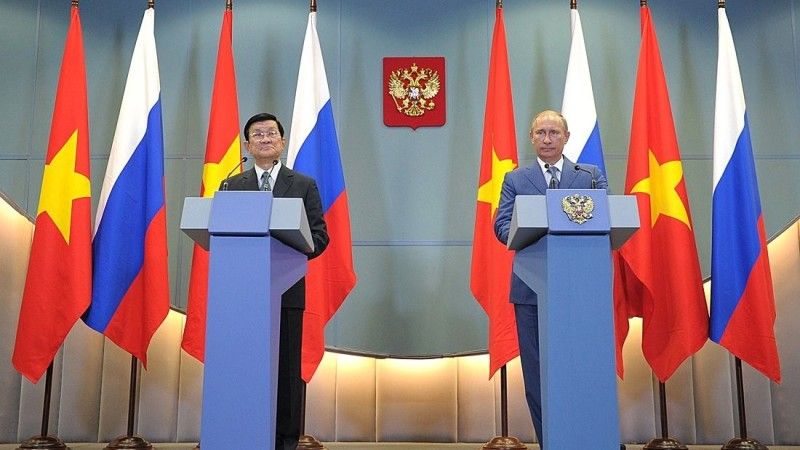
„Bamboo diplomacy” has become one of the key concepts used to describe Vietnam’s contemporary foreign policy. By avoiding formal alliances, Vietnam seeks to enhance its strategic autonomy in a rapidly changing international environment.
Hanoi’s actions, grounded in pragmatism and flexibility, aim to maintain a balance between the competing superpowers. In an era of Sino-American rivalry, preserving good relations with other significant global players by elevating bilateral relations and redefining areas of cooperation is becoming a crucial element of the balancing act. In this context, Russia, a long-standing partner of Vietnam since the Cold War, occupies a special place in Hanoi’s foreign policy.
Russia’s „Soviet” Legacy in Vietnam
Cooperation during the Cold War remains the foundation of contemporary bilateral relations. The Vietnamese still remember and appreciate Moscow’s support for the Việt Minh during their national liberation struggles against France, and later for the Democratic Republic of Vietnam (DRV) and the Việt Cộng guerrillas fighting to liberate the south of the country. This support from the Soviet Union was crucial during battles against the American and South Vietnamese armies.
The North Vietnamese observed with suspicion the warming relations between the United States and the People’s Republic of China (PRC) since the early 1970s, which pushed the DRV closer to Moscow, amid the Sino-Soviet conflict. After the end of the Vietnam War and the country’s reunification, the partnership between Vietnam and the USSR was formalised with the signing of the Treaty of Friendship and Cooperation on November 3, 1978, which drew Vietnam into the Soviet sphere of influence.
December 25, 1978, brought Vietnamese intervention in Democratic Kampuchea, ruled by the Khmer Rouge, which threatened Vietnam’s security by attacking and massacring the local population in the south of the country. The Pol Pot regime, which had maintained good relations with Beijing, was quickly overthrown. Still, China’s concern about Hanoi’s growing influence on the Indochina Peninsula provoked the PRC to invade Vietnamese territory and engage in fighting that lasted from February to March 1979.
The border war not only intended to deliver the „lesson” Deng Xiaoping sought to teach Vietnam, but also to test the credibility of the Vietnamese–Soviet alliance. Although Moscow did not intervene in the war, it supported Vietnam with intelligence and sent military equipment to the Vietnamese.
The entry of Vietnamese troops into Cambodia led to accusations of imperial ambitions from Western countries towards Hanoi. Vietnam’s actions were criticised, the country was labelled an aggressor, attempts were made to impose sanctions, and the country was isolated on the international stage. Moscow placed the Hanoi authorities under a protective umbrella, countering anti-Vietnamese resolutions at the UN and extending economic support to Vietnam.
The military presence in Cambodia, which lasted until September 1989, would not have been possible without Soviet assistance. Furthermore, the economic crisis and food security issues made Vietnam dependent on Soviet support. According to various estimates, between 20% and 30% of Vietnam’s GDP was dependent on Moscow, and total aid since 1976 had increased from 1.45 billion USD to 18 billion USD by 1990. The USSR supplied Vietnam with fuel, fertilisers, and food on preferential terms. Economic integration was strengthened by Vietnam’s presence in the Council for Mutual Economic Assistance (Comecon), which Vietnamese joined in June 1978.
A close partnership with Vietnam allowed the Soviets to use the Cam Ranh military base, which they had leased since 1979. Cam Ranh secured the Soviet Pacific Fleet with a vital foothold in Southeast Asia, with easy access to the strategically important Strait of Malacca, the South China Sea, and the Indian Ocean. A sustained military presence in the region, along with two reliable allies (in addition to Vietnam, Laos was also part of the pro-Soviet bloc), provided the ability to contain China and balance the influence of the United States.
After the fall of the Iron Curtain, relations between Hanoi and Moscow deteriorated. Disagreements arose over Vietnam’s outstanding Cold War debt, amounting to approximately 11 billion USD, the military presence of Russian soldiers at the Cam Ranh base, and the lease payments. Relations warmed when, in September 2000, Russia wrote off 85% of Vietnam’s debt (Vietnam was to repay the remaining 15% over the next 23 years).
In March of the following year, bilateral relations were lifted to the level of a strategic partnership. Moscow also declared its intention to leave the Cam Ranh base in 2002, two years before the agreement expired, prompted by Vietnam’s declarations regarding its commercial use and its refusal to lease base to other countries.
The impact of the Russian annexation of Crimea and the war in Ukraine on Hanoi-Moscow relations
The annexation of Crimea by the Russian Federation (RF) in early 2014 initially had little impact on relations between Hanoi and Moscow. Vietnam did not criticise the seizure of the peninsula, as bilateral relations were in a dynamic recovery phase. Two years earlier, Russia had announced its „pivot to Asia” policy, directing greater attention toward Southeast Asia, which was related to the desire to strengthen relations with Vietnam. In July 2012, during an official visit by Vietnamese President Trương Tấn Sang to Moscow, the status of relations was upgraded to a comprehensive strategic partnership.
In November of the following year, during Vladimir Putin’s stay in Vietnam, an agreement was signed granting Russian warships and aircraft special permissions to use Cam Ranh infrastructure. Thanks to simplified procedures, Tu-95 bombers could be supported by an aerial refuelling tanker stationed at the base. This gave them the ability to conduct patrols near American bases, once again allowing Russia to assert its presence in the Asia-Pacific region.
In line with the principles of „bamboo diplomacy”, Vietnam cautiously responded to the annexation of Crimea in the international forum. It abstained from voting on the UN General Assembly resolution of late March 2014, which affirmed Ukraine’s territorial integrity and invalidated the referendum held in the occupied territories. This close partnership was demonstrated by Vietnamese President Trương Tấn Sang’s visit to Moscow in May 2015 and participation in Victory Day celebrations, as well as Putin’s presence in Vietnam at the APEC summit in November 2017.
After the beginning of the Russian aggression against Ukraine, Vietnam remained very reserved, avoiding direct criticism of Moscow’s actions. At the UNGA, it abstained from votes unfavourable to Russia, including the first one concerning the resolution condemning the invasion, voting against the removal of Moscow from the UN Human Rights Council. On the other hand, Vietnamese ambassador to the UN Đặng Hoàng Giang spoke about respect for sovereignty and territorial integrity in accordance with the UN Charter, without explicitly mentioning Russia as an aggressor.
Vietnam remained open to the Russian politicians« visits, allowing Moscow to break international isolation. In July 2022, Russian Foreign Minister Sergei Lavrov visited Hanoi, en route to the G20 summit in Bali, Indonesia. In October, Russian Prosecutor General Igor Krasnov also travelled to the Vietnamese capital.
In April 2023, Vietnam hosted Russian Deputy Prime Minister Dmitry Chernyshenko, and in May, Dmitry Medvedev, Vice-Chairman of the Security Council of the RF. In June 2024, Vladimir Putin visited Hanoi, following official visits by Joe Biden and Xi Jinping in September and December 2023, respectively. The Russian president primarily emphasised the historical ties between the two countries, avoiding explicit references to the United States and the West.
The day after Putin’s departure, Daniel Kritenbrink, assistant secretary of state for East Asian and Pacific Affairs and former U.S. Ambassador to Vietnam, arrived in Hanoi. His visit may have been a sign of Washington’s acceptance of Hanoi’s policy direction, much like the establishment of a comprehensive strategic partnership during President Biden’s visit to Vietnam.
Perception of Russian aggression and Russia in Vietnam
Vietnamese society was divided in its assessment of the Russian invasion. On the one hand, there was a significant amount of empathy and understanding for the attacked country, which found itself in a situation Vietnam had experienced many times before. The Vietnamese showed more sympathy for Ukrainians than the political elites, viewing Ukraine as a victim of war. The argument was also raised that a lack of reaction to Russian actions could leave the international community unanswered for China’s potential attack.
Moreover, there was a noticeably strong sentiment toward Russia, especially among older Vietnamese generation, who remembered the era of Soviet aid. Initially, reactions varied among Vietnam’s political elites, ranging from dignitaries who were positively inclined toward the West to military elites who were favourable to Russia.
However, it was difficult to find critical material about Moscow in the state media. Often, pro-Ukrainian public sentiment, especially at the beginning of the war, was balanced by more pro-Russian statements and posts on the governmental websites and the Communist Party of Vietnam channels.
Moscow has achieved some success in Vietnam and Southeast Asia. By conducting an effective disinformation campaign, it has successfully shaped the narrative surrounding the war in Ukraine. Russia has a relatively positive image in the region because it does not pose a serious security threat. For Vietnam, it is even a player whose presence in the region can strengthen it. In many Southeast Asian countries, the conflict is often framed as a proxy war, with Kyiv representing the West.
Moscow’s actions are explained as a reaction to NATO’s desire to expand eastward. Western countries are often accused of hypocrisy and double standards, by reminding NATO/coalition of the willing’s past invasions of Afghanistan or Iraq. Videos and photos have appeared on Vietnamese Facebook showing the presence of Ukrainian troops in Iraq, where nearly 1600 Ukrainian soldiers served under the Polish command of the Multinational Division Central-South.
The West, and especially the United States, are criticised for the lack of an adequate response to Israel’s actions against Palestinians in the Gaza Strip. Criticism on this issue comes primarily from Muslim states in the region. Vietnam also rhetorically supports countries and nations fighting for independence. However, within the framework of its „bamboo diplomacy”, this stance does not undermine the maintenance of good relations with Israel or the procurement of Israeli weapons.
Ukraine, in turn, is sometimes criticised for an inept foreign policy and lack of tools for balancing between powers, such as Vietnam’s „bamboo diplomacy”. The argument is raised that Kyiv has failed to consider the risks and threats to its security, and didn’t recognise Russia’s interests, stemming from its inability to manage relations with such a powerful neighbour.
To counterbalance this view, comments are sometimes made that the war in Ukraine is also a result of Russia’s aspirations and desire to maintain its influence in the former Soviet republics, with Moscow pushing its interests in the region too aggressively.
Vladimir Putin himself is viewed positively as a strong leader capable of standing up to the West. His „pivot to Asia” policy, with a particular emphasis on Vietnam, has received a positive response from the Vietnamese public, which has appreciated his role in revitalising bilateral relations. The Russian president has visited Vietnam five times and was recently greeted with honours.

Military Cooperation
During the Cold War, military support constituted a significant portion of aid flowing from the USSR to Vietnam. In some years, it amounted to as much as one-third of Moscow’s total support, providing equipment, weapons, ammunition, officer training, and logistical and intelligence support during the Vietnamese presence in Cambodia, the border war, and tensions with China. This cooperation continued in the 1990s and early 2000s, enhanced by the fact that the Vietnamese People’s Army was based on Soviet models and technology.
The impetus for increasing arms purchases from Russia was the growing cooperation between Moscow and Beijing in this area. In the 1990s, Russia increased its arms sales to China, which became more assertive in the South China Sea, prompting a response from the Vietnamese authorities. The potential threat urged Vietnam to modernise its armed forces, with Russia as a primary supplier.
SIPRI estimates that between 2001 and 2024, Vietnam purchased 80% of its equipment, worth 6.7 billion USD, from Russia. Moscow was followed by partners such as Israel (6.6% - 550 million USD), Belarus (3.6% - 300 million USD), Ukraine (2.2% - 187 million USD), and the Czech Republic (1.6% - 135 million USD). During this period, Vietnam was the fourth largest recipient of Russian equipment (5.2% of total exports), behind India, China, and Algeria. The most intensive cooperation took place between 2011 and 2016.
Vietnam made the most significant purchases in 2014 (1.07 billion USD) and 2011 (979 million USD), which was related to rising tensions over the Paracel and Spratly Islands. Thanks to cooperation with Russia, Vietnam modernised its armed forces, acquiring submarines, missile frigates, corvettes, jet fighters, transport helicopters, and tanks, thereby making the Vietnam People’s Army a significant force in the Southeast Asian region.
The modernisation of the Vietnamese armed forces, based on Russian equipment, was hindered by internal factors, including the anti-corruption campaign, which slowed the decision-making process. Following the annexation of Crimea and Western sanctions, doubts arose about Russia’s reliability as a partner in arms sales, while its growing alignment with China raised concerns for Vietnam’s security. The diversification of arms suppliers was primarily driven by the Countering America’s Adversaries Through Sanctions Act (CAATSA), passed by the US Congress in August 2017, which allowed for the imposition of sanctions on countries trading arms with Russia.
Russia’s credibility declined even further after the launch of the full-scale invasion of Ukraine. Moscow had to focus on supplying its armed forces with equipment as they fought on the front. Furthermore, concerns arose about the ability to deliver spare parts to Vietnam or repair purchased equipment. However, new opportunities appeared for Vietnam when the US lifted the arms embargo on Vietnam during Barack Obama’s visit in May 2016. However, American equipment is expensive and difficult to integrate with the existing equipment of the Vietnamese armed forces.
Furthermore, Vietnamese military elites place greater trust in Russia than in the United States, supporting Moscow’s position as a key security partner. This resulting from strong sentiment, as many Vietnamese officers were trained in the USSR (later in Russia) or at home by Soviet and Russian advisors. Many Vietnamese soldiers speak Russian, rather than English, which enables them to read instructions or communicate directly with the Russian side.
The strong ties between the defence ministries were highlighted by General Phan Văn Giang’s meeting with his Russian counterpart, Sergei Shoigu, in Hanoi in December 2025. On the other hand, Vietnam refused to re-export Russian equipment or ammunition, which were intended for use by the Russians in Ukraine. Hanoi refused to yield to Moscow’s persuasion, fearing more repercussions from the US side.
International Dimension of Bilateral Cooperation
Vietnam is Russia’s largest trading partner in Southeast Asia and can play the role of the gateway to the entire region. Having a trusted partner in Hanoi, who can advocate for Moscow’s interests among the Association of Southeast Asian Nations (ASEAN) countries, could lead to closer relations with other ASEAN member states. In turn, Russia is opening up opportunities for Eurasian integration for Hanoi by facilitating access to the markets of the Eurasian Economic Union (EAEU) (in addition to Russia, it includes Belarus, Kazakhstan, Armenia, and Kyrgyzstan), having initiated the signing of the Free Trade Agreement between Vietnam and the EAEU, which entered into force in October 2016.
Moscow also supports Hanoi in its pursuit of full membership in the BRICS bloc, which promotes the interests of countries from the Global South. For now, Vietnam has been a BRICS partner country since October 2024, and the Vietnamese authorities still face the dilemma of deepening cooperation within this initiative. BRICS intends to oppose the United States and the Western world, with which Hanoi also seeks to maintain good relations. Nevertheless, Russia could become Vietnam’s advocate in this forum if the Vietnamese express such interest.
Russia’s presence in Vietnam also aims to counterbalance Chinese influence in the region. Close Beijing-Moscow relations could lead China, at Russia’s urging, to soften its stance on the South China Sea dispute. However, it appears that the authorities in Hanoi are engaging in a clever dialogue with China regarding the claimed islands, and the brunt of the tensions has shifted to Sino-Philippine relations. Furthermore, Moscow rarely speaks out on the dispute over the Spratly and Paracel Islands, and in the past, it has also failed to react to clashes, such as the one in March 1988 around Johnson Reef, when 64 Vietnamese soldiers died.
To some extent, Vietnamese-Russian energy cooperation may serve as leverage against China. PetroVietnam and Zarubezhneft established the Vietsovpetro joint venture in 1981, which began drilling in Vietnam’s exclusive economic zone a few years later. During Putin’s visit in June 2024, Zarubezhneft was granted the right to extract hydrocarbons in an area claimed by China within the „nine-dash line”.
Vietnam’s close ties with Russia and the potential for developing cooperation in raw material extraction, nuclear energy, space technology, and naval research could lead Beijing to view some of Vietnam’s projects more favourably. However, the question remains how much influence Russia can exert on China, whose support Moscow is becoming increasingly dependent on.

The Future of the Partnership
Converging goals and strong historical ties mean that Vietnam and Russia are eager to deepen their cooperation. However, due to the war in Ukraine and sanctions against Moscow, Hanoi will seek to diversify its arms trade partners. Russia’s share in Vietnamese arms exports will decline, although a complete phase-out of Russian equipment is not possible in the short term. Cooperation in other fields is promising, such as nuclear energy (the first phase of construction of the Centre for Nuclear Science and Technology has been initiated), oceanographic research, marine resource management, and marine biotechnology. Imports of Russian liquefied natural gas and joint initiatives related to oil exploration and production, both off the coast of Vietnam and Russia, could also be important.
„Bamboo diplomacy” has proven to be an effective foreign policy concept so far. While cooperating with Russia and China, the United States and European countries, such as France and the United Kingdom, have not been discouraged from deepening their relations with Hanoi. Moreover, they also upgraded their ties with Vietnam to a comprehensive strategic partnership status in 2024 and 2025, respectively. It means that Hanoi has managed to establish the highest status for bilateral relations with all permanent members of the UN Security Council, maintaining a balance between Western and Global South countries.
Author: Michał Zaręba, PhD


