












- KOMENTARZ
- WAŻNE
- WIADOMOŚCI
Russian information warfare strategy in light of the experience of the war in Ukraine

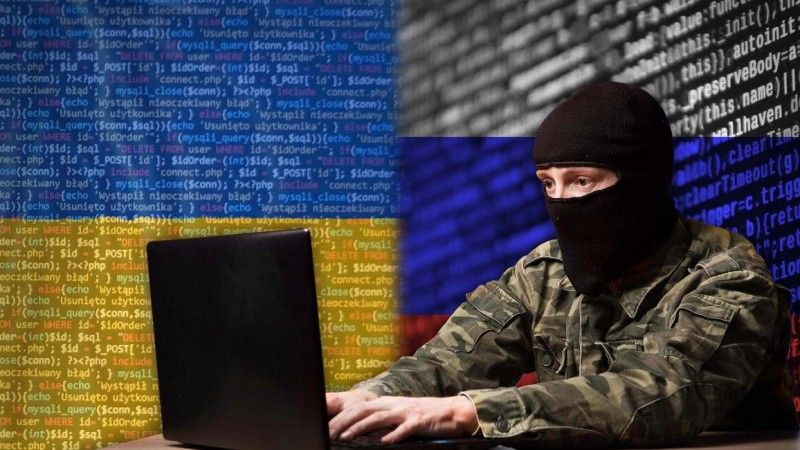
The full-scale invasion of Ukraine by the Russian Federation, launched on 24 February 2022, constituted a turning point in the geopolitical rivalry between Moscow and the West. The conflict not only exposed the limitations of Russia’s existing information warfare strategies, but also accelerated their institutional and operational transformation.
An analysis of Russian information doctrine and practice requires consideration of diverse theoretical approaches, as well as the manner in which the Russian Federation defines and conducts information warfare in both domestic and external dimensions.
"Subversive war"
In Russian academic discourse, three main terms and concepts of information warfare are in use. Yevgeny Messner introduced the notion of „subversive war”, understood as a comprehensive process of destabilising an adversary through political, propaganda and psychological means. Aleksandr Dugin, in his concept of „network-centric warfare”, emphasised the need to integrate information operations with cyber and military activities within the framework of „fourth-generation warfare”.
By contrast, Igor Panarin defines „information warfare” as an instrument for shaping perception and public opinion, integrating digital technologies with traditional propaganda and psychological operations. From the perspective of Russian strategic thought, the essence of information warfare lies in the coordinated use of military, technological, media and psychological instruments in order to destabilise an adversary, influence its decision-making processes and ensure control over the internal narrative.
Prior to 2022, Russian information doctrine, formalised inter alia in the „Information Security Doctrine”, treated the information sphere as an integral component of national security, requiring both defensive and offensive measures. In this document, the „information space” encompasses communication systems, media and digital resources, providing the theoretical justification for conducting coordinated influence campaigns.
Within Russian military and strategic thinking, ideas combining military and non-military means were also promoted, notably in the 2013 article by General Valery Gerasimov, which described the blurring of the boundaries between war and peace and the necessity of employing various forms of influence in a ”new generation of warfare”.
Practical experience from Ukraine, however, revealed the limitations of these concepts and forced significant adaptations. The first surprise for the Kremlin was the high resilience of Ukrainian society and the ability of the authorities in Kyiv to conduct effective real-time communication. The daily presence of President Zelenskyy on social media, short and authentic messages, and narratives of resistance gained international resonance, limiting the ability of Russian state media to shape the overall picture of the situation. Delays and errors in military operations further undermined the credibility of certain Kremlin narratives.
See also 

The second area of adaptation concerned the international response and control over digital platforms. Restrictions imposed by Western institutions and actions taken by social media companies (including the suspension of RT and Sputnik in the EU) forced Moscow to diversify its channels of influence. Traditional state media were supported by alternative transmission pathways, including indirectly funded regional portals, messaging applications (Telegram), and „proxy influencers” — groups or individuals with an appearance of independence who amplified pro-Russian content in a manner more difficult to directly link to Moscow.
Domestic adaptation consisted in strengthening control over the information space through legal and technological measures. Regulations were introduced penalising the „dissemination of false information” about the activities of the armed forces and the „discrediting” of the use of the military, including the confiscation of property belonging to those who violated these provisions. In parallel, the implementation of a „sovereign internet” continued, enabling the selective disconnection of the domestic network from global traffic and control over information flows.
The third dimension of adaptation involved the integration of cyber operations with disinformation campaigns. Disruptions to communications (for example, the attack on the Viasat network), destructive malware (Industroyer/Industroyer2) and DDoS campaigns were synchronised with targeted narratives, creating information chaos and undermining citizens« trust in state institutions. The war also became a testing ground for artificial intelligence and deepfakes — from video materials intended to discredit the Ukrainian leadership to the automation of botnets amplifying specific narratives.

Authenticity as a key
These experiences demonstrated that the authenticity of content is of key importance. Rapid, emotional accounts from the battlefield proved more effective than artificially generated messaging. Russia therefore had to increase content production, while also refining methods of its „moderated” presentation, making use of local actors and tailoring messages to the sensitivities of specific audiences.
The conflict also triggered a reorganisation of the apparatus responsible for information activities — integrating services, ministries, state media and private entities into a networked system that is more difficult to dismantle. The internationalisation of campaigns and the visibility of operations in Western OSINT sources, however, reveal the limitations of this strategy and necessitate continuous tactical adjustments.
In conclusion, the experience of the full-scale war against Ukraine has forced the Russian Federation to substantially revise its concepts and practices of information warfare: shifting from a centralised, propaganda-driven strategy towards a more complex, hybrid and multi-channel model, combining repressive instruments of domestic control, technical mechanisms of network sovereignty, diversified external campaigns, and the close integration of cyber and psychological operations.
Such adaptation increases the flexibility and resilience of Russian information operations, but at the same time exposes new limitations related to technological countermeasures by platforms, international coordination of counter-campaigns, and the need to maintain internal legitimacy amid the rising costs of the conflict — making the future information landscape more complex and difficult to predict, while simultaneously confirming the central role of information in the Kremlin’s geopolitical strategy.
Author: Agnieszka Rogozińska, PhD


