












- WIADOMOŚCI
- KOMENTARZ
- ANALIZA
Major rare earth discoveries in Scandinavia raise hopes of easing Europe’s dependence on China

Recent historic discoveries in the North could significantly reduce the continent’s dependence on Chinese rare earth elements, but only in the long term, leaving Europe’s immediate vulnerabilities unresolved.
China's rare earth grip on Europe's ambitions
Last year, Chinese export controls exposed the sheer scale of Western dependence on Beijing for rare earth elements (REEs). The vulnerability is particularly acute in the EU, which relies on China for around 85–90% of its total rare earth supply, rising to near-total dependence (≈98–100%) in critical segments such as magnets and heavy rare earths, which are indispensable for high-end manufacturing, the green transition, and defence industries. Worse still, demand is set to increase up to six-fold over the next decade if Europe is to keep pace with decarbonisation and rearmament.
Rare earths have therefore become one of Brussels’ central strategic concerns in recent years, as reflected in initiatives such as the Critical Raw Materials Act and REPowerEU. To diversify and de-risk supply, the EU has pursued a range of strategic raw-material partnerships with resource-rich third countries. These span cooperation with like-minded partners such as Australia, Canada, Japan, and Ukraine, as well as with other countries across Africa, South America, and Central Asia. Yet the recent discoveries in the North suggest that part of the answer may lie much closer to home.

A Northern breakthrough: Europe's largest rare earth discoveries
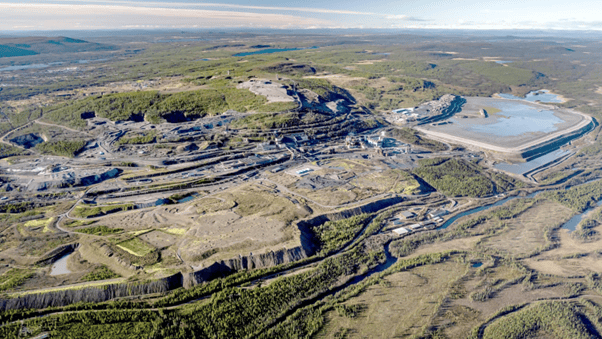
The first months of this year brought a series of historic discoveries and breakthroughs for Europe’s domestic rare earth sector, particularly across the North. The most significant came in Fensfeltet in southern Norway, where updated estimates in March increased the size of the continent’s largest known deposit by 80%, from 8.8 to 15.9 million tonnes of rare earth oxides, making it potentially one of the largest in the world.
Rare Earths Norway plans to begin extraction in 2031, initially meeting around 5% of the EU’s total rare earth demand, a share that could later rise to 20–30%. Around 20% of the deposit consists of neodymium and praseodymium, both essential for high-performance magnets. The site also contains significant quantities of niobium and thorium, which could be used in high-strength steel and, potentially, as fuel for nuclear energy.

The news from Fensfeltet came just days after a similar announcement by the Swedish mining company LKAB, which confirmed that the Per Geijer deposit near Kiruna holds around 2.2 million tonnes of rare earth oxides. The site is rich above all in light rare earths, including neodymium and praseodymium, but also contains meaningful quantities of heavy rare earths. If developed, the project could begin operating within 10–15 years and, if further expanded, meet up to 18% of the EU’s rare earth demand.
Another Swedish site, Norra Kärr, could come online much sooner and become Europe’s first operating rare earth mine, while helping reduce its total dependence on Chinese heavy rare earths. The deposit is exceptionally rich in heavy rare earth elements, which make up more than half of its composition, including dysprosium and terbium, both essential for high-performance permanent magnets. The mine could produce 248 tonnes of dysprosium oxide and 36 tonnes of terbium oxide annually over 26 years, potentially covering the EU’s entire demand for heavy rare earths during that period. Awaiting a 25-year mining lease from the Swedish government, Norra Kärr remains the most advanced rare earth project on the continent.

Greenland: unfulfilled potential
Beyond Scandinavia itself, the broader European resource space holds even greater potential, but also deeper political and environmental constraints. Nowhere is this clearer than in Greenland, perhaps Europe’s most strategic, and still unrealised, rare earth asset.
The island’s Kvanefjeld deposit holds around 11 million tonnes of rare earth oxides with a relatively diverse and balanced composition, making it one of the world’s largest known rare earth accumulations. At full scale, it could theoretically produce around 32,000 tonnes of rare earth oxides annually, or roughly 12–14% of global supply. Yet the project faces strong local opposition on environmental and political grounds, above all because of the radioactive and chemical waste it would generate, casting serious doubt over its realisation.
In fact, the vast reserves of strategic minerals on the world’s largest island were among the most frequently cited motives behind the current US administration’s push earlier this year to acquire Greenland from Denmark. Despite the apparent failure of that effort, the US-backed mining company Critical Metals Corp. has since secured rights to develop Tanbreez, Greenland’s other major rare earth deposit, helped in part by its much lower radioactive content. The case shows that Europe must treat strategic resources in politically aligned territories as assets to be secured — legally and commercially — rather than assumed.

The real bottlenecks: time, regulations, and capital
The three largest deposits identified in Norway and Sweden alone could meet up to 50% of the EU’s total rare earth demand for decades, especially when smaller, but still significant, sites in Finland are also taken into account.
The problem is timing. Europe’s critical dependence on Chinese rare earths is immediate, as are its urgent needs for decarbonisation, industrial competitiveness, and rearmament. Domestic supply, by contrast, is unlikely to make a meaningful difference before the 2030s in the optimistic scenario — or the 2040s in the more pessimistic, and arguably more plausible, one.
The European Court of Auditors’ latest report is unequivocal: exploration of critical raw material deposits in the EU remains “underdeveloped and risky”, while bringing a discovery into production can take up to 20 years. The auditors conclude that it is “hard to imagine” domestic production making any tangible contribution by 2030, even though the EU formally aims to cover 10% of its rare earth consumption by then. At the same time, they note that “efforts to diversify imports have yet to produce tangible results.” In the medium term, then, EU countries remain effectively locked into dependence on Chinese rare earths, giving Beijing powerful leverage to shape the pace and scale of their green transition, industrial competitiveness, and strategic autonomy.

The report points to financial, legal, and administrative bottlenecks that continue to slow European rare earth projects at the required speed and scale. Capital remains scarce because the sector is highly risky, given both the very low success rate of exploration and the long path to production, while fragmented and insufficient EU funding still fails to meaningfully de-risk it. This is compounded by a complex legal framework and strict environmental criteria that have yet to be properly integrated into the EU’s sustainability financing rules. On top of that, burdensome bureaucracy stretches permitting procedures to 10–15 years in typical cases, and sometimes beyond 20. If geology was once seen as the main obstacle to Europe’s rare earth ambitions, today it is increasingly Europe itself that stands in their way.
More broadly, this is the product of European neglect, lack of imagination, and strategic myopia. As early as 2014, the European Rare Earths Competency Network identified the development of domestic mines as an urgent priority for reducing dependence on China and already pointed to Norra Kärr as a potential production site by 2020. Twelve years later, the project remains stuck in the permitting process, and Europe still does not have a single operating rare earth mine. Europe’s critical raw materials malaise was never inevitable. It was a choice.
Building for the long term, managing the inevitable
The problems are well known, and so are the solutions: legal and administrative simplification, combined with more consolidated and expanded public-private funding. What Europe still lacks is not diagnosis, but realistic targets, execution, and clear prioritisation of the most feasible and promising projects. To move forward, both EU institutions and the relevant Nordic states must recognise the full strategic value of these discoveries and back them with faster permitting and adequate financing — or risk wasting yet more time.
Of course, European rare earth autonomy will not depend solely on upstream mining capacity, but also on the development of the entire supply chain, including downstream processing and manufacturing, where Chinese dominance is even stronger. In 2025, Europe’s first rare earth magnet manufacturing plant opened in Estonia and could eventually be supplied by Scandinavian mines, helping Europe secure more of the rare earth value chain. Yet not all of it: the number of processing facilities in Europe is shrinking, driven by high energy prices and insufficient supply, which only underscores how essential reliable feedstock is for building downstream capacity.

In the meantime, Europe will have to manage its severe dependence on China while trying to mitigate it through faster-acting measures. These include external strategic partnerships, which, as the audit report makes clear, must be based on partners’ actual capacity and short-term ability to export. Recycling could also help ease dependence, with the EU aiming to meet 25% of demand through circularity by 2030. Yet that target appears unrealistic given current recycling rates below 5%, and in some cases close to zero. Here again, broad and wishful targets must give way to material-specific goals, better waste collection, and a regulatory framework that makes recycling commercially viable.


