












- WIADOMOŚCI
- WAŻNE
Poland's Foreign Minister Sikorski: We shall not be viewed as “suckers” in alliances

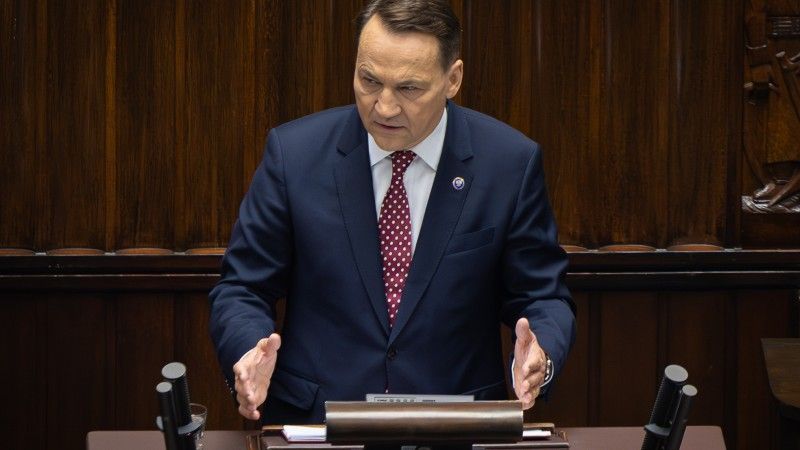
Photo. Ministerstwo Spraw Zagranicznych RP 🇵🇱 (@MSZ_RP)/X
Deputy Prime Minister and Minister of Foreign Affairs Radosław Sikorski delivered his tenth government statement (exposé) as head of the Ministry of Foreign Affairs (Poland). In a speech lasting more than an hour and a half he addressed the war in Ukraine, Poland’s role in the European Union and NATO, Poland’s relations with the United States, and the SAFE programme.
The minister opened his speech by recalling warnings from European defence ministers, the NATO head and the head of British intelligence about the growing risk of escalation from Russia. According to Sikorski the threat is real and multidimensional.
See also 

Russian hybrid threats
According to the minister, Poland experiences as many as three thousand cyberattacks per day. The Kremlin’s hybrid activities (sabotage actions, violations of Polish airspace by drones, etc.) are intended to intimidate the public, deepen internal divisions, and weaken trust in state institutions. In Sikorski’s view Moscow will continue to „test the limits of the West.”
In response to a series of Russian actions Poland has taken concrete retaliatory steps. In the past year the Ministry of Foreign Affairs withdrew permission for the Russian consulate to operate in Gdańsk and Kraków (in November 2024 the consul in Poznań was treated similarly). Travel for Russian diplomats using non-biometric passports has been restricted, and the movement of persons under sanctions has been limited.
Poland has also played a key role in supporting EU sanctions on Russia, including measures against the so-called „shadow fleet.” As Sikorski said, at the start of Poland’s EU presidency (1st January–30th June 2025) there were 80 ships on the sanctions list; by the end of that presidency the list had grown to 450 ships. Currently about 600 vessels are sanctioned, and efforts to expand the list continue. In the context of sanctions the minister stressed that since the start of full-scale Russian aggression against Ukraine the European Union has managed to freeze over €340 billion of the reserves of the Russian Central Bank.
War in Ukraine
A substantial part of Thursday’s address focused on relations with Ukraine. Sikorski reiterated that full responsibility for the war on Poland’s eastern border lies with the Russians. „Attacks on civilians demonstrate that Vladimir Putin is not seeking peace but the capitulation of Ukraine,” the minister said, calling the Russian aggression a „historic mistake” that cost Russia severe reputational and economic losses and resulted in the loss of more than a million soldiers.
The minister announced that an international conference on Ukraine’s reconstruction will take place in Gdańsk on 24th and 25th June.
International order
Sikorski said the current international order is „shaking on its foundations.” We are witnessing a turn toward power politics and a return to a concert of great powers, he said. „In a world where everything is decided by force and money there is no room for alliances. We consistently advocate an international order based on the United Nations Charter,” the minister emphasised.
Relations with the US
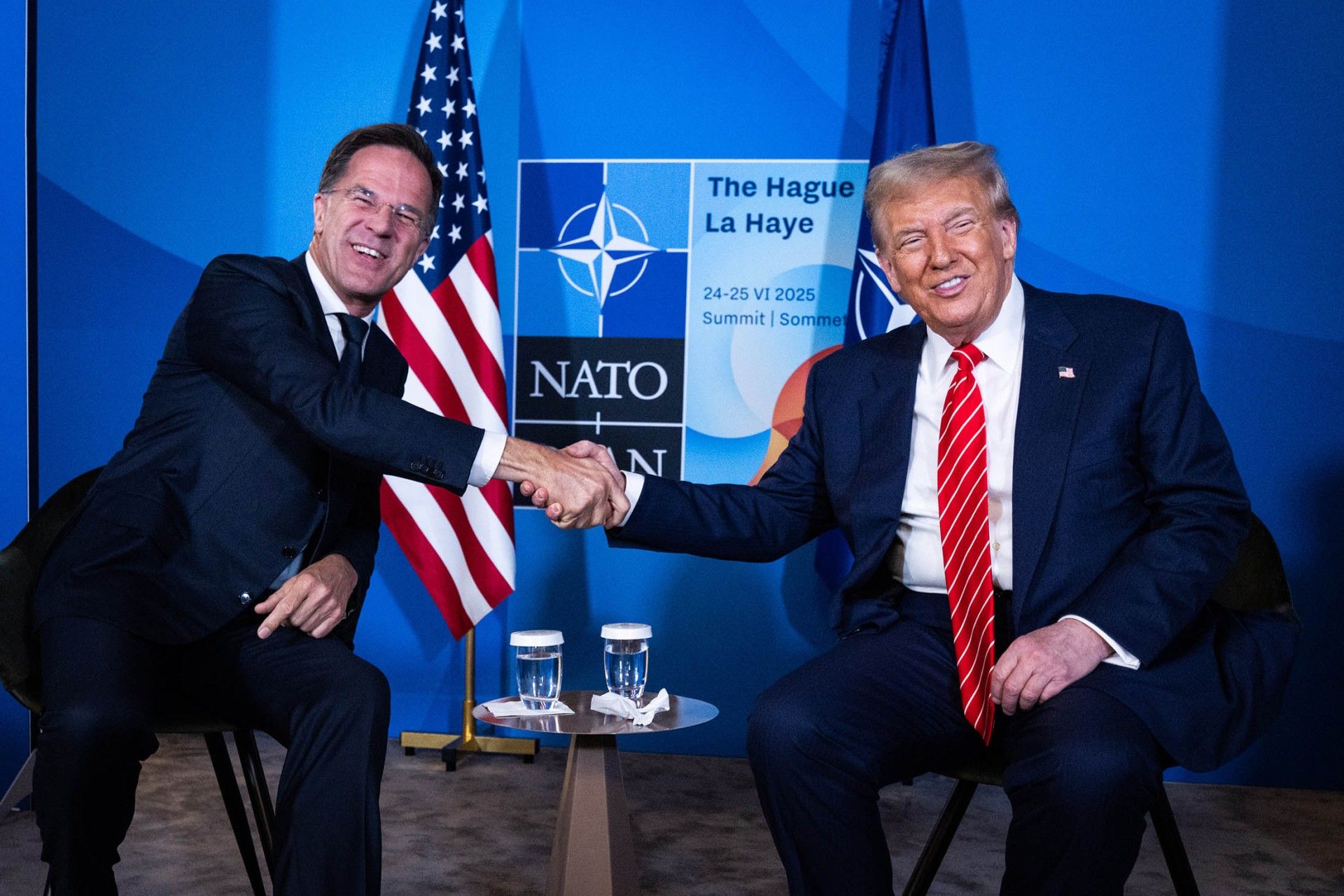
A large part of the exposé concerned Poland’s and Europe’s relations with the United States. At the beginning of that section Sikorski said the alliance with the United States „for decades has been a pillar of Polish foreign policy — regardless of the governing option.”
He stressed that Poland remains a loyal ally of the United States but expects a partnership based on mutual respect. He emphasized that both Warsaw and Washington benefit from cooperation, and that Poland „is not only a recipient of security but also bears real costs and responsibilities.” As an example he cited the opening in 2024 of the first permanent US base in Redzikowo Redzikowo, whose main purpose includes protection of US territory. He also noted that Polish purchases of American military equipment amount to 128 contracts totalling about $63 billion and create jobs in 15 US states.
The minister reminded listeners of Poland’s significant support for US missions in Afghanistan and Iraq, where 65 Polish soldiers died in total (43 in Afghanistan and 22 in Iraq). „They are heroes of the Polish and American peoples. We must remember them and honour their sacrifice,” Sikorski added.
Sikorski declared that Poland can be a regional hub for US forces in Europe „if Putin’s actions continue to destabilize Europe and the world.” This entails hosting bases, missions, exercises and storing key equipment for NATO’s eastern flank.
Closing the US section, Sikorski referred to the recently published US National Security Strategy and National Defense Strategy. He noted that Americans face new challenges and that the current administration prioritises protection of its own territory, the Western Hemisphere and the Indo-Pacific region. „Europe has slipped down the priority list, and Russia is seen as a regional threat but also as a potential partner for economic reset,” he said.
„America is changing. We can acknowledge that and prepare, or we can cover our eyes and ears. I agree that Western Europe for too long benefitted from the peace dividend; I agree that the whole of Europe should take greater responsibility for its security and I know we can do it. (…) We view changes in the United States with understanding but also with concern. We remember President Wilson’s and Reagan’s help, but we also remember Yalta,” he added.
„We have been and will be a loyal ally of America, but we will not be suckers,” summed up Radosław Sikorski.

European Union and NATO: The pillar
A key point of the speech was Poland’s EU membership. Sikorski repeated that it is in Poland’s interest to develop strategic cooperation with the European Union. „Poland’s membership in the EU was a conscious decision made in the 1990s, not an accident or coercion,” he added.
He said the European Union and NATO do not compete but complement each other. He warned against encouragements toward Brexit-like exits, showing Poland’s gains from membership and possible losses from leaving the bloc. According to figures Sikorski presented, since joining the European Union in 2004 (to September 2025) Poland has received €268 billion in EU funds; Poland’s contributions to the EU budget totalled nearly €100 billion. Exiting the EU would cost the country several percentage points of GDP, lower wages and reduce exports of meat and dairy products by several percent.
Beyond EU and NATO cooperation, Poland pursues stronger regional cooperation — among Baltic Sea states, the Bucharest Nine and the Three Seas Initiative. The minister recalled that in May 2025 a treaty on deepened defence cooperation with France was signed, and more such agreements may follow. Another important idea Poland participates in is a „military Schengen.”
SAFE and Armed Forces Modernization
Closing the EU cooperation topic, Sikorski discussed the SAFE concept (Security Action for Europe). He reminded listeners that under the mechanism the European Union will provide €150 billion in loans for investments in the defence industry. €43 billion is earmarked for Poland. Sikorski said participation in SAFE is profitable, arguing that the mechanism offers cheaper financing than other options (Poland would „save” PLN 36 billion in interest compared to potential loans from other sources).
Funds from SAFE are mainly to be used for arms purchases, including drone systems and elements of the Eastern Shield. Sikorski — citing Defence Minister Władysław Kosiniak-Kamysz — said that within the year batteries of the SAN system could be delivered to the Polish Armed Forces under the instrument.
Returning to modernization of the Polish Armed Forces, Sikorski reminded the audience of recent defence procurement deals with Sweden (submarines), Turkey (Aselsan) and Norway (Kongsberg). He stressed these contracts include technology transfer and production in Poland.
Other Partnerships
At the end of his speech Sikorski announced the reactivation of the Advisory Council on Foreign Economic Policy and stressed the importance of stronger coordination of economic actions in Poland’s foreign policy.
„Although there is a war beyond our eastern border, Poland cannot confine itself to its immediate neighbourhood. In a globalised world security threats and state interests may arise thousands of kilometres from our borders — therefore defending Polish interests begins also beyond Europe,” the foreign minister said.
In that context Sikorski announced strengthening strategic partnerships with Japan and South Korea, as well as deepening cooperation with Australia and New Zealand and maintaining a technological partnership with Taiwan. He said relations with China should be balanced — with „clear communication of objections to actions that cause concern.” He also flagged relations with India and sectoral cooperation with ASEAN (accession to the Treaty of Amity and Cooperation) as key priorities.
Regarding the Middle East, Poland declared support for Syria and Palestine, while recognising Israel’s right to defend itself (especially against terrorism) and stressing the need to respect international humanitarian law.
Africa was described as „a continent seen as a region of challenges but also economic opportunities for Polish companies.” For Latin America Sikorski singled out Brazil, Chile, Argentina and Mexico as priority partners in the region.
At the end of his speech the foreign minister said the past year was a record one for Polish humanitarian assistance. He also referred to Poland’s participation in the G20. At the G20 summit in Florida in December Poland will be represented by Karol Nawrocki.


