












- WIADOMOŚCI
Russia could change overnight?

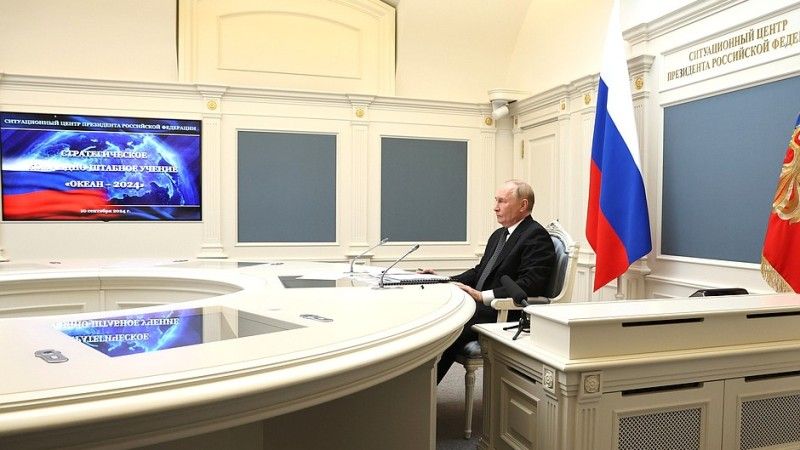
Photo. Kremlin.ru
Discontent with the war in Ukraine is growing across Russian society and increasingly within the economic and political elite. Kaupo Rosin, Director General of the Estonian Foreign Intelligence Service, does not predict the imminent collapse of Vladimir Putin’s system. He does, however, warn that if serious change comes, it may happen much faster than many in Europe expect.
In an interview withThe Telegraph, Rosin argues that Putin increasingly faces only bad options. Continuing the war means further military losses, economic pressure and growing internal tensions. Ending it, however, could expose Putin as a leader who failed to achieve his objectives. According to Rosin, voices around the Kremlin calling for a reconsideration of the current course are becoming stronger.
This does not mean that Russia is approaching a street revolution. Rosin points instead to people with access to money, weapons and information. In these circles, he says, there is much less discussion about total victory and more about possible ways to end the war. The Prigozhin rebellion in 2023 already demonstrated how quickly an apparently stable system can reveal its weaknesses.
The economic situation is becoming equally important. Russian battlefield losses are exceeding recruitment numbers, while Ukrainian strikes against oil infrastructure are increasing pressure on state finances. Estonian intelligence estimates that Russia’s budget deficit could reach around 10 trillion roubles this year. Another mobilisation also remains possible, although no political decision has yet been taken.

At the same time, Rosin does not see an immediate conventional Russian attack on NATO. In his assessment, Putin still considers Article 5 credible. The real question concerns the next several years. If Europe continues to strengthen its defence, support Ukraine and keep the United States engaged in NATO, deterrence should remain effective. If the West weakens itself, Moscow may recalculate.
This is also important in the context of CIA Director John Ratcliffe’s recent visit to Moscow. Rosin does not disclose the details, but says the visit did not weaken deterrence. Dialogue and deterrence therefore do not have to contradict each other. A direct channel with Moscow can also be used to communicate limits and consequences.
Rosin is even more direct about Russian sabotage in Europe. He argues that the term „hybrid warfare” can obscure the reality and that in some cases state-sponsored terrorism is a more accurate description. Russia may not be preparing to attack NATO tomorrow, but it is already testing the Alliance through sabotage, cyber operations and attacks on logistics. The Russian system is under growing pressure, but it remains dangerous.


