












- WIADOMOŚCI
- WYWIADY
MEP Halicki on frozen Russian assets and hybrid war

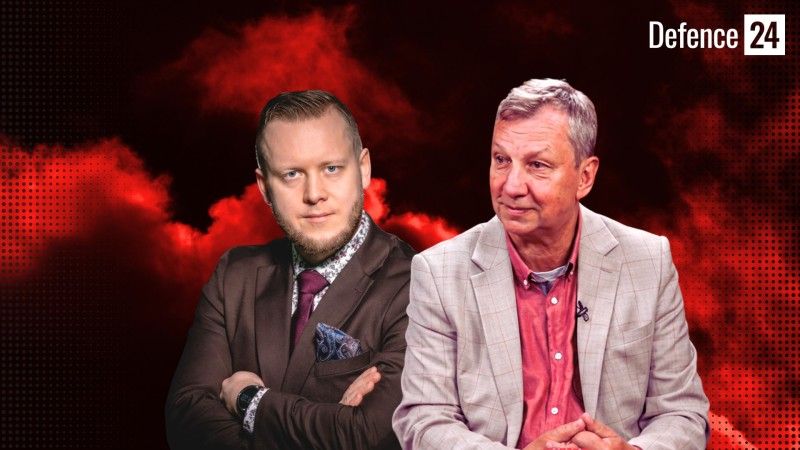
Dr Aleksander Olech (Defence24) in a conversation with Andrzej Halicki, Member of the European Parliament, Vice-Chairman of the European People’s Party Group and member of the European Parliament’s Committee on Budgets, addresses issues including SAFE, upcoming threats to Poland and Europe, and frozen Russian assets.
(Aleksander Olech, Defence24): How do you view slogans such as „Poland is the largest beneficiary of SAFE” today? Will we actually be able to utilise all the funds from this programme?
(Andrzej Halicki): Yes, I have no doubt about that. I would ask a slightly different question: where would we be today in the face of this threat? We should no longer speak only of a state of hybrid warfare. We can speak of a state of real war and the threat regarding a potential Russian attack on Europe.
Where would we be if this project did not exist? Without the strengthening of the Polish defence industry and today’s funding of these billions of zloty. Added to this are real projects which, if production is successful, could be exported beyond Poland. An example of such a Polish export product is the Piorun missile system. We have immense potential and it must be utilised. It is not limited to building our own security. We are developing a domestic industry that can become a very significant part of Polish economic growth.
Was there significant surprise in the European Union regarding such a large loan for Poland?
Of course, there was. It was not a matter of one or two conversations. The Polish share was firmly negotiated. Exceeding a 10% share was supposed to be unattainable for us. I said it would be more than 20%. In the end, this threshold exceeded 30%. Now we must focus on using these funds wisely. Security is single and shared, but it is under threat.
Today, we see not only an increase in employment and the creation of new jobs, but above all, the development of technologies of strategic significance, such as anti-drone systems. What until recently was the domain of small startups and almost „garage” production can quickly transform into a major industry and become an opportunity for building contacts and expansion beyond Europe. This is confirmed by talks with Gulf states, which – despite the presence of American bases – see the need for their own defence systems and are asking about the possibility of participating in SAFE. Growing interest, also from Canada, shows that Poland can gain a completely new position for years to come. We must now capitalise on this potential.
Can we say that Poland will avoid the largest Western corporations becoming the sole beneficiaries of SAFE?
It is already avoiding it, because we have a growing queue of potential buyers. The balance of power is changing; it used to be Poland that was dependent. It is important for this change to be permanent. For now, we have the opportunity to use vast funds, but also, knowing that we have potential, we must put it into practice. And this is not just a task for the Polish Armaments Group (PGZ). The Polish private sector will also benefit from this.
SAFE is a response to threats here and now. Russia is not sleeping; it is not only watching but also testing. We are experiencing not only various types of sabotage and diversionary acts, but above all, something that is a real war in the awareness-political sphere. Russia did everything to prevent SAFE from coming into effect, including in the political arena. After all, we heard the concept of „not provoking Russia because it does not threaten us.”
See also 

Do you not have the impression that the European Union only reacts to a Russian attack instead of deterring it?
SAFE is a pre-emptive and deterrent action. I have no doubt about that. Today, the Baltic states are most at risk of a potential attack or destabilisation by Russia. The use of the Russian-speaking population should not be ruled out. Such provocations have already occurred. There is the issue of Transnistria. There is Moldova, which has resisted Russian influence five times – influence that sought to change the country’s pro-European course, also through the use of special services. The cryptocurrency market also plays a significant role here, as it allows such operations to be financed and is not subject to sufficient control.
Time for a key question. Will the European Union tackle frozen Russian assets?
The European Union must return to the issue of frozen Russian assets – this is another topic that remains shelved, mainly due to Belgium’s concerns about legal consequences. However, all available tools must be used against Russia.
Putin did not attack Ukraine solely for reasons related to the Russian-speaking population – his goal is to maintain Russia as a hegemon and prevent the expansion of the European community near its borders. His narrative about NATO expansion shows a desire to revise the current order and subordinate the countries of Central and Eastern Europe, including Poland, the Czech Republic, Slovakia, Romania, and Bulgaria, to the Russian sphere of influence.
How realistic is Ukraine’s accession to the EU before 2030?
Today, Ukraine’s membership in the European Union before 2030 seems unlikely, but we should not create a „second-class membership” for it. Ukraine must undergo a full reform process and meet uniform legal rules and security standards applicable to all members. At the same time, the coming decade may bring a large expansion of the EU – alongside Ukraine, potentially including Bosnia and Herzegovina and Moldova, among others. Rapid progress by these countries would be an important signal to Moscow that Europe is consistently strengthening its community by admitting countries that choose security, cooperation, and European values. For Europe is not just geography, but above all a community of values, loyalty, and mutual security.
Poland and the Baltic states have for years faced the instrumentalisation of migration as an element of hybrid warfare. Following the experiences of France, Italy, and Spain, is there an awareness in Brussels today of how serious a problem migration has become for the whole of Europe?
Brussels now has a dual awareness of the migration problem: on the one hand, it sees the consequences of previous, erroneous decisions, and on the other, it is increasingly clearly looking for effective solutions. The Polish Presidency has identified three key elements: physical protection of external borders and support for frontline states, a common asylum system and data exchange, and an efficient return mechanism for individuals who have no right to remain in the EU. To this end, Frontex needs to be strengthened and cooperation with third countries enhanced. The first changes are already visible, although the entire system still does not function as effectively as it should. Europe must learn lessons from its poor past so that the future is better.
We have discussed SAFE, the sale of Polish armaments, and migration. It is therefore worth asking, in my opinion: should Polish weaponry be sold to Africa?
First, we must take care of our own security, but at the same time, we should utilise the potential of the Polish defence industry and develop the export of armaments, including to Africa. We already have technologies such as the Piorun, and I also see huge opportunities in the production of drones and anti-drone systems. Such cooperation can be more than just selling equipment – it can build long-term partnerships and shared security.
However, Europe should set clear requirements for its partners. We cannot, on the one hand, fund aid and development programmes, and on the other, ignore situations where third countries allow Russia to use their flags to circumvent sanctions or engage in activities that threaten our security. Today, the world is a system of interconnected vessels, which is why we need greater awareness and responsibility on both sides. Then we can utilise European tools much more broadly – from defence cooperation to educational, medical, and developmental aid.
See also

Final question: is there an awareness in Brussels that the coming year will be crucial in terms of elections in member states? Elections are approaching in Poland, France, and Germany.
There is an awareness in Brussels that the upcoming elections in member states may decide the future of the entire European Union. The results of elections in Poland, France, Germany, and in the longer term also in Spain, could create an arrangement that either strengthens Europe – making it more secure, integrated, and open to expansion – or leads to its weakening and disintegration.
This is why the elections in Poland will also be so important. It could be said that just as in 1989 the changes in Europe began in Warsaw and Gdańsk, so today an important signal for the entire community can flow from here. Putin is also aware of this scenario and is actively trying to influence European politics through disinformation. Europe, therefore, faces a choice: either we cooperate and strengthen the community, or it will become weaker and less secure.
Thank you for the conversation.


