












- KOMENTARZ
- WAŻNE
Russia is targeting heads of defence companies. Europe has already had warning signals

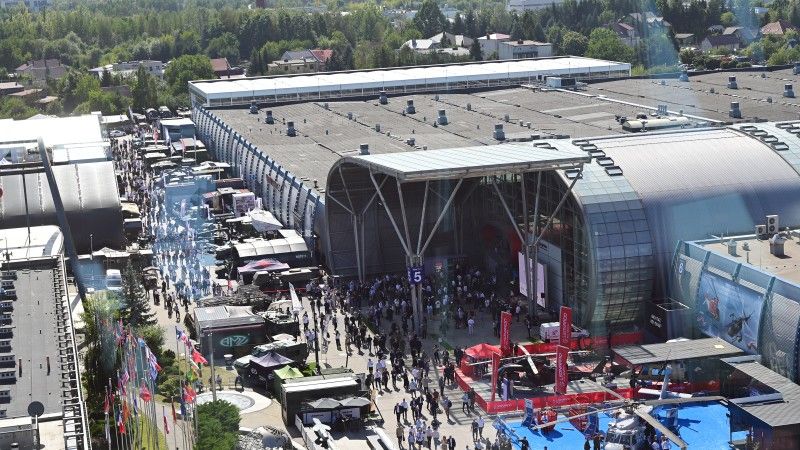
Photo. Targi Kielce
European intelligence services are warning that Russia is expanding its operations against the defence industry. This is no longer only about infrastructure sabotage, arson or cyberattacks. The heads and key decision-makers of companies producing weapons, drones, components and technologies supporting Ukraine are increasingly becoming targets. This should be taken seriously not only in Poland and Finland, but also in other countries.
Russia is no longer limiting itself to putting pressure on the European defence industry as a sector. Moscow is trying to strike specific people who make decisions, organise production, increase deliveries to Ukraine and build new military capabilities in Europe. According to Western intelligence findings, this is not only about the largest defence corporations. Russian interest also covers smaller technology companies, particularly those linked to drones and their components.
This is a fundamental change in Russia’s hybrid campaign. Previously, in Europe, the discussion most often focused on the burning of warehouses, damage to infrastructure, cyberattacks or attempts to disrupt logistics. There was also talk of assassination attempts against Zelenskyy. Now, the shift towards reconnaissance of specific, key individuals is becoming increasingly visible. This concerns their workplaces, routines, travel and surroundings. For Russia, striking the head of a company or a person responsible for a key armaments programme may be as effective as an attack on the factory itself. The aim is to intimidate those who make European defence production actually grow.
Europe has already had a warning signal
Poland cannot treat this as a minor and distant problem of Western Europe. On 31 August 2026, a fire broke out at the premises of WB Electronics S.A. in Skarżysko-Kamienna. The National Prosecutor’s Office opened an investigation concerning participation in the activities of a foreign intelligence service against the Republic of Poland and an offence of a terrorist nature. According to the statement, the case concerns the deliberate starting of a fire by placing a charge containing flammable materials. This was not a random location. WB Electronics is one of the most important companies in Poland’s unmanned-systems sector, and its systems are important both for the Polish Armed Forces and for Ukraine.
This case should be read together with the wider European dimension. In Estonia, Russian services were attributed with an attack on Milrem Robotics, a company linked to unmanned technologies. Denmark is warning that Russia is selecting companies involved in deliveries for Ukraine. Germany previously foiled a plot to assassinate Armin Papperger, the CEO of Rheinmetall. Western services now indicate that a similar threat may concern not only the biggest names, but also the heads of smaller companies whose products have direct significance for the battlefield.
This is particularly important because modern defence companies do not operate only through large plants and state-owned corporations. In many cases, the advantage comes from a small company, specialised technology, fast production, small teams or being located in a third country. Russia does not need to destroy an entire production line to achieve an effect. It can try to intimidate a CEO, designer, owner or programme manager, and then count on the company reducing its activity, delaying deliveries or withdrawing from the most sensitive projects.
That is why the protection of the defence industry is beginning to include the people who make key decisions. In a large corporation, this may mean the chief executive or members of the management board. In a smaller company, it may be the owner, the chief engineer or the person running a key project. From the point of view of Russian services, the formal function is not what matters. What matters is the person’s importance for production, technology and cooperation with Ukraine.
More countries in the crosshairs
In Finland, this problem should also be treated very seriously. Finnish counterintelligence service Supo has already warned that the threat of Russian sabotage in Europe has increased and also concerns Finland. It pointed in particular to the defence industry and activities connected with support for Ukraine. The head of Patria, a leading Finnish defence, aerospace and security company, is now moving in public places with protection.
This requires a change of approach. If Russia wants to weaken European support for Ukraine, it does not need to win the information war or carry out a spectacular attack on a large factory. It is enough for managers to start limiting travel, for companies to increase security costs, for small firms to decide that Ukrainian projects are too risky, and for engineers to feel that their work makes them a personal target. Such a psychological effect is part of Moscow’s operation.
The response of NATO states must therefore be concrete. This is primarily about counterintelligence risk assessment, better exchange of information between the state and companies, and treating personal security as part of the security of defence production. These are truly unprecedented issues in the field of state resilience.
It is now clear to everyone that Russia has understood that the war with Ukraine is also being fought in European factories, at conferences and in logistics. That is why it strikes not only infrastructure or equipment, but also key figures. If Europe genuinely wants to increase its defence capabilities, it must also protect those who make the most important decisions on armaments.


