












- WIADOMOŚCI
Russia’s growing capabilities to strike NATO

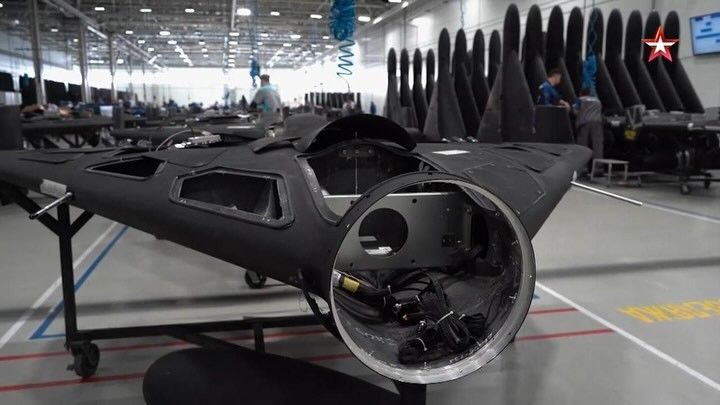
The Russian Federation has installed several secret bases capable of launching drones deep into NATO territory. With storage for more than 1,000 drones at a time, the infrastructure poses a threat to the eastern flank.
According to The Telegraph, the Kremlin has established at least 10 bases with newly built launch pads for Moscow’s most advanced long-range suicide drones (most likely the Geran-2 based on the Iranian Shahed 136). These bases are built in close proximity to the Ukrainian and Belarusian borders and the Black Sea. Some of them have already been reportedly used to perform strikes on Ukraine. With the rapidly evolving technology, some of the bases put Russia’s most powerful drones in range of Warsaw.
For some time now, European and US intelligence officials, as well as several European politicians, have warned of possible Russian armed provocations on NATO’s soil. Those could include missile and drone attacks alike or false-flag operations blamed on Ukraine. A NATO official assured The Telegraph that the military alliance was „ready to defend every inch of allied territory” and would continue to „enhance our readiness to deter and defend against any threat, including from drones.”
The drone issue is certainly on the rise among NATO states. With the prolonged war in Ukraine, more and more Ukrainian and Russian drones intrude into the airspace outside the war theatre. Just recently have we observed drones being shot down in Romania and Latvia.
See also 

Moscow is constantly upgrading its version of the Iranian Shahed drone. Right now, it is capable of reaching targets almost 620 miles away. The Kremlin claims that slower, older variations of the drones could reach UK shores. However, those are more likely to be intercepted. According to leaked Ukrainian government documents, the latest versions of the UAV, namely, Geran-4 and Geran-5, are able to fly fast enough to evade air defence systems while carrying a 90 kg payload.
A NATO official told The Telegraph that „drones have fundamentally altered the character of modern warfare and have become a decisive factor on the battlefield” (as one can see in Ukraine). „We are rapidly expanding our ability to produce, operate and neutralise drones at scale,” he added. The question is whether NATO is able to outpace Russia in this arms race. It is imperative for the Alliance to collaborate with Ukraine when it comes to drone technologies as it is one of the very few states which take part in truly modern warfare.


