












- WIADOMOŚCI
Russia’s plan to sabotage European weapon factories

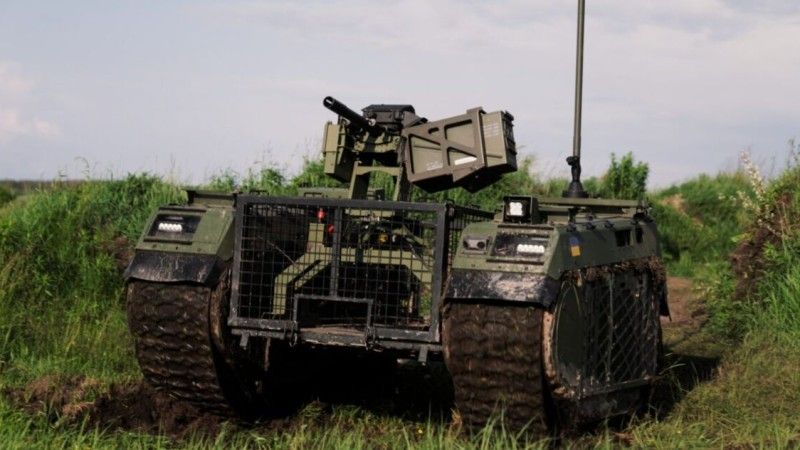
The hybrid warfare between Russia and Europe continues. The Kremlin is reportedly recruiting local gang members to attack defence manufacturers across NATO member states to test its resolve.
According to The Telegraph, several attacks have been reported and all of them appear to be prudently calculated to fall just short of triggering the casus foederis. Last week, Latvia has detained three of its nationals on suspicion of arson attacks against a drone manufacturer in neighbouring Estonia. A fire was set to a building belonging to Milrem Robotics, a company supplying weapons to Ukraine. It is one of the two foreign suppliers of unmanned ground vehicles (UGV) to Kyiv.
While it’s yet to be confirmed whether it was an act of sabotage and if Russia had been involved, the arson fits into a broader pattern of similar attacks against Ukraine’s military supply chains across NATO territory.
Since the Russian invasion of Ukraine in February 2022, there has been an increase in unexplained attacks across Europe. “There have been explosions at major arms manufacturers in Italy and Bulgaria this month alone,” The Telegraph reports. In March, a Czechia-based plant producing thermal imagers for Ukraine was almost burned down. Similarly, Lithuania charged six people over an attempt to burn down a factory supplying radio-wave scanners to Kyiv.

Most of the time, Russia does not use its nationals to carry out those attacks. According to a Western intelligence assessment, reported by The Telegraph, Russia’s GRU military intelligence agency has turned to using local criminal gangs instead of its own agents. “They stay in Russia where it’s safe. They’re not taking any risks for their own operational and physical security,” said Normunds Mežviets, the head of Latvia’s state security service. Instead, members of criminal gangs are recruited as intermediaries via online messaging apps like Telegram. These then give out tasks to locals, paying them in cryptocurrency. People performing the tasks may not even know they’re working for Russia.
What’s important is that the further west one goes, the likelihood of blaming Moscow for such attacks decreases. While eastern NATO states like Poland and the Baltics are eager to be vocal in calling out Russian aggression in Europe, countries like Germany and Italy are more insular about similar claims, afraid of escalating the situation. And the Kremlin thrives on this division. With every new successful attack where the real culprit is not exposed, Russia itself gathers valuable data on just how far it can push NATO’s boundaries. Unity within the Alliance is imperative here. The adversary’s moves are bolder than ever, and yet some NATO members still refuse to name the state behind those actions and address the issue. This needs to change if the allies don’t want to find themselves needlessly antagonised in the future.


