- WIADOMOŚCI
- KOMENTARZ
Canada–Türkiye: Trade, defence cooperation and human rights concerns


Canada and Türkiye recently announced a major three-year Strategic Partnership Action Plan for 2026–2029. The agreement was unveiled on October 22, 2026, during Canadian Prime Minister Mark Carney’s official visit to Ankara, where he met with Turkish President Recep Tayyip Erdoğan.
The visit marked the first-ever bilateral trip to Türkiye by a Canadian prime minister and signalled a significant expansion of economic, defence, energy, and diplomatic cooperation between the two countries. Prime Minister Carney has been seeking to diversify Canada’s international partnerships amid an ongoing trade war with the United States, following President Trump’s imposition of tariffs on Canadian goods.
The three-year Strategic Partnership Action Plan is intended as the first step toward broader cooperation, with a free trade agreement between the two countries emerging as a key objective. Negotiations are scheduled to begin on November 30, 2026.

Strengthening ties with Ankara aligns with the Prime Minister Carney government’s new strategy, The Plan for a Stronger Canada: National Security for Canadians, which emphasizes diversifying international partnerships and opening new markets for the Canadian economy. As the document states, Canada will seek to „pragmatically partner with countries who share our interests and work collectively through variable geometry coalitions to strengthen our Strategic Capabilities and advance our priorities.”
In an official statement after the Ankara talks issued on October 22, the two leaders agreed to work toward the “successful conclusion of a Canada-Türkiye Free Trade Agreement” and to expand bilateral trade and investment in priority sectors, including energy, defence production, aerospace, and artificial intelligence.

The plan places significant emphasis on defence and security cooperation. Both leaders reaffirmed their commitment to deepening bilateral and multilateral defence ties. “They agreed to strengthen cooperation in support of peace and security in the Euro-Atlantic region and beyond, including Ukraine, the South Caucasus, and the Middle East, in particular Gaza.”
As NATO members, Canada and Türkiye are exploring closer defence industry partnerships, joint manufacturing opportunities, military-to-military dialogue, and technological cooperation. For Canada, which is seeking to reduce its dependence on the United States, Türkiye offers several strategic advantages. Its geographic position connects European, Asian, and Middle Eastern markets, while its substantial manufacturing capabilities, particularly in the automotive, aerospace, and defence sectors, create opportunities for industrial cooperation. Türkiye could also become a potential buyer of Canadian energy resources, nuclear technology, and mining expertise. Both countries share an interest in strengthening defence supply chains and industrial capabilities. Earlier this year, Türkiye also declared its intention to join the Canadian-led Defence, Security and Resilience Bank (DSRB), an initiative designed to finance defence companies in participating countries.
The expansion of defence cooperation comes against a backdrop of past concerns over the use of Canadian military technology by Türkiye. Ottawa first suspended the issuance of new export permits to Türkiye in October 2019, following Turkish military operations in northeastern Syria. In October 2020, Canada suspended additional military export permits amid allegations that Canadian-made surveillance and targeting systems were being used in Turkish Bayraktar TB2 drones deployed by Azerbaijan during the Nagorno-Karabakh conflict. A subsequent government investigation found credible evidence that Canadian sensors had been used in the conflict, prompting Ottawa to cancel export permits in April 2021. Canadian officials concluded that the use of the technology was inconsistent with Türkiye’s previous end-use assurances.
Ottawa reversed its restrictive export policy in January 2024, just days after Ankara ratified Sweden’s NATO accession following nearly 20 months of delays. According to Reuters, Canada had linked the removal of restrictions to Türkiye’s approval of Sweden’s membership. As part of the policy shift, Türkiye also agreed to provide greater transparency regarding the potential re-export of Canadian military technology to third countries.
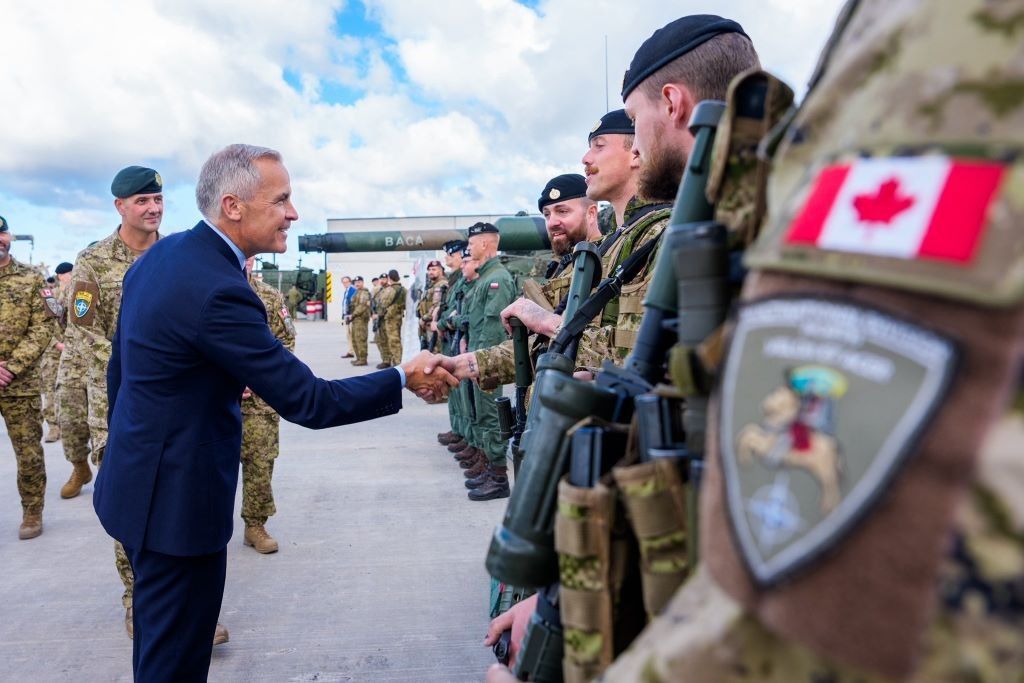
However, Canada’s growing rapprochement with Türkiye has not been without controversy. While Prime Minister Carney presents the partnership as part of an ambitious strategy to diversify trade amid tensions with Washington, its potential economic benefits remain open to question. Türkiye accounted for less than 0.3% of Canada’s merchandise trade in 2025, worth approximately CAD $4.3 billion, compared with roughly CAD $1 trillion in trade with the United States, according to Statistics Canada figures cited by Reuters. Although President Erdoğan has proposed increasing bilateral trade to US$10 billion, no timeline has been established. Even if that target were achieved, Türkiye would still account for less than 1% of Canada’s merchandise trade at current levels. These figures raise questions about the economic significance of the partnership, particularly given the political and moral dilemmas associated with closer ties to Ankara.
Human rights organizations and some liberal politicians have also questioned Canada’s decision to deepen cooperation with a government whose actions appear to contradict the values frequently emphasized by the Canadian prime minister. Critics point to the imprisonment of Istanbul Mayor Ekrem İmamoğlu, a prominent political rival of President Erdoğan, as well as the detention of other opposition politicians, journalists, and activists. The Turkish government has also faced accusations of restricting independent media. Amnesty International’s Türkiye Director, Ruhat Sena Akşener, warned that “Silence in the face of human rights violations for the sake of economic or strategic interests normalizes the status quo and undermines governments’ human rights commitments.” Despite concerns raised by various groups, it remains unclear whether Carney addressed these broader human rights issues during his discussions with Erdoğan.