


- WIADOMOŚCI
Canada focuses on sovereignty. Carney announces the 'Plan for a stronger Canada'

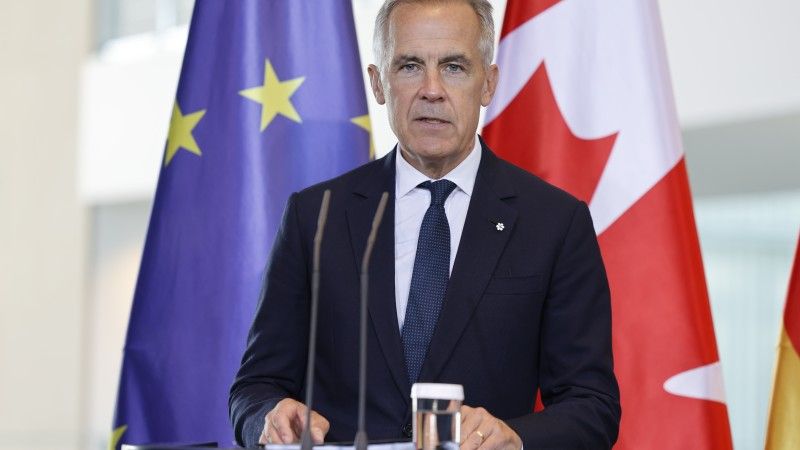
Canadian Prime Minister Mark Carney has announced the „Plan for a Stronger Canada,” the country’s first comprehensive national security strategy in over two decades. The document, comprising approximately 13 pages, provides a framework for further detailed policies and responds to the erosion of the international rules-based order and new threats to sovereignty.
„The international rules-based order is eroding. Canada faces new and evolving threats to its sovereignty, from cyberattacks to the weaponisation of trade agreements. The line between economic security and national security has vanished, and thus the rules of sovereignty have changed,” stated a release from the Prime Minister’s Office. Carney, speaking during the Canada-EU Summit in Montreal, emphasised: „It is no longer enough to feed, fuel, and defend ourselves. Sovereignty now requires secure access to semiconductors, critical minerals, payment systems, clean energy technologies, vaccines, space communications, and artificial intelligence.”

The strategy is based on five pillars intended to ensure Canada’s „strategic autonomy” and resilience:
- Economic security and resilience – Strengthening sovereignty in key sectors, domestic investment in supply chains, maximising energy security, and innovation to position Canada as a strategically important player and global leader in critical industries.
- Disciplined foreign policy – Diversifying partnerships with like-minded countries, building strategic capabilities, and collaborating while maintaining autonomy. The document envisages "clear-eyed" relations with the US based on mutual respect and sovereignty, as well as new partnerships in the Middle East and Africa, among others.
- Strengthening the armed forces – Meeting NATO and NORAD targets, building a domestic defence industrial base, accelerating procurement (including through the Defence Investment Agency and a defence industrial strategy), strengthening security in the Arctic, and contributing to stability in the Indo-Pacific region, the Middle East, and beyond.
- Public safety – Intensifying efforts against foreign interference (including espionage), extremism, organised crime (extortion, fraud, money laundering, sabotage), as well as protection against foreign information manipulation.
- Modernising intelligence – Expanding capabilities for early detection and prevention of new threats, strengthening cooperation with partners and domestic capabilities, while updating legal authorities and safeguarding citizens' rights.

The document lists eight sectors of strategic capability: emerging technologies, critical minerals, defence, energy, transport, pharmaceuticals and biotechnology, food security, and payment, settlement, and investment systems. The strategy commits to preparing for „all scenarios up to and including war.”
Changes are to be implemented through legislation presented to Parliament over the next 12 months. A detailed foreign policy is expected to be released in about a month, with subsequent policies (defence, public safety, economic, and intelligence) following in the coming months. The strategy will be updated at least every four years.
 / Defence24.com


