


- WIADOMOŚCI
Ukraine reveals details of the attack on the Crimean Bridge. Several weapons used in the strike

The attack on the Crimean Bridge was preceded by a weeks-long operation targeting Russian air defence systems, radars and electronic warfare equipment, Volodymyr Zelenskyy said. According to the Ukrainian president, the road and rail sections of the crossing were attacked with Neptune and Flamingo missiles, as well as Palanytsia and Ruta drones. The strike was the seventh stage of operations that gradually weakened Russian defences on the way to the main target.
The attack on the Crimean Bridge was carried out by the Security Service of Ukraine in cooperation with the General Staff of the Armed Forces of Ukraine. The Ukrainian president said that Defence Forces units took part in the operation, and that various types of domestically produced weapons were used during its successive stages. The strike on the crossing was the culmination of efforts to reduce the effectiveness of its defences.
The choice of earlier targets points to an effort to neutralise Russian air defences before the main strike. Destroying radar stations may have limited the ability to detect and track aerial targets, while eliminating electronic warfare equipment may have reduced the effectiveness of jamming Ukrainian missiles’ and drones’ navigation and communications. Losses among air defence systems may, in turn, have weakened the ability to intercept them. Operationally, this would mean gradually creating favourable conditions for breaking through the defences along the axis of attack.
In the final phase of the operation, individual strike assets were directed against the bridge’s two sections. According to the Ukrainian president, Palanytsia drones hit the road section, while Neptune missiles, Ruta drones and FP-5 Flamingo cruise missiles attacked the rail section. The wider operation also used Dovbush, Vendetta, Da Vinci, Sichen, MICH 2000, An-197 and FP-1 systems.
Grateful to the Security Service of Ukraine, all units of Ukraine’s Defense Forces involved, Ukraine’s Minister of Defense, the Commander-in-Chief of the Armed Forces of Ukraine and the General Staff, and all our weapons manufacturers for an unprecedented operation in response to Russian strikes on our infrastructure. Today, everyone can see the consequences for the main military crossing from Russian territory into our Ukrainian Crimea. This is the result of the seventh stage of an operation carried out over several weeks, developed and coordinated by the Security Service of Ukraine together with the General Staff of the Armed Forces of Ukraine. Our warriors gradually destroyed air defense systems, radars, electronic warfare equipment, and other designated targets on the way to the final objective. For this, they used “Dovbush,” “Vendetta,” “Da Vinci,” “Sichen,” “Mich-2000,” “Ruta,” “Palianytsia,” “An-197,” “FP-1,” “FP-5 Flamingo,” and “R-360 Neptune.” Today, at the key stage, the “Palianytsia” drones performed exceptionally well, striking the road section of the bridge, while “Neptune” missiles, “Ruta” drones, and FP-5 drones struck the railway section. Using “Flamingo,” our warriors carried out a precision-guided strike – and the communications uplink worked flawlessly until the very last seconds. We have repeatedly offered Russia steps toward de-escalation – and every proposal has been met with loud rejection. Russia strikes our infrastructure every day, including bridges in Zaporizhzhia, Dnipro, Kyiv, and the Odesa region. We are restoring our infrastructure. But we are also reminding Russia that war will always return to where it began. Ukraine’s defensive capabilities are strong and will remain so, and we will never leave terror against our cities and people unanswered. I thank the true warriors of the Security Service of Ukraine, all our Defense Forces, our intelligence agencies, and EVERY manufacturer of weapons effectively used to defend Ukraine, Ukrainians, and our national interests. Glory to Ukraine!
— Volodymyr Zelenskyy / Володимир Зеленський (@ZelenskyyUa) November 17, 2026
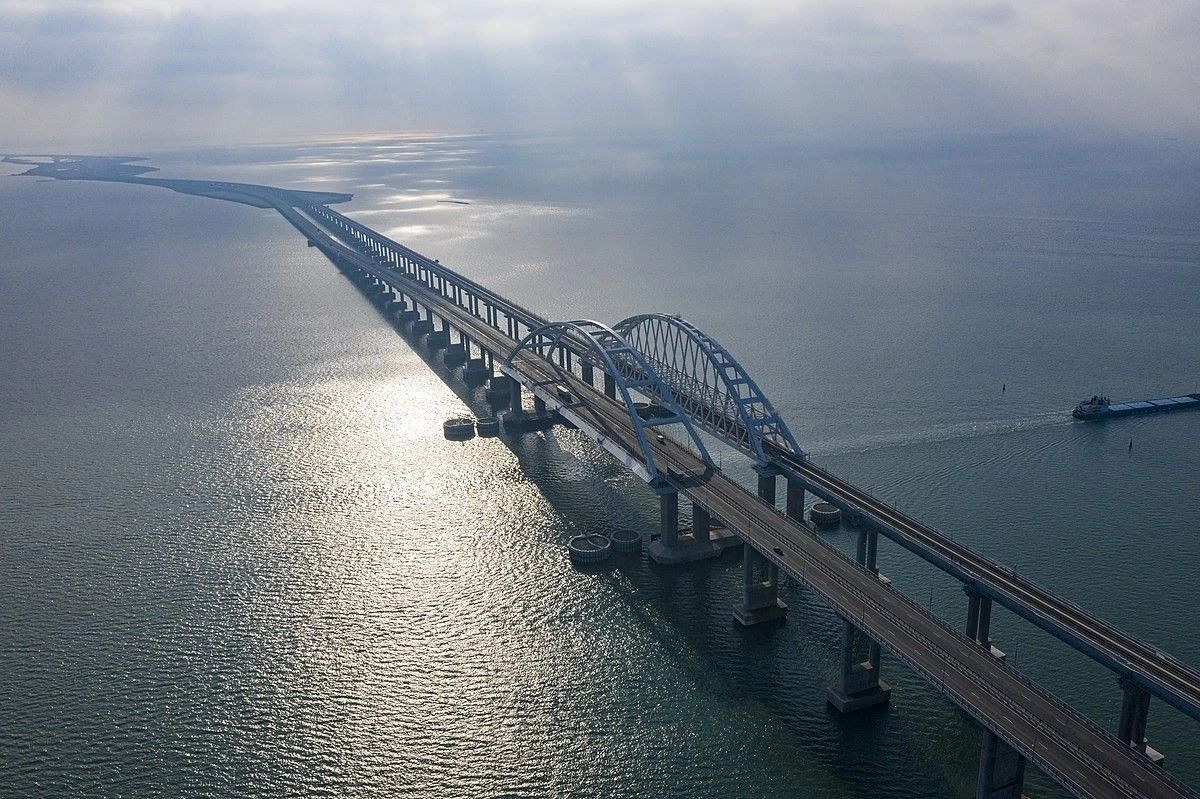
According to reports based on photos and videos circulated on social media, part of the road section collapsed along with an arch structure. There were also reports that the rail section had been damaged. The scale and duration of any reduction in capacity will be crucial to the military assessment of the attack. The bridge across the Kerch Strait provides a direct link between Russia and occupied Crimea, enabling the transport of supplies, including fuel and heavy equipment. A prolonged closure of the rail section could force supplies to be reorganised and more shipments routed through occupied southern Ukraine. This would place a greater burden on infrastructure there, which is also vulnerable to Ukrainian strikes.

Ukraine’s operational gains should be considered more broadly than simply in terms of cutting Crimea off from supplies. One important consequence of the attack may be a reduction in the flexibility of Russia’s logistics system: fewer available connections make it harder to reroute shipments in the event of further strikes. Concentrating transport on alternative routes would increase the strain on infrastructure and the risk of bottlenecks, especially if railway hubs and transshipment facilities were also targeted. Repairing the bridge and restoring its defences would also require engineering resources and air defence assets, potentially at the expense of needs on other operational fronts. From Ukraine’s perspective, the significance of these actions would therefore lie in disrupting supplies while also limiting the opponent’s freedom to deploy its forces. However, the durability of any gains depends on the extent of the damage, how quickly transport capacity is restored, and whether pressure can be maintained on the remaining parts of Russia’s supply network.


