


- WIADOMOŚCI
Russia could unleash 6,500 jet-powered Shaheds a month. Ukraine sounds an alarm
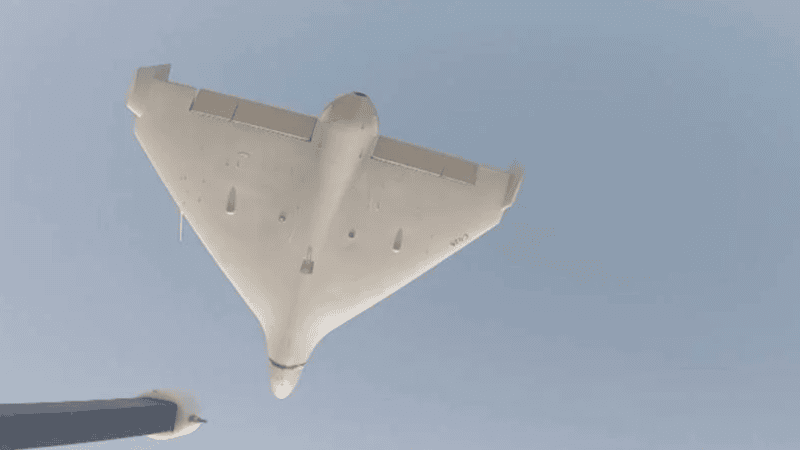
Russia could use as many as 6,500 jet-powered Shahed drones against Ukraine in November. Ukrainian Prime Minister Serhiy Koretskyi made this forecast in an interview with Radio Svoboda. That would mean more than a twelvefold increase in attacks using this type of drone compared with August. Ukrainian officials are warning of further intensification of strikes on energy infrastructure ahead of winter.
In an interview given in Brussels on 16 November, Koretskyi drew attention to the sharp rise in the number of Russian attacks. According to the figures he cited, Russia used around 530 jet-powered Shaheds in August. If the current trend continues, that number could rise to 6,500 in November.

President Volodymyr Zelenskyy had earlier reported the growing scale of the threat. At the end of September, he said that Russia had used more than 2,730 jet-powered Shaheds that month, of which Ukraine’s air defences had shot down or disabled more than 1,500. That represented a success rate of around 55 per cent. By comparison, according to Zelenskyy, the success rate against older, piston-powered versions of these drones exceeded 90 per cent.
More jet-powered drones
Figures from the Ukrainian Air Force also show the scale of the use of the new drones. During the night of 15–16 November, Russia attacked Ukraine with 158 drones of various types, including 77 jet-powered aircraft. According to the Ukrainian command, air defences shot down or disabled 131 drones, including 55 jet-powered ones. Hits were recorded at 19 locations, while debris from downed aircraft fell at a further 11 sites.
Jet-powered Shahed variants pose an increasingly serious challenge for Ukraine’s air defences. Their greater speed compared with versions fitted with piston engines reduces the time available to detect, identify and intercept a target. This makes them harder to counter, particularly with mobile fire groups equipped with guns.
A further problem is the renewed reports of limitations affecting the Starshield satellite communications system. According to Volodymyr Zelenskyy, in areas of Ukraine occupied by Russia, terminals lose connectivity when travelling faster than around 161 km/h. This makes it harder to use Ukrainian interceptor drones against the much faster, jet-powered Shaheds. Kyiv has asked the US and SpaceX for an explanation. The company denies introducing new restrictions, while Zelenskyy says it attributes the problems to technical issues.
Russian attacks threaten the energy sector
Ukraine’s prime minister stressed that Russia is intensifying its strikes even before winter begins. In addition to long-range drones, Russian forces are using guided aerial bombs, cruise and ballistic missiles, and tens of thousands of FPV drones, including aircraft controlled via fibre-optic cables.
According to Koretskyi, the Ukrainian authorities are currently focusing on two tasks: protecting infrastructure from further attacks and preparing to restore it quickly. The prime minister acknowledged that it is impossible to protect the entire energy network, which includes thousands of kilometres of transmission lines and numerous substations. The government, local authorities and energy companies are therefore preparing emergency power sources and measures to mitigate the effects of Russian strikes as quickly as possible.

Ukrainian officials fear that further escalation of attacks on the energy sector could lead to prolonged outages of electricity and heating in major cities. Koretskyi stressed that preparing for the worst-case scenarios is essential, even if they are ultimately prevented.


