












- ANALIZA
- KOMENTARZ
- WIADOMOŚCI
Russia’s Strategy in Central and Eastern Europe: From destabilisation through aggression to regional domination

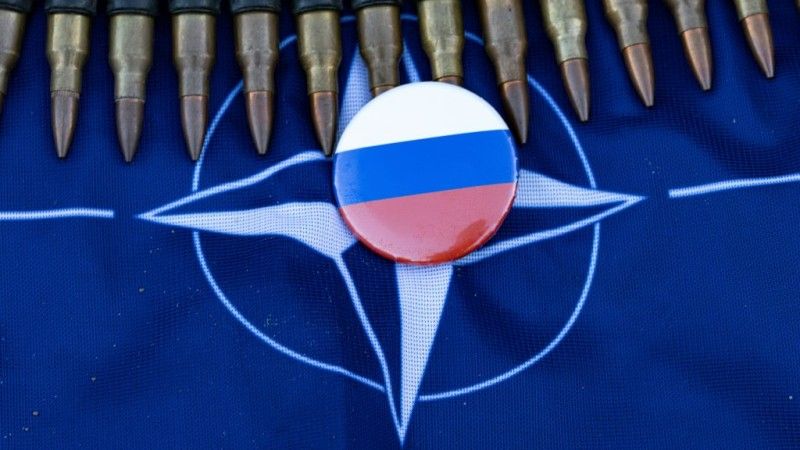
Russia seeks to rebuild its Soviet sphere of influence across the region, using historical and moral justifications to mask its underlying revisionist and expansionist ambitions. These ambitions now constitute a major threat not only to regional stability, but also to the international order as such.
Russia's revisionist strategy in the near abroad
Russia’s strategy in its near abroad has been grounded in the doctrine of a multipolar order, under which the Kremlin views itself as one of the world’s pivotal powers that could reshape the rules of the international system. The annexation of Crimea and military intervention in the Donbas became integral elements of this doctrine, framed as efforts to “restore historical justice” and defend the interests of ethnic Russians beyond the country’s borders.
The "compatriots" doctrine as a pretext for intervention
In recent years, Russia’s military-strategic posture — particularly its increasingly assertive behavior toward neighboring states — has emerged as a key driver shaping regional dynamics. Actions such as the annexation of Crimea, support for pro-Russian fighters in the Donbas, and demonstrations of military force across Central and Eastern Europe have raised growing concern among neighboring countries, which view these moves as a direct threat to their sovereignty.
Moscow’s projection of power is intended not only to demonstrate its dominance in the region, but also to impose its authority over neighboring states. Within this strategy, the defence of “Russian citizens” or “compatriots” abroad becomes a central justification for the use of military force. Such reasoning, reflected both in Russian strategic documents and in statements by President Vladimir Putin himself, suggests that Moscow claims the right to intervene militarily whenever Russian-speaking populations in other countries are perceived to be under threat. This may apply not only to Russian citizens, but also to ethnic Russians living in states such as Ukraine, Lithuania, Latvia, or Estonia.
Russian documents point to two main criteria that may justify such a decision. The first is the existence of a perceived threat to the security of Russian-speaking populations, including Russian citizens and compatriots living beyond Russia’s borders. The second is the possibility that such populations may appeal to Russia for protection if their security is believed to be at risk. These conditions remain deliberately broad and vague, giving Moscow considerable room for interpretation and, in turn, wide discretion to justify military action in response to virtually any threat it chooses to define as such.

Buffer-zone politics and the failure of the Novorossiya project
The Novorossiya concept, often invoked by the Kremlin, was intended to serve as the ideological foundation for building a Russia-controlled bloc in southeastern Ukraine. The combined territories of the Donetsk, Luhansk, Kharkiv, Zaporizhzhia, Kherson, and Mykolaiv regions were meant to form a new political entity that would reinforce Russian dominance in the area while cutting Ukraine off from the Black Sea.
Despite repeated efforts, however, the project failed to secure broad support among the local population. This forced Russia to adjust its approach and shift its focus toward prolonging the conflict in the Donbas, while simultaneously seeking to weaken Ukrainian statehood. This strategy fits into the broader context of Russia’s efforts to revise the post-Cold War international order.
A central objective of Russia’s military offensive against Ukraine was to push Western influence away from its borders by establishing a buffer zone composed of states that emerged after the collapse of the Soviet Union. This objective was pursued with considerable success in the case of Belarus, which has in practice lost much of its sovereignty. Russia’s absorption of Belarus, presented under the banner of the “Union State of Belarus and Russia,” is pursued via the gradual integration of the two countries under the Kremlin’s political and economic dominance.

Security divides across Central and Eastern Europe
Central and Eastern Europe includes both member states of the European Union and NATO, as well as countries that remain outside these Western structures, such as Ukraine, Moldova, and several Balkan states. This institutional divide translates into varying levels of security and resilience amid Russian military and hybrid threats across the region.
For countries such as Poland and the Baltic states, which experienced decades of Soviet domination, ensuring national security and deterring potential Russian aggression remain overriding priorities. To this end, they have systematically increased defence spending, expanded military cooperation within NATO, and pursued diplomatic efforts to strengthen the presence of allied troops on their territory.
These actions must be understood in the broader context of deeply rooted fears of Russian imperialism, which has repeatedly threatened their sovereignty. Poland, Lithuania, Latvia, and Estonia are acutely aware that their geographic location makes them particularly exposed to the Russian threat. In response to Russia’s actions after 2014, these countries deepened cooperation with other NATO members, leading to the creation of such initiatives as the Enhanced Forward Presence (eFP), which involved the deployment of multinational battlegroups along the Alliance’s eastern flank. These efforts helped strengthen the region’s defensive capabilities and improve its resilience to potential threats.
Conversely, countries that are not members of the North Atlantic Alliance, such as Ukraine, are much more vulnerable to destabilisation driven by external aggression, and especially to direct military action by Russia. The case of Ukraine, which became the target of Russian aggression in 2014, illustrates one of the clearest examples of this risk. The annexation of Crimea and the outbreak of conflict in the Donbas exposed the absence of adequate defence mechanisms, which could guarantee security at the international level.
Although Ukraine had declared its aspiration to join NATO, it did not at the time benefit from collective defence guarantees. This proved to be a crucial factor that allowed Russia to use military force against Ukraine without fear of allied intervention. Georgia, which likewise experienced Russian aggression in 2008 during the war over South Ossetia and Abkhazia, found itself in a similar position: being outside NATO left it largely exposed to Russian expansionism. Moldova, whose status remains even more complex, also continues to face the risk of destabilisation by Russia, particularly in light of the presence of pro-Russian forces in Transnistria.

Belarus under increasing Russian domination
Belarus’s status as a sovereign state raises serious doubts, given its increasingly close ties with the Russian Federation. It is difficult to determine both the degree of Alyaksandr Lukashenka’s subordination to the Kremlin and the extent of his control over the Belarusian security apparatus. Like other post-Soviet states, Belarus faces persistent pressure from Russia, whose objective in this case remains the preservation and further consolidation of its domination over Minsk.
On the one hand, President Lukashenka, who has held power for years, seeks to preserve Belarus’s formal independence. On the other, political and economic realities have made the country ever more dependent on Russia. One of the clearest illustrations of this dependence is the announced change in Belarus’s status with regard to nuclear weapons, including its hosting of Russian nuclear arms, which became a matter of public debate following the referendum held on 27 February 2022. This shift not only deepens the alliance with Russia, but also alters the region’s military balance, which is becoming increasingly shaped by the Russian military presence.
Belarus is thus becoming one of the most critical flashpoints in Russia’s relations with the West. Its dependence on Russia makes it a key element of Russian foreign policy, while any change in its political or military status carries the potential to trigger far-reaching consequences across the region.

Russia as a threat to regional and global stability
From a long-term analytical perspective, Russia’s actions after 2014 carry far-reaching and destabilising consequences for the stability of the international order. Above all, they challenge a system built on the principles of state sovereignty and territorial integrity as enshrined in the UN Charter, which has formed the foundation of the post-Second World War international order. Russia’s annexation of Crimea and intervention in the Donbas have undermined these principles, setting a dangerous precedent for other states with revisionist ambitions.
Moreover, these actions intensified the rivalry between Russia and the West, not only in the military sphere, but also across areas such as the economy, technology, and diplomacy. Following the 2022 full-scale invasion of Ukraine, the Russian Federation’s policy toward the so-called near abroad assumed far more overtly aggressive character. These developments are a direct threat to regional stability in an area already marked by numerous political, economic, and military conflicts.


