












- ANALIZA
Sanctions or enticements? What is the American approach towards Russia?

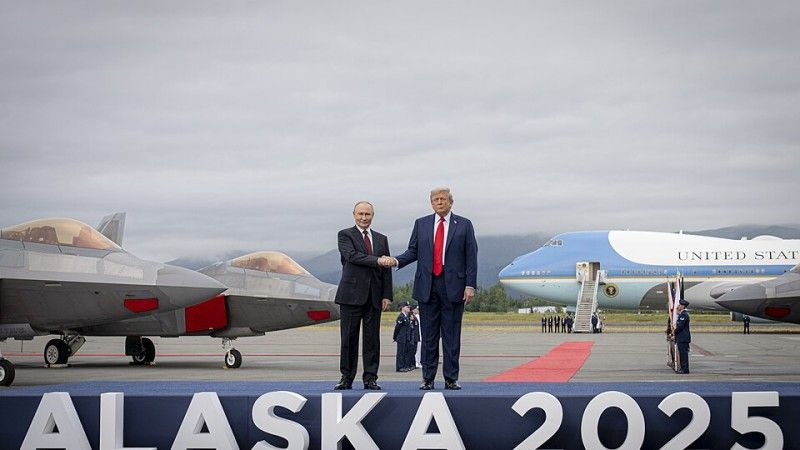
Photo. Benjamin D Applebaum / Wikimedia Commons
Amid recent announcements about the passage of Graham’s bill in Congress, which is supposed to enable the U.S. president to impose sanctions on countries doing business with Russia, there have also been reports about Donald Trump’s potential economic enticements for the Kremlin. The question is: what is the real American approach towards Russia and Vladimir Putin?
Last week, Donald Trump announced that he will sign Graham’s bill, which will allow him to impose sanctions, including tariffs of up to 100% on countries cooperating with the Russian Federation. The restrictions will also target Russian officials, businesspeople, financial institutions, as well as the shadow fleet of tankers that Moscow uses to evade existing Western sanctions. The main objective of the bill’s initiator, Senator Lindsey Graham, who died in July, and its bipartisan supporters is to force Russia to end the war in Ukraine.
Nevertheless, it seems that President Trump would prefer a different approach, based on offering economic incentives to Russia, according to sources cited by The New York Times.
In Donald Trump’s view, the objective remains the same. By offering economic incentives, he hopes to persuade Putin to end the war. Importantly, the U.S. administration is reportedly considering signing business deals with Russia even before the fighting in Ukraine comes to an end. It is difficult to avoid using the term „reset” when discussing Trump’s approach towards Russia. So far, however, it remains unclear what specific deals are being considered.
Without a doubt, this approach stands in contrast to the strategy supported by both Republicans and Democrats in Congress, who are calling for stronger economic and military pressure on Putin in order to force him to stop the war.
It is worth highlighting that since returning to the White House, Donald Trump has been supportive of pursuing business deals with Moscow. At the same time, the Russian side has mentioned potential agreements involving rare earth minerals and aluminium, joint ventures in the Arctic, and even the involvement of U.S. companies in selling Russian natural gas to Europe.
Donald Trump has been a strong supporter of a reset with Russia; nevertheless, until last week’s NYT reports, he emphasised that such business deals would only be possible once Russia made peace. The latest developments suggest that this reset may be closer than many expected.

Lindsey O. Graham Sanctioning Russia and Iran Act of 2026
Last week, Congress passed a landmark sanctions bill with bipartisan support aimed at weakening the Russian energy sector. The measure was approved by a vote of 262 to 159. The vote took place shortly after Russian drone strikes hit civilian transport infrastructure in southern Ukraine, killing five people.
According to Representative Michael McCaul, Republican of Texas and one of the sanctions bill’s leading proponents: „This bill will cripple Russia’s war machine and finally bring Putin to the negotiating table.”
However, it is worth noting that the original version of the bill was significantly stricter. It would have required the U.S. president to impose tariffs on every country purchasing Russian hydrocarbons. In its current form, the president has the authority to impose such tariffs but is not legally required to do so.
Moreover, according to Gregory Meeks, the senior Democrat on the House Foreign Affairs Committee, the bill prioritises presidential tariff powers over binding sanctions commitments.
Many observers viewed the legislation as the most significant congressional action against Moscow since Donald Trump returned to the White House. Trump has stated that he intends to sign the bill. However, it should be remembered that despite expanding tariff policies towards many countries around the world, his administration has not imposed any new sanctions on Russia during his second term.
On the contrary, from March to May 2026, the administration eased certain restrictions on Russian oil tankers. Furthermore, Trump will not be required to impose sanctions that could affect major buyers of Russian oil such as China, India, or Turkey.
There is also a possibility that tariffs could be imposed on the European Union, which continues to import certain Russian hydrocarbons, despite the complex sanctions regime. Given Trump’s assertive attitude towards the EU, such a scenario cannot be overlooked.

What’s next?
Even though the bill has been passed and Donald Trump has announced that he will sign it, the current U.S. administration still appears to favour a more reset-focused approach that could eventually lead to business agreements with Moscow.
This is certainly not a positive signal for Ukraine or for the transatlantic alliance, both of which strongly oppose any easing of pressure on Russia. The current sanctions regime demonstrates that economic restrictions can weaken the Russian economy, but only when they are comprehensive, cover all sectors that are critical to the Kremlin’s budget, and are fully enforced.


