












- WIADOMOŚCI
The US and New Zealand are building a port. China is threatening repercussions

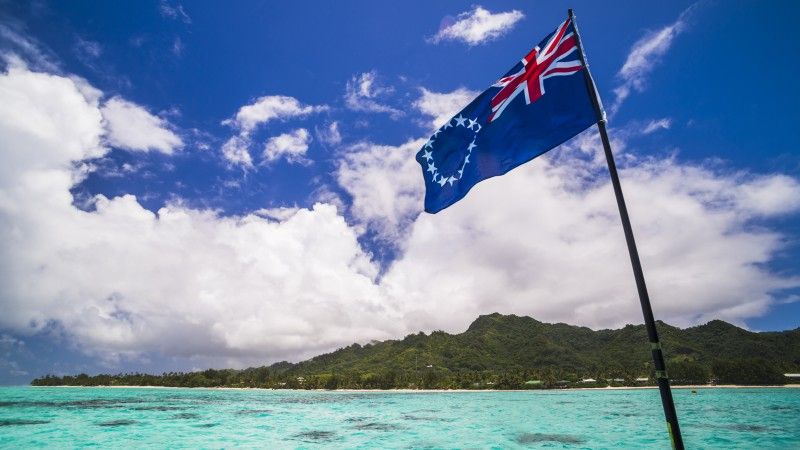
The United States and Australia recently celebrated the 75th anniversary of the conclusion of the Pacific Security Treaty. US diplomatic engagement in this region does not end with historical references, as evidenced by a new US investment in the Cook Islands.
On 1 September 1951, in San Francisco, the United States, Australia, and New Zealand concluded the ANZUS (Australia, New Zealand, United States Security Treaty) agreement, aimed at strengthening cooperation between these nations in the Indo-Pacific region. Seventy-five years later, relations between the governments in Washington and Canberra remain at a high level, as evidenced by a recent post by US Deputy Assistant Secretary of Defence Elbridge Colby, in which he stated that both countries have made „tremendous progress in strengthening collective defence and deterrence by denial in the Western Pacific over the last year and a half.”
In this context, it is worth highlighting the development of the AUKUS project and the associated decision for USVirginia-class submarines to be rotationally stationed at the HMAS Stirling base from 2027. One must also not forget the Five Eyes alliance – an intelligence network consisting not only of representatives from the United States and Australia, but also New Zealand, the United Kingdom, and Canada.
Cook Islands to bolster US presence in the Pacific
While New Zealand’s involvement in the ANZUS format is not as deep, Wellington still views the United States as one of the primary guarantors of security in the region. This is evidenced by the latest agreement signed by representatives of the US, New Zealand, and Cook Islands authorities.
During the annual Pacific Islands Forum in Palau, Deputy Secretary of State Christopher Landau, New Zealand Foreign Minister Winston Peters, and Cook Islands Prime Minister Mark Brown signed an agreement to expand a port that served as a naval base during World War II. The investment is expected to cost approximately $60 million, with the vast majority of the costs to be borne by the United States ($50 million).
„This project underscores the United States« strong commitment to our partners in the Pacific region and builds on the critical minerals agreement that the United States and the Cook Islands signed earlier this year,” Landau said.
At this stage, it is difficult to find official information suggesting that the port modernisation is intended for military tasks. Media reports lean towards more general statements, as evidenced by a comment from a representative of the 15 islands. „The upgraded port will be a true lifeline for the atoll, providing safer landings, better access to services, and stronger links to the world,” according to Stars and Stripes.
US security analyst Paul Buchanan, quoted by the same portal, presents this in a different light, speaking of the possible establishment of a forward US military base. „My impression is that the US would like to have a naval base, a tracking station, and small land-based facilities in this very remote part of the South Pacific so they can counter the growing Chinese naval presence in the region,” he said.
China reacts
The signing of the trilateral agreement is significant for another reason. As mentioned, the accord was signed during the Pacific Islands Forum in Palau. One of the entities participating in this event was Taiwan, which did not escape the attention of the authorities in Beijing, who criticised the organisers of the undertaking and warned of „consequences”.
It is also worth noting that Xi Jinping’s recent visit to Egypt—a country that is one of the primary beneficiaries of American military aid (Foreign Military Financing)—can be interpreted as a Chinese reaction (aimed at the US) to the agreement with the Cook Islands.


