












- ANALIZA
- WIADOMOŚCI
The US trains Libya while Russia builds six bases

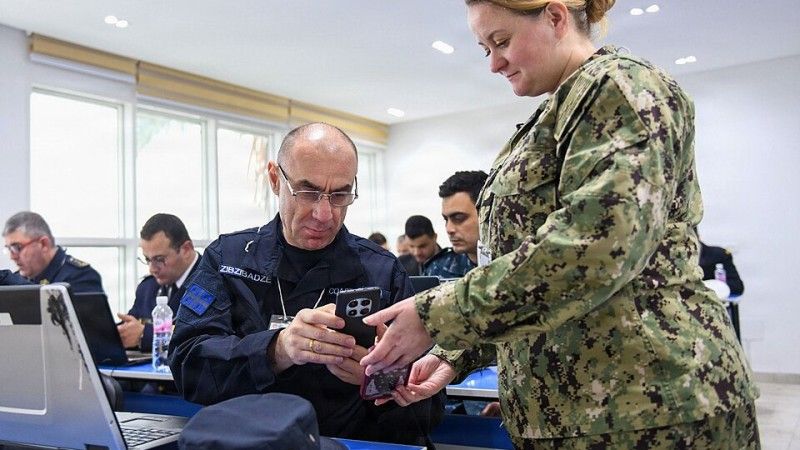
Photo. U.S. Navy photo by Petty Officer 1st Class Novalee Manzella / Wikimedia Commons
US Marines have trained with Libyan naval special forces during Phoenix Express 2026 in Tunisia. The headline may suggest that Washington is suddenly conducting exercises with forces closely connected to Russia, but the reality is more complicated. Official US military material identifies the Libyan participants as Navy Special Forces personnel from Tripoli, not forces controlled by Khalifa Haftar. The more important story is that the United States is trying to engage both sides of divided Libya while Russia is simultaneously consolidating a permanent military presence in the country.
Phoenix Express should also not be presented as an exercise against one specific “common enemy”. The 12-day multinational exercise brought together 13 countries and focused on maritime security, including visit, board, search and seizure operations and wider cooperation in the southern Mediterranean. US Force Reconnaissance Marines trained directly with Libyan personnel from Tripoli in Bizerte.
However, Washington’s policy towards Libya in 2026 goes much further. In April, Libya, Italy and the United States jointly organised part of Flintlock 2026 in Sirte, bringing together Libyan joint forces and international partners. AFRICOM explicitly presented the exercise as supporting the development of a more unified Libyan military.

The next step came in August. Security leaders from eastern and western Libya travelled together to Ramstein Air Base, where the US Air Force presented C-130J operations, maintenance, air mobility planning and the structures required to build an integrated air command. This is important because Washington is not simply choosing Tripoli against Haftar. It is trying to connect military structures from both sides and gradually bring them into a system of cooperation with the West.
At the same time, Russia is building something much more physical. The US National Geospatial-Intelligence Agency’s Tearline project identified Africa Corps-linked activity at six Libyan air bases: Al-Khadim, Al-Jufra, Tamanhint, Matan al-Sarra, Al-Qardabiyah and Brak al-Shati. Since 2024, satellite imagery has shown construction and renovation of hangars, barracks, aprons and runways. This network gives Russia military access across eastern, central and southern Libya and provides an important logistical bridge towards the Sahel.
Al-Khadim is particularly important as a transit point between Libya and the Sahel, while Matan al-Sarra extends Russian access deep into the Sahara, close to Chad and Sudan. Russia therefore does not need to transform Libya into a formal ally or establish officially recognised bases. Access to airfields, personnel, logistics and infrastructure already gives Moscow a durable military position on NATO’s southern flank.
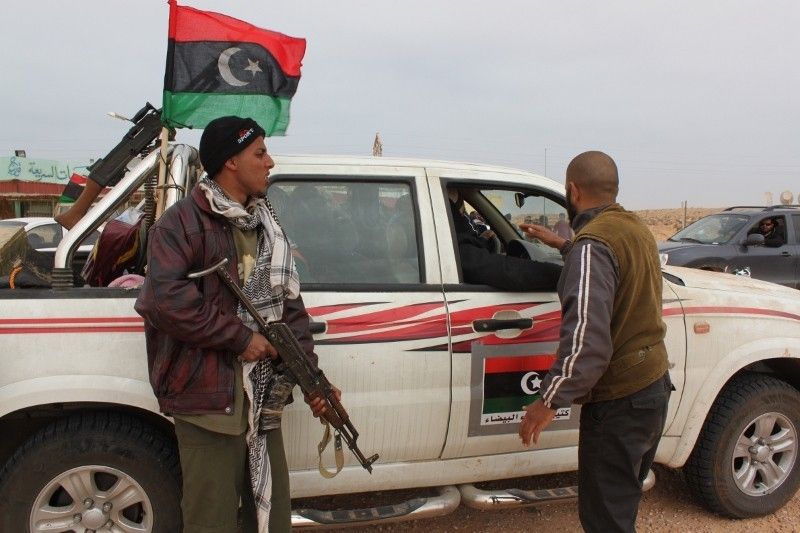
There is also a paradox around Haftar. His forces remain closely connected to Moscow and control territory hosting much of Russia’s military infrastructure, but they are not isolated from Washington. In August 2026, Haftar’s forces played an important role in the release of American hostage Kevin Rideout, while US contacts with eastern Libyan military structures continued. At the same time, Reuters reported that Haftar’s forces had acquired Chinese and Turkish combat drones despite the UN arms embargo.
Libya therefore cannot be divided neatly into an American camp and a Russian camp. Washington is trying to work with Tripoli while also opening channels to eastern forces and promoting military integration between the two sides. Moscow is pursuing a different objective: permanent access, infrastructure and a logistical corridor towards Africa. The competition is therefore not simply about who supports whom, but it is about who will have access to Libyan territory, military structures and infrastructure when the country eventually becomes more unified – if that ever happens.


