












- ANALIZA
- WIADOMOŚCI
Russia expands its military presence in Libya

Russia is consistently strengthening its military presence in Libya, exploiting the country’s internal divisions, its relations with General Khalifa Haftar and access to military infrastructure. This is no longer only about the presence of the Africa Corps or support for one of Libya’s competing camps. Moscow is building a network based on airfields, access to ports and the movement of troops, supporting its activities not only in Libya, but also in the Sahel and further south in Africa.
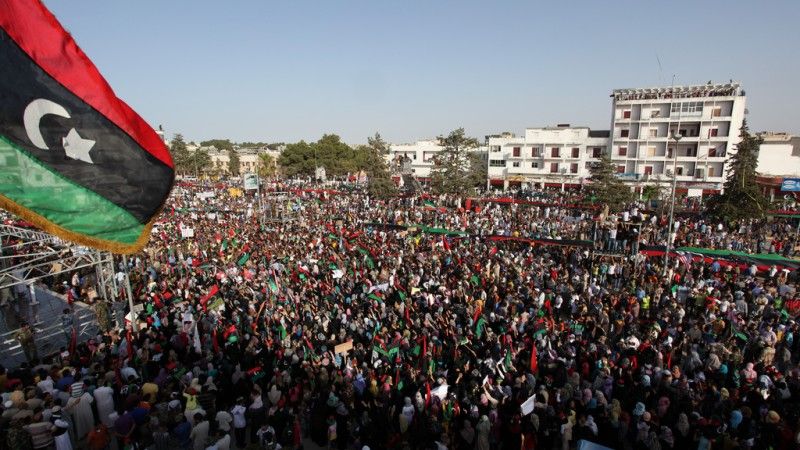
Libya remains a deeply divided state in which there is no single centre of power capable of effectively governing the entire territory and pursuing a coherent foreign policy. Following the disputed elections of 2014, the division between the eastern camp, associated with the House of Representatives and General Khalifa Haftar’s Libyan National Army (LNA), and the western camp centred around the authorities in Tripoli became entrenched. Despite the existence of formal state structures, real power remains divided between political centres, armed forces, militias and foreign actors. Under these conditions, Russia has consistently expanded its presence for years.

Photo. Defence24
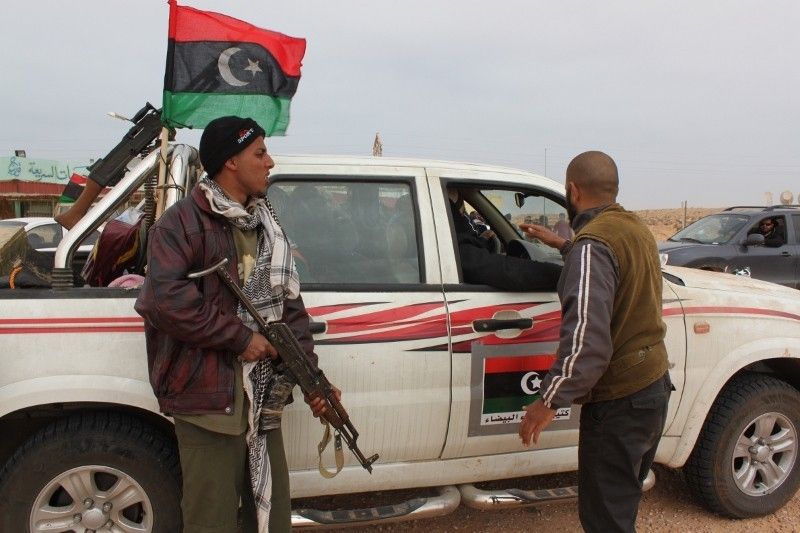
Initially, it did so through Russian private military structures and later primarily through the Wagner Group. Its activities in Libya became particularly well documented in 2019, when Russian mercenaries actively supported Haftar’s offensive against Tripoli. Following the death of Yevgeny Prigozhin and changes in Russia’s system of military presence in Africa, soldiers of the Africa Corps, subordinate to the Ministry of Defence, began to play an increasingly important role.
Russian military personnel, experts and businessmen are interested in gaining access to energy and military infrastructure and securing logistics not only within Libya, but also across the continent. This gives Moscow additional opportunities to influence the domestic situation and strengthens the Kremlin’s position in North Africa.
The Kremlin moves in every direction
Russia is pursuing a two-track approach, maintaining contacts with both the authorities in Tripoli and the eastern camp. Military cooperation with Haftar remains considerably more developed. This allows Moscow to influence different political circles and, above all, to safeguard its own presence regardless of how the balance of power in Libya changes. Even greater Turkish involvement or Italy’s attempts to strengthen its position have not led to a weakening of Russia.
In recent years, the Russian presence in the country has become increasingly military in character. Russians, initially primarily as Wagner Group mercenaries and now also as Africa Corps soldiers, use military infrastructure in eastern and southern Libya.
Only a few years ago, most attention was focused on the Al-Khadim, Al-Jufra and Brak al-Shati air bases, which were used to handle transport flights, service equipment, maintain Russian personnel and support Haftar’s forces. Today, however, the scale of this presence is significantly larger.
Satellite imagery analysis indicates a Russian presence at six important aviation facilities: Al-Khadim, Al-Jufra, Tamanhint, Matan al-Sarra, Al-Qardabiyah and Brak al-Shati. Since 2024, construction work has included hangars, accommodation facilities, warehouses and technical infrastructure, as well as upgrades to roads, aprons and runways.
It must be underlined that this does not mean that the Russian Federation has formally taken over six Libyan bases. These remain Libyan military installations, located mainly in territories controlled by forces associated with Haftar. Russia has, however, gained the ability to use parts of this infrastructure.
The individual airfields perform different functions. Al-Jufra remains an important basing point and a support facility for the Russian presence in Libya and has been used by the Russians for several years. Al-Khadim is important for the movement of personnel and equipment between Libya and other parts of Africa. At Tamanhint, infrastructure is being expanded to support transport aircraft, while Brak al-Shati increases Russia’s ability to sustain its presence in the southern part of the country.
Ultimately, this creates a multi-level picture of expanding military capabilities based on – even if temporary – military facilities. Russia is creating infrastructure that allows it to receive personnel and equipment, deploy them across different parts of Libya and eventually move them further towards the Sahel, including Mali and Burkina Faso, as well as the Central African Republic or Sudan.
Particular attention should be paid to the modernisation of the Matan al-Sarra base, also known as Maaten al-Sarra, in south-eastern Libya, close to the borders with Chad and Sudan. The base remained largely unused for many years, but intensive work is now being carried out there.
At the same time, Moscow is using port infrastructure in eastern Libya. The most important point is Tobruk, through which Russian vessels have previously delivered military equipment, including armoured vehicles, artillery and other materiel.
A permanent Russian base in Libya?
It is true that Russia has long been interested in obtaining a permanent and large military facility in Libya. If Moscow secured permanent naval facilities in Tobruk, its importance would increase even further. Russia would gain a position on the southern coast of the Mediterranean, directly opposite southern Europe. The formal establishment of a Russian base would also further strengthen Haftar and formalise part of the cooperation that currently relies primarily on Russian access to Libyan infrastructure.
Libya’s importance increased further following the collapse of Bashar al-Assad’s regime in December 2024. Some personnel and equipment were subsequently transferred from Syria to eastern Libya. Russian transport aircraft, including Il-76s and An-124s, flew to Libyan bases and airfields. This demonstrated that Moscow could use Libya to take over some of the functions previously performed by Russian bases in Syria.
This does not mean that Libya has completely replaced Syria. The Russian presence at Hmeimim and Tartus has been reduced, but it has not disappeared. Libya is therefore becoming a second and increasingly important pillar of Russian infrastructure in the Mediterranean direction – or, to put it directly, on NATO’s southern flank – and in Africa.
As a result, eastern and southern Libya have become one of the most important elements of the infrastructure used to sustain the Russian presence in the Sahel. This is particularly important because these countries have no access to the sea. Soldiers (whether Wagner or Africa Corps), fuel, ammunition, vehicles, drones, weapons and spare parts have to be transported thousands of kilometres from the territory of the Russian Federation. Libya helps to reduce some of these problems through developing air links and the ability to maintain stocks much closer to the areas where they are later used.
Libya is only the beginning
Libya is not the only element of Russia’s system for supplying its forces in Africa. Moscow is also developing other routes. Conakry in Guinea has been used to deliver heavy equipment that was subsequently moved towards Mali. The port of Lomé in Togo provides an opportunity to transport supplies through Burkina Faso towards the Sahel. Douala in Cameroon remains one of the points used to supply the Russian presence in the Central African Republic.
São Tomé and Príncipe and Equatorial Guinea are also becoming increasingly important, with Russia expanding its access to infrastructure and developing military cooperation. Moscow is increasing not only its military presence, but also its logistical footprint. Libya is particularly important because it connects access to the Mediterranean with southern Libya and, from there, with the Sahel.
A challenge for NATO
The Russian presence in Libya also matters for NATO’s southern flank. This does not mean that the country currently represents a direct military threat to Europe. There is no confirmation that Russia has deployed missile systems there intended to strike European countries – but it could do so.
A greater Russian presence creates additional possibilities for influencing the region. Migration flows towards Europe are increasing; Russia is gaining influence over the transport of raw materials, while weapons and narcotics are also being moved through regional networks. Africa possesses enormous resources, and Moscow is gradually entering more countries.
Libya is not an end in itself for Russia, but it is a starting point for further activity across the continent. It is precisely the development of this infrastructure, rather than simply the number of facilities used by the Africa Corps, that will matter most for Russia’s future position. At this stage, Moscow is exerting pressure simultaneously on NATO’s eastern and southern flanks.


