












- WIADOMOŚCI
Türkiye and Israel enter a new pase of confrontation

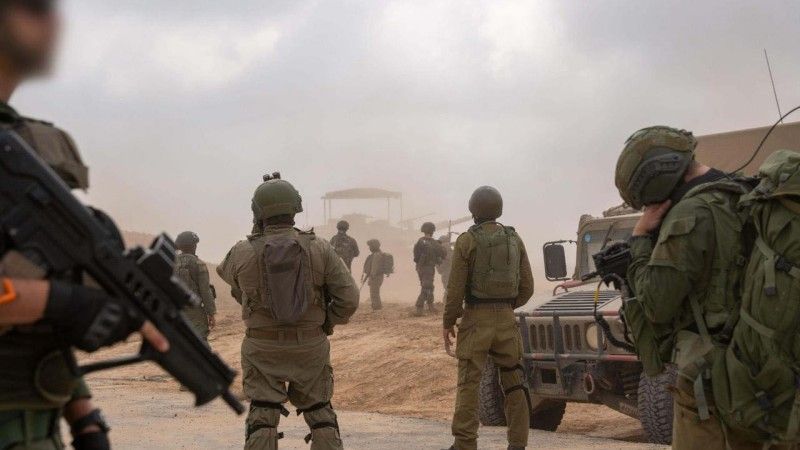
The ongoing rivalry between Türkiye and Israel reached a climax in August 2026, escalating from sharp diplomatic rhetoric to direct military incidents and legal battles on the international stage. This rivalry is defined by conflicting visions of regional security, the new balance of power in Syria following the fall of the Assad regime, and the domestic political calculations of both countries.
The situation was further exacerbated by Israel’s recent attack on an airbase in Syria, aimed at preventing the alleged deployment of Turkish forces there. Türkiye has reacted with caution to these actions, viewing Benjamin Netanyahu’s moves as a desperate attempt to preserve his political position ahead of the upcoming elections. Both sides are competing for influence not only in the Middle East but also in the Horn of Africa, raising concerns about the risk of direct military confrontation.

Direct Military Clash in Syria
The most serious flashpoint was an Israeli airstrike carried out on the night of 17–18 August 2026 on the Abu al-Duhur Airbase in northern Syria, located just 60 km from the Turkish border.
Israel justified the attack as an operational necessity, claiming that Türkiye was preparing to deploy military personnel, drones, and advanced air defence and radar systems (manufactured by the Turkish company ASELSAN) there. For Tel Aviv, the installation of these systems constitutes a „red line”, as it could restrict Israel’s freedom of action in Syrian airspace, which is considered critical to the country’s security.
However, Ankara and Damascus strongly denied these accusations, describing the airstrike as unlawful aggression that violated Syrian sovereignty. In Türkiye’s account of the events, only a Turkish military delegation had visited the base the day before the attack to provide technical assistance with its reconstruction.
See also 

Legal and Diplomatic Battle
Three days after the Israeli raid, on 21 August 2026, the Turkish Ministry of Justice took legal action, requesting that INTERPOL issue Red Notices for Prime Minister Benjamin Netanyahu and Israeli soldier Lieutenant Afek Moskovitch.
The case concerns Israel’s forced takeover of the international humanitarian aid flotilla „Global Sumud” bound for the Gaza Strip in October 2025, during which Turkish citizens, among others, were unlawfully detained. The Turkish prosecutor’s office also accuses Netanyahu of crimes against humanity, torture, and unlawful imprisonment.
Tel Aviv dismissed these actions as a „pathetic attempt at intimidation”, and Netanyahu himself publicly called President Erdoğan an „anti-Semitic tyrant”. Erdoğan, in turn, has repeatedly called Netanyahu a „war criminal” and compared him to Hitler.
The Influence of Domestic Politics and the Role of Mediators
Both sides are exploiting the conflict for their own gain. With Israel’s elections scheduled for October 2026, Netanyahu’s critics accuse him of deliberately provoking a conflict with Türkiye to boost his poor poll ratings and portray himself as a guarantor of security.
For this reason, Türkiye is deliberately employing a tactic of restraint. Ankara officials emphasise that they do not intend to provide Netanyahu with a „lifeline” in the form of military escalation to support his election campaign. It is worth noting that even Erdoğan himself has avoided directly mentioning the Israeli Prime Minister in his recent speeches.
The United States, which must manage the crisis between its NATO ally (Türkiye) and a key partner in the Middle East (Israel), is playing a key role in extinguishing the fire. On 23 August 2026, Israeli and Syrian delegations (with the Israeli delegation led by Mossad chief Roman Gofman) met in Jordan under US auspices. The meeting aimed to develop de-escalation mechanisms and prevent the Turkish-Israeli conflict from spreading into Syrian territory.


