












- ANALIZA
- KOMENTARZ
- WIADOMOŚCI
U-Boats in the Arctic: Canada turns toward Europe… and Poland

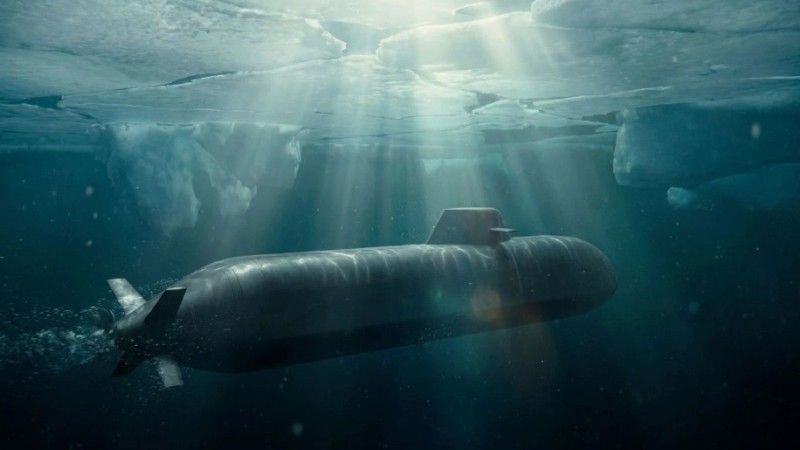
Photo. TKMS
TKMS’s victory in the competition to deliver 12 new submarines to the Royal Canadian Navy represents more than a triumph for the German and Norwegian defense industries. The decision clearly demonstrates a shift in the direction of Canadian defense policy. The government in Ottawa is turning toward Europe.
Canadian defence spending will exceed 2 percent of GDP during the current fiscal year. This will be the first time it has done so since the fall of the Berlin Wall. The recently concluded Canadian Patrol Submarine Project, or CPSP, will contribute to further increases. Although the plan to acquire new submarines for the Royal Canadian Navy has not yet culminated in a binding procurement contract, there is little doubt that it will become the most expensive equipment-acquisition program in the history of the Canadian Forces.
The four British-built Victoria-class submarines will be replaced by Type 212CD boats. As many as a dozen futuristic U-boats for the Royal Canadian Navy could be constructed at Thyssenkrupp Marine Systems shipyards in Kiel and Wismar. The Norwegian defense industry, led by Kongsberg, is also participating in the program. The unsuccessful bidder was South Korea’s Hanwha Ocean, which offered its KSS-III CPS design. Technically, the Korean submarines competed with their German counterparts on equal terms. There are many indications that the outcome was determined not only by economic considerations, but above all by Canada’s increasingly close ties with Europe.

Photo. MarkjF31 / Wikimedia Commons / CC BY-SA 4.0
Canadian media estimate that the total cost of the CPSP over the new submarines« entire life cycle could reach approximately CAD 100 billion, or around PLN 265 billion. Of this amount, roughly CAD 25 billion—nearly PLN 64 billion—would be allocated to purchasing the submarines themselves. During the procurement process, TKMS concluded agreements with numerous industrial partners and First Nations communities. The objective is to establish a Canadian support base for a program that will continue for decades, encompassing infrastructure, training systems, and component manufacturing. If the new submarines remain in service for approximately 40 years, the Canadian flag will not be lowered from the final Type 212CD until the 2070s.
Until recently, approximately 70 cents of every Canadian dollar spent on military-equipment procurement went across the country’s southern border to the United States. That proportion is now changing significantly. In fairness, it should be noted that American shipyards do not build diesel-electric submarines. Canada’s defense pivot toward the eastern side of the Atlantic, however, extends well beyond equipment purchases for the Royal Canadian Navy. European-Canadian relations are also deepening in numerous other areas, ranging from the joint monitoring of the Arctic and North Atlantic to the construction of nuclear reactors on both sides of the ocean. I will return to these issues later.
See also 

The "Tender of the Century" is not the end of the road
With the Canadian contract, the number of Type 212CD submarines on order will rise from 12 to 24, provided that Canada proceeds with its planned purchase of a dozen boats. Germany and Norway have already signed binding contracts for six submarines each, while Berlin is considering the acquisition of three additional boats. The keel of the prototype, which has not yet been named, was laid in September 2023. The submarine is scheduled to be launched next year and commissioned into the Royal Norwegian Navy—Sjøforsvaret—in 2029. The third boat, the future U-37, is scheduled to enter service with the German Navy—Deutsche Marine—in 2031, becoming Germany’s first submarine of the class. Contracts for the delivery of submarines to the Royal Canadian Navy are expected to be signed by the end of 2027. Ottawa wants to receive four boats by 2034. This will require TKMS to rearrange its production schedule and make room for the Canadian order.
The CPSP is unprecedented in NATO’s post-Cold War history. Few Alliance members have ever operated such a large fleet of diesel-electric submarines of a single type. By comparison, until recently the Turkish Naval Forces—Türk Deniz Kuvvetleri—operated 14 Type 209 submarines. Their construction, however, took approximately three decades, and Turkey’s Type 209 boats belong to three subclasses with somewhat different configurations and equipment: Atılay, Preveze, and Gür.
The acquisition of new submarines represents only one element of a broad plan to expand the Royal Canadian Navy. The National Shipbuilding Strategy, launched in 2010, initiated major investments in Canada’s shipbuilding industry. For example, in January of this year, Irving Shipbuilding’s facility in Halifax, Nova Scotia, laid the keel of the first of 15 River-class destroyers. The new ships will replace the Halifax-class frigates and the now-retired Iroquois-class destroyers. The design is based on the Type 26 frigates being built by BAE Systems, although it incorporates significant modifications. Ships from the Global Combat Ship family have also been ordered by Canada’s closest allies: Australia, Norway, and the United Kingdom.
In addition, two new Protecteur-class replenishment ships are based on Germany’s Berlin-class design, while the eight Harry DeWolf-class patrol ships intended for both the navy and the Canadian Coast Guard were derived from Norway’s Svalbard-class vessels. The Continental Defence Corvette procurement process is also under way and is intended to select a supplier for between 16 and 20 ships for the Royal Canadian Navy. There are strong indications that these Arctic-capable corvettes will be constructed domestically by Canadian shipyards. In terms of size, equipment, armament, and seakeeping, they will be comparable to light frigates.
Wolf-Packs of the Atlantic
The scale of these plans indicates that, for the first time since the Cold War, the Royal Canadian Navy will possess equipment suited to its operational requirements in both quantitative and qualitative terms. All the new ships are expected to be fully interoperable with allied forces, particularly those in Europe. It should be emphasized that Canada has the longest coastline in the world and that its navy operates across three oceans: the Arctic, Atlantic, and Pacific. Intensifying competition for Arctic resources, the changing security architecture of the Atlantic and Pacific, and the threatening rhetoric of the unpredictable occupant of the White House all underscore the urgency of Canada’s requirements.
The decision to pursue a European direction in the modernization of the Royal Canadian Navy appears to be a natural consequence of global developments. Implementation of the CPSP will enable the establishment of a transatlantic supply chain, as well as a shared training and logistics system for three countries operating what will become NATO’s most numerous new class of diesel-electric submarine. It is significant that the Canadian and Norwegian navies will operate highly similar equipment in support of comparable missions. Had Ottawa decided to purchase new submarines from South Korea—equally modern, but based on a somewhat different operational concept—the resulting strategic landscape would have looked rather different.
See also

Saab GlobalEye.

Photo. Saab
It is not difficult to imagine a scenario in which combined Canadian-Norwegian-German submarine flotillas are stationed at Haakonsvern Naval Base in Bergen to patrol the North Atlantic and the Norwegian Sea, monitoring the activities of Russia’s Northern Fleet—Severnyy Flot—alongside other NATO forces. Under an alternative scenario, German Navy and Royal Norwegian Navy submarines could be redeployed to Canadian Forces Base Halifax to support Royal Canadian Navy vessels in securing the Canadian Arctic. Similar opportunities exist for surface forces, including Norway’s Type 26 frigates, whose principal mission will be anti-submarine warfare, and Canada’s multirole River-class destroyers.
Canadian purchases of European military equipment are not limited to warships. In 2023, the Royal Canadian Air Force introduced its first CC-330 Husky aerial-refueling and transport aircraft, a variant of the Airbus A330 MRTT. More recently, the government in Ottawa decided to purchase six Leonardo M-346 Master advanced jet trainers and five Saab GlobalEye airborne early-warning aircraft. Soon afterward, it emerged that the GlobalEye would shortly become NATO’s principal aircraft of its class. There have also been unofficial reports of Canadian interest in acquiring Saab Gripen combat aircraft and of Ottawa’s intention to join the British-Japanese-Italian Global Combat Air Programme, or GCAP, as an observer.
Middle powers stand together
Canada’s ties with Europe are not limited to defence. Prime Minister Mark Carney’s government intends to transform the maple-leaf nation into an energy power and a champion of the green transition. Ottawa controls substantial reserves of resources essential to the energy economy, including oil, natural gas, uranium, copper, nickel, and cobalt. The extraction and export of these resources have become part of Canada’s national-security strategy. Its objective is to reduce existing economic dependencies by diversifying trade relationships and creating new sources of revenue. Canada is also one of the rare countries to possess a fully sovereign nuclear technology.
Ottawa’s energy and climate policies are aligned to a significant extent with Europe’s objectives, both at the national and European Union levels. Canada also holds a broadly similar view of the security architecture of the Northern Hemisphere. This creates a natural basis for cooperation and synergy in defense. The results include Canada’s purchases of European armaments and its accession to the Security Action for Europe, or SAFE, program. Brussels and Ottawa have also concluded the European Union-Canada Strategic Partnership Agreement and established a Security and Defence Partnership. These arrangements build upon the EU-Canada Comprehensive Economic and Trade Agreement of 2017.

Photo. Edgewing
To appreciate the practical dimension of these partnerships, one need only look at developments in Poland. Canada and Poland are strengthening their cooperation in the energy sector, including the construction of BWRX-300 small modular reactors in Poland. The process will be supported by the Canadian companies Aecon and AtkinsRéalis. The latter company was granted the rights by the Canadian government to construct, operate, and develop CANDU-family heavy-water reactors, which are being proposed for Poland’s second large-scale nuclear power plant. Meanwhile, the Polish resource-sector giant KGHM is working to open a copper and nickel mine in Canada, while Canada’s Lumina Metals intends to make a similar move in Poland. It was recently announced that the Canadian Armed Forces intend to purchase Polish unmanned systems from the WB Group through the SAFE program. A Polish government delegation headed by Minister Konrad Gołota visited L3Harris’s Canadian subsidiary to discuss airborne early-warning aircraft, while representatives of the Polish Armaments Group presented the Canadian side with an offer from Poland’s defense industry.
In his widely discussed speech at the World Economic Forum in Davos, Prime Minister Carney called on middle powers to strengthen their ties so that they could collectively resist power politics and promote a form of political realism grounded in the fundamental, non-negotiable values of Western democracies. Canada’s defense-policy pivot toward Europe began before Prime Minister Carney took office. It is now, however, acquiring a highly practical dimension, while relations between Canada and Europe are closer than they have been in many decades. When discussing transatlantic relations, it is worth remembering that North America contains more than one country.


