












- WIADOMOŚCI
- KOMENTARZ
Ukraine at a pivotal moment? Three developments to watch ahead of the NATO summit

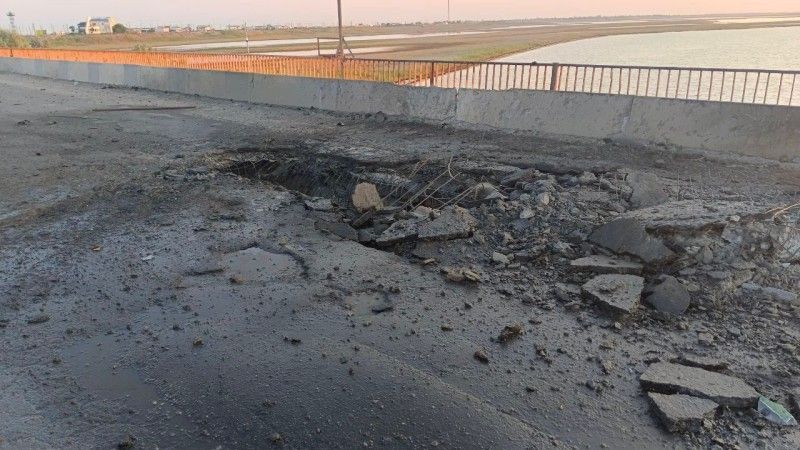
Photo. @blyskavka_ua/X
As the NATO summit begins, Ukraine arrives after another wave of Russian attacks on Kyiv. Russia launched one of the largest missile and drone barrages of the war earlier this week, renewing President Volodymyr Zelenskyy’s calls for stronger air defences and tougher commitments from allies.
Olha Polishchuk, Eastern Europe Research Manager at ACLED, said:
“Russia has once again shown it can inflict devastating damage on Ukrainian cities. But at the same time, Kyiv is making life increasingly difficult for Moscow. Three developments over the past two weeks suggest Ukraine is putting growing pressure on Russia ahead of a summit where military support is once again expected to top the agenda.”
Crimea under pressure
Ukraine dramatically stepped up its long-range strike campaign against occupied Crimea in June, targeting the peninsula’s fuel, power and transport infrastructure. ACLED records more than 100 Ukrainian drone and missile strikes in June, up from just 21 in May — the highest monthly total since the start of the full-scale invasion.
The strikes hit an oil terminal in Kerch, electricity substations, the railway bridge over the North Crimean Canal, ferry crossings across the Kerch Strait and transport links connecting Crimea with occupied southern Ukraine. The impact has gone far beyond military targets. On 21 June, Russian occupying authorities banned civilian fuel sales, while repeated attacks on power infrastructure left parts of Sevastopol experiencing persistent blackouts. By 26 June, the Russian authorities had declared a state of emergency across the peninsula as residents queued to leave Crimea at the start of the tourist season.
The campaign also reflects what’s happening on the wider battlefield. Russia has failed to make significant territorial gains this summer, with Ukrainian counterattacks and strikes on logistics limiting advances around Pokrovsk, the Kramatorsk-Kostiantynivka axis and Huliaipole. Given the disruption already caused to Russian supply lines, Ukraine is likely to keep up the pressure, with further strikes on the Kerch Bridge and other supply routes to Crimea remaining a likely next step.

Strikes deep inside Russia
Ukraine has also expanded its campaign inside Russia itself. In June, ACLED recorded a sharp increase in drone and missile strikes, including Russia’s interception of a record 992 Ukrainian drones in a single day on 17 and 18 June. Ukrainian attacks reached Moscow, where the Moscow Oil Refinery was hit for the second time in a week, and St Petersburg was hit during the city’s International Economic Forum.
The sustained campaign against Russia’s energy infrastructure has contributed to fuel shortages across dozens of regions, prompting temporary export restrictions, increased fuel imports from Belarus and discussions over further emergency measures. It’s still unclear whether these attacks will change the Kremlin’s strategic thinking, but they do show Ukraine is becoming increasingly capable of overwhelming Russian air defences and imposing economic costs far from the front line.

The war beyond the battlefield
The conflict is also continuing to spill beyond Ukraine and Russia. On 29 June, an explosive device wounded three people outside a residential building in Monaco, including Ukrainian-born businessman Vadym Yermolayev, who was sanctioned by Ukraine in 2023 over business activity in occupied Crimea.
While the motive remains under investigation, the attack is the latest in a series of incidents targeting individuals linked to Russia or Ukraine across Europe since the start of the full-scale invasion. ACLED records at least nine such attacks since February 2022, underlining how the conflict’s shadow war increasingly stretches well beyond Ukraine’s and Russia’s borders.
Tomorrow’s NATO summit therefore comes at a pivotal moment. Russia continues to show it can launch devastating attacks against Ukrainian cities, highlighting Kyiv’s urgent need for more air defence. At the same time, Ukraine is demonstrating that it can increasingly threaten Russian logistics and energy infrastructure both in occupied regions and Russia proper through its expanding long-range strike campaign. Whether NATO responds with new commitments could shape not only Ukraine’s ability to defend itself, but also its ability to keep increasing the pressure on Russia in the months ahead.
Author: Olha Polishchuk, Eastern Europe Research Manager at ACLED


