












- WIADOMOŚCI
Ukraine push for drone deals with NATO countries

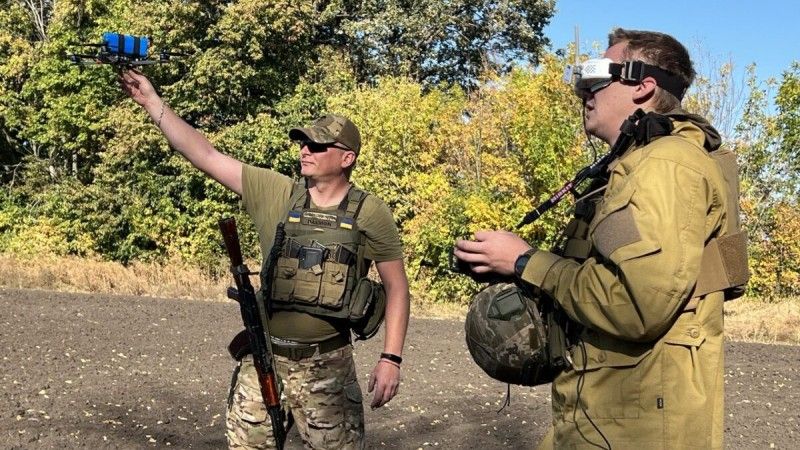
Ukraine wants to bring at least seven more NATO countries into defence agreements built around drones, air defence and battlefield lessons from the war with Russia. Kyiv is trying to change the way partners see it: not only as a state that needs weapons, but also as a country able to export operational experience, anti-drone knowledge and practical solutions tested under Russian attacks.
Ukraine has already signed so-called “drone deals” with six countries in recent months, including Saudi Arabia, the United Arab Emirates, Qatar, Azerbaijan, Latvia and Lithuania. The next step is to bring at least seven additional NATO members into similar arrangements. This matters because Kyiv is trying to turn its wartime experience into a foreign-policy instrument. It wants partners to see Ukraine not only as a country defending itself, but also as a state that has tested counter-drone systems, electronic warfare, sensors, interception methods and strike drones under real combat conditions.
The term “drone deal” is too narrow. Davyd Aloian, deputy secretary of Ukraine’s National Security and Defence Council, has said that the initiative covers far more than drones themselves. It includes experience, components, sensors, ground stations, radar systems and the wider architecture needed to make these systems useful. An interceptor drone alone does not create protection against Shaheds. It needs detection, command, control, targeting, operators, procedures and integration with other air-defence layers.
The Gulf became interested after Iranian Shahed-type attacks exposed serious weaknesses in regional air defence. Some states had to use expensive Patriot missiles against relatively cheap drones, while Ukraine has spent years learning how to deal with this threat more efficiently. Kyiv can now offer assessments of what a partner needs at the operational and tactical level, even if actual drone deliveries are limited because Ukrainian industry remains focused on its own war effort. This is why Ukraine’s most valuable export is not only hardware, but also the system knowledge around it.

NATO’s eastern members are a natural audience. Latvia signed a deal after two Ukrainian long-range drones, pushed off course by Russian electronic warfare, hit an oil storage facility. Lithuania also moved after a similar incident involving Ukrainian drones entering its airspace and air-raid sirens being sounded. Latvia has already announced a joint drone production facility in the east of the country. For states close to Russia and Belarus, this is no longer a theoretical problem. They need production, servicing, repair, sensors, anti-drone procedures and experience in responding to incidents near hostile borders.
Kyiv also wants to push a more ambitious idea: a European analogue to the Patriot system, able to defend against Russian ballistic missiles. This is much harder than drone cooperation, but it shows the direction of Ukrainian thinking. Europe is preparing for a future with less certainty about American support, and Ukraine wants to be part of that security architecture before formal NATO membership. It wants to enter through technology, production, operational lessons and joint projects.

There is still a serious caveat. Ukraine urgently needs to rebuild and expand its own drone production, and it needs large amounts of money for technology. It offers extremely valuable experience, but not always mature, transparent and fully NATO-compatible systems. Ukrainian forces often rely on basic air-defence solutions, improvised drones, commercial components and materials from China. NATO countries must therefore ask whether Ukrainian technologies can be integrated into a multi-layered and multi-domain allied air-defence architecture, with NATO procedures, certification standards, command systems and interoperability requirements. Ukraine can show what drone war looks like in practice. The Alliance must decide which lessons can become equipment, doctrine and production inside NATO’s own system.


