- WIADOMOŚCI
Ukrainian energy sector ahead of winter. Russian drones and ballistic attacks are wearing down defences

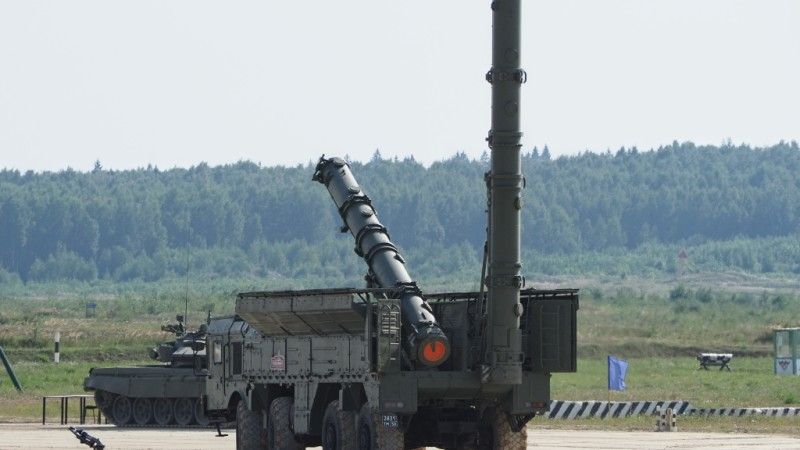
Photo. Boevaya mashina/Wikimedia Commons/CC 3.0
Russian attacks on Ukrainian energy infrastructure are intensifying ahead of the start of the heating season. In recent days, strikes have led to power outages in many regions of the country, and authorities in Kyiv are raising the alarm about the systematic destruction of facilities responsible for electricity production and transmission.
According to the Ukrainian Ministry of Energy, on 17 October, more than one million consumers were without power at one point. Another wave of attacks, carried out on the night of 18–19 October, once again damaged key components of the system. Ukraine is therefore entering the period of peak energy demand with serious problems, although it is simultaneously increasing gas reserves and preparing for repairs to the damaged infrastructure.

Hundreds of drones and ballistic missiles in a single operation
On the night of 18–19 October, Russia launched a large-scale aerial attack on Ukraine. According to the Ukrainian Air Force, the Russians used Iskander-M or S-400 ballistic missiles, Iskander-K cruise missiles, and 269 unmanned aerial vehicles (UAVs) of various types.
Ukrainian air defence reported neutralizing 247 targets, including four cruise missiles and 243 drones. However, not all ballistic missiles involved in the attack were intercepted. According to Ukrainian authorities, more than ten energy facilities were damaged, and approximately 550,000 households lost access to electricity. In subsequent statements, Zelenskyy spoke of 28 substations and other critical energy facilities affected by the strikes.
It is not only the number of attack assets used that is significant, but also how they are deployed. Simultaneously directing drones and missiles with different flight parameters at Ukrainian cities and infrastructure facilities forces the defenders to engage on multiple levels. Drones can arrive in waves, stretching the attack over time and forcing the prolonged operation of detection systems and fire units. Ballistic missiles, meanwhile, represent a particularly difficult threat as they travel at very high speeds, leaving the defenders with little reaction time.
Russia thus exploits the advantage resulting from the ability to conduct mass strikes. Even if Ukrainian systems destroy the vast majority of incoming UAVs, individual hits can be enough to disable a key substation, damage transmission equipment, or disrupt the operation of a large power plant.

Ukraine is unable to intercept everything
A key limitation of Ukrainian air defence remains the availability of suitable interceptor missiles. Protection against Russian ballistic missiles is particularly difficult. Patriot systems remain the primary means allowing Ukraine to counter this type of threat. Kyiv needs both more launchers and ammunition, the stocks of which are limited.
According to information from „The Washington Post” on 15 October, Ukraine reportedly had only a few Patriot missiles left after using previous stocks during Russian attacks. The exact status of the stockpiles is not publicly known, but the scale of the problem has been signalled by Ukrainian officials, confirming that the capability to counter ballistic missiles may be limited to a near-minimum by ammunition availability.
See also 

Jet-powered drones complicate defence
An additional challenge is the Russian Geran jet-powered drones. Their higher speed compared to slower piston-engine UAVs shortens reaction times and makes them more difficult to counter using some cheaper anti-aircraft assets. Ukrainians are warning that Russian strike drones remain almost constantly in Ukrainian airspace, and in a single day, Russia can launch around a thousand UAVs.
Kyiv is developing its own anti-drone solutions, including interceptor UAVs, which may reduce the need to use expensive missile ammunition. However, this does not automatically solve the problem of protection against all types of Russian attack assets. Effective defence requires a combination of detection, electronic warfare, mobile fire groups, anti-aircraft artillery, aviation, and missile systems. The outcome of the defence is also determined by the quality of information about the incoming attack. Ukraine does not currently receive early warning from partners regarding the first wave of ballistic strikes. In the past, intelligence provided by allies helped in preparing the defence. The lack of timely warning limits the time for dispersing assets, preparing positions, and making decisions on engaging specific targets.
Energy as a target of a war of attrition
Russian attacks have a direct impact on the military situation, but their effects extend beyond the battlefield. Disabling substations and damaging transmission networks hampers the supply of energy to industrial plants, railway infrastructure, hospitals, and municipal facilities. Ahead of winter, the risk of disruptions to the operation of combined heat and power plants and central heating systems becomes particularly significant.
Before the heating season, Ukraine accumulated approximately 16 billion cubic metres of gas in underground storage; however, fuel reserves do not guarantee energy security if the infrastructure required to utilise them is damaged. The ultimate effect of the Russian campaign therefore depends on Ukraine’s ability to repair damage, maintain power reserves, and protect the most critical elements of the system.
From a military perspective, Russia is conducting a campaign in which the number of attack assets and the frequency of strikes are intended to gradually weaken Ukrainian defensive capabilities. Ukraine must simultaneously protect cities, critical infrastructure, and logistics hubs, while also conserving ammunition for subsequent waves of attacks. Without international support, Ukraine faces the harshest winter since the start of the full-scale invasion.