- WIADOMOŚCI
- KOMENTARZ
United States once more playing for Russia

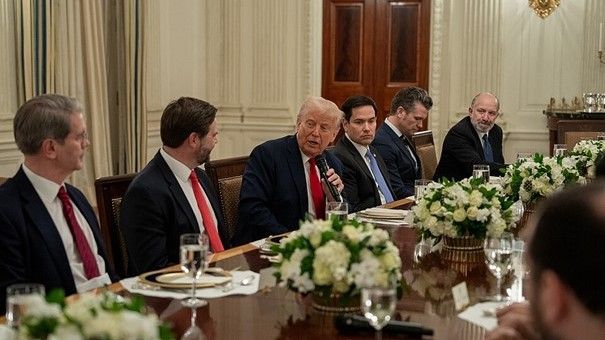
On Friday, a couple of hours after the Strait of Hormuz was reopened to commercial shipping, U.S. Treasury Secretary Scott Bessent announced an extension of the sanctions waiver for Russian oil and petroleum products already loaded on vessels.
Through this decision, the American administration is extending the announcement made in the middle of March that introduced a 30‑day authorisation to purchase Russian oil currently aboard tankers.
It can be assumed that the main objective of this action is to ease global supply shocks from the US-Israeli war against Iran – especially when taking into consideration the fragile ceasefire, the renewed closure of the Strait of Hormuz announced on Saturday by Tehran and the lack of a concrete date for a second round of negotiations.
Once more, the American administration is showing its inconsistency. On Wednesday, Secretary Bessent mentioned that the United States would not renew the sanctions exemption on Russian oil already at sea: We will not be renewing the general license on Russian oil, and we will not be renewing the general license on Iranian oil. Nevertheless, after Friday’s announcement, the current sanctions waiver will be effective until May 16. The officials did not immediately explain the reversal.

Russia is once more benefiting from Washington's action
Thanks to this decision, the Russian Federation will increase its profits from oil sales, strengthening its economy and military capabilities to continue the war in Ukraine. Donald Trump is once more undermining the sanctions regime imposed by the European Union and G7 countries since the beginning of the full-scale aggression in February 2022.
Senate Democrats Jeanne Shaheen, Chuck Schumer and Elizabeth Warren in their joint statement emphasised:Make no mistake, Putin has been one of the biggest beneficiaries of President Trump’s war against Iran, as Russia saw oil revenues nearly double in March.
The extension shows how the results of the war with Iran have boosted Moscow’s ability to profit from its energy exports, which had been constrained due to the Americans’ and Europeans’ sanctions since the invasion of Ukraine.

Challenges for the United States
Both Iran and the United States claim to have won the war. Nevertheless, Washington is in a far more difficult position. Although on Friday Donald Trump announced the unblocking of the Strait of Hormuz, on Saturday morning Iran re-closed it, alleging “repeated breaches of trust” by the United States. A tanker reported coming under fire from Iranian Revolutionary Guards (IRGC) gunboats while traveling through the waterway. Trump’s peace lasted less than 24 hours.
Without a doubt, the American president is feeling mounting pressure. First, midterm elections are approaching this autumn, and public dissatisfaction over high fuel prices is growing – especially since high gasoline prices were used during the last presidential campaign against Joe Biden and Kamala Harris. Secondly, the FIFA World Cup is approaching. This week, supporters from around the world could see that they will pay $150 for a 30-minute NJ Transit train journey from New York to MetLife Stadium in New Jersey to take part in the soccer match.

The current situation seems complicated and very fragile. U.S. gasoline prices remain at a high level, which puts pressure on households shortly before the key midterm elections this year. In this chaotic environment, the primary beneficiary is the Russian Federation, which is earning increased revenue from oil exports and using it to maintain and expand military spending.