- ANALIZA
- KOMENTARZ
- WIADOMOŚCI
War with Iran – too early to call the winners

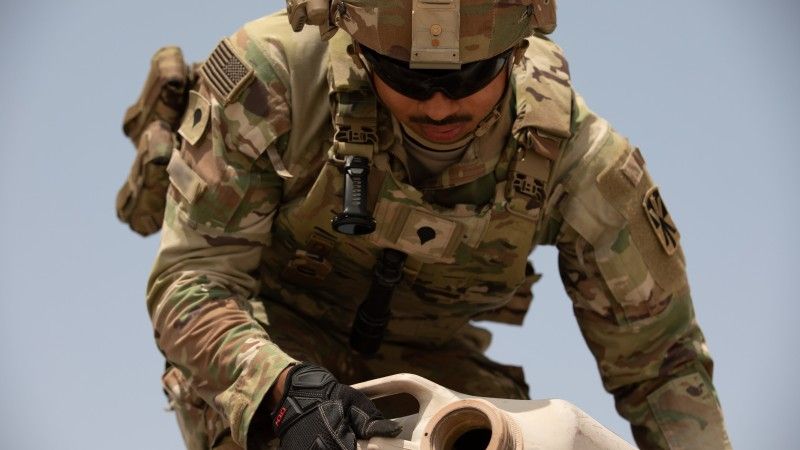
Seeking an answer to the question of who is winning the war between Israel, the United States, and Iran is understandable, but decidedly premature. Not only because the conflict is still ongoing, but above all because war is inherently a political phenomenon. It is a non-zero-sum game whose consequences often become apparent only over a longer period, measured not in months, but in years or even decades.
A good example is the 2003 Iraq War. If one were to assess its course after just the first month, many experts and commentators would likely have concluded that the United States had achieved a clear victory. It was symbolically declared in May by President George W. Bush aboard the USSAbraham Lincoln aircraft carrier. However, later developments, including the emergence of the Islamic State a decade later and the current situation, laid the groundwork for a more comprehensive assessment.
Similarly misleading would be conclusions drawn from the first weeks of World War I, when German forces quickly advanced into Belgium and northern France. The outcomes, however, turned out to be entirely different, and their long-term consequences, especially in terms of shifts in the international standing of great powers (structural/systemic changes), became visible only from the perspective of many years and decades. It is also worth remembering that both victory and defeat come in different shades and degrees; at times, success proves to be Pyrrhic, achieved at excessive cost.

Between Costs and Gains
The same applies to the current war between the United States and Israel on one side and Iran on the other. This is especially true because audiences operate in an environment of intense disinformation coming from all parties to the conflict, which significantly hinders the formulation of clear-cut assessments. This is compounded by deliberate restrictions on access to information, sensational, yet often unreliable or even faked media reports, as well as biases and sympathies that shape interpretations of events. As a result, we’re left with an incomplete and fragmented picture in an extremely dynamic situation, one that all sides are actively using as a „cognitive battlefield” to shape opinions and influence emotions.
For example, it remains unclear what the internal situation in Iran currently looks like, both politically and militarily. Most analyses are based on limited data, often without access to key information. Uncertainty even extends to the question of leadership. Mojtaba Khamenei, reportedly selected as the new Supreme Leader of the Islamic Republic of Iran, has not appeared in public, raising questions about his actual role and condition. There are also claims that real power may lie in the hands of the Islamic Revolutionary Guard Corps.
Some analysts, such as Ali Vaez of the International Crisis Group, suggest that as a result of Israeli actions targeting the state leadership, influence may have shifted to a more radical „hawkish” faction associated with the Sepah, advocating a harder, more confrontational policy. Even if this diagnosis is accurate, the real extent of their power remains an open question, as does the degree to which they must take into account other factions within Iran’s military and political structures.
Assessing who will ultimately win this war requires answers to several questions that cannot yet be answered reliably. Will the Islamic Republic collapse, and if so, when? The current conflict may have triggered chain reactions that could lead to its erosion and eventual disintegration within five or ten years. Perhaps, but perhaps not. Only then will a sound evaluation of the war’s consequences be possible, including identifying its true winners and losers. History shows that such processes unfold over extended periods of time. One need only recall the example of the Soviet Union, whose collapse was to some extent a consequence of the draining war in Afghanistan (one of many contributing factors), or Iran under the Shah, where the loss of power in 1979 marked the culmination of a crisis that had been building for years.

There is no shortage of opinions that the current war goes beyond a local or even regional dimension, fitting into a broader global systemic rivalry linked to hegemonic cycles. In this interpretation, the United States seeks to weaken the anti-Western bloc by „pulling” Iran out of its structure, thereby striking at a key core formed by China and Russia. If this geostrategic perspective truly plays a significant role in Washington’s calculations, then caution in assessing the course and outcomes of the conflict is even more justified. After all, the consequences may only become apparent over many years and on a scale far broader than the Middle East alone.
Although a deeper geostrategic analysis at the global level goes beyond the scope of this article, it is worth referencing the Chinese perspective, which captures the complexity of the current situation. As Zong-yuan Zoe Liu notes in „Foreign Affairs”, Beijing does not view this war solely in terms of American victory or defeat. In other words, success or failure does not translate straightforwardly into China’s assessment. „The danger for China lies not in immediate scarcity but in disorder. A United States that is simply weaker is manageable; one that is unpredictable, violent, and unconstrained by the system it once championed is far more perilous. A fading United States may create opportunity; a volatile America destroys the very conditions that allow those opportunities to materialize. What Beijing fears is not that Washington will lose power but that it will wield its remaining power in ways that make the world harder to navigate. Confronted with an increasingly reckless Washington, the Chinese leadership will act with caution, protect its vulnerabilities, and resist taking up global responsibilities that it is ill-equipped to shoulder.”
And if the Islamic Republic does not collapse, would that constitute a success or a failure from the perspective of the United States? Even in this scenario, drawing clear conclusions remains largely speculative. One possible outcome is that Iran, under the impact of wartime destruction and international isolation, could transform into a state resembling Saddam Hussein’s Iraq after the 1991 Gulf War: closed, sanctioned, politically isolated, and at the same time tightening control over its own society. The Islamic Republic would thus be preserved, which might be seen as a failure for the White House, but it would be isolated and less significant for the China–Russia bloc (which also includes North Korea). In such a case, the United States could more energetically turn to addressing other challenges, including those it has partly created through its own actions.
This, however, is not the only possible trajectory. Dr. Arman Mahmoudian of the Global and National Security Institute (University of South Florida) points out that the survival of the Islamic Republic, combined with isolation, could paradoxically force certain internal reforms, leading to a qualitative shift and potentially reducing regional tensions.
An equally plausible scenario, however, is the opposite: the strengthening of radical factions seeking a more confrontational regional policy, using the structures of the so-called „Axis of Resistance.” In such a configuration, Iran could increase its indirect activity in the Middle East, although it remains unclear to what extent its weakened economy and limited resources would allow continued financing of affiliated organizations.
The plausibility of these scenarios depends on many variables that cannot yet be precisely assessed. A key factor will be Israel’s future policy, including the possible continuation of military actions such as strikes on Iranian territory or the elimination of its leaders. Assessing this would require knowledge of Prime Minister Benjamin Netanyahu’s political future and whether the opposition might take power in the coming years. Equally important is the political dynamic in the United States: the level of support for Donald Trump after the war, as well as the results of the 2026 congressional elections and their impact on the direction of U.S. foreign policy, not only toward the Middle East.
If, however, the Islamic Republic survives this conflict, it will have achieved its primary objective: preserving the system. For Iran’s leadership, this is an absolute priority, to which all other interests are secondary. It is worth recalling that in the 1980s, Ayatollah Ruhollah Khomeini emphasized the primacy of the state’s interest even over the most fundamental religious principles, allowing for their suspension in the name of survival. In this sense, the regime’s mere survival could be considered a success for Iran’s authorities and simultaneously a failure for the United States, although in practice such an assessment would be a significant oversimplification.

Stress Test
This success, however, may prove so costly that it takes on a Pyrrhic character. Iran has suffered serious infrastructural and military losses, forfeiting a significant portion of the capabilities it had built over decades, while the airstrikes are still ongoing. Even in the most optimistic scenario, it will emerge from the war weakened: with a depleted missile arsenal, reduced naval and air force capabilities, weakened air defense systems, and diminished command-and-control and reconnaissance capacity. On top of this will come extensive damage to infrastructure, both military and civilian. Rebuilding the system will take years and require financial resources that Iran lacked even before the war. Even if someone were willing to supply Iran with weapons through barter arrangements, and there are not many willing partners, Tehran may be forced to make substantial and painful concessions, for example, in granting extraction rights for energy resources, not only oil but also gas.
On the other hand, it cannot be overlooked that Israel, despite intensive military operations, has not succeeded in eliminating its adversaries. Despite thousands of airstrikes, organizations such as Hamas, Hezbollah, Shiite militias in Iraq, and the Houthis in Yemen continue to operate and retain significant combat potential. This means that even a severe weakening of Iran does not necessarily translate into a lasting shift in the regional balance of power, and the conflict, albeit in a different form, may continue.
A key issue remains the need to restore the effectiveness of the doctrine of deterrence (deterrence by punishment), which was first put to the test by Israel’s armed forces and then, in 2026, also by the United States. As vividly put by IRGC Aerospace Force commander General Amir Ali Hajizadeh, who was killed in an Israeli airstrike in 2025, „deterrence is like riding a bicycle. When you stop pedaling, you stop moving and fall behind.” At some point, Iran lost its ability to deter its adversaries. The outbreak of the 2026 war is evidence of that „pause in pedaling.” At the same time, however, the course of the campaign and Iran’s chosen strategy may lead to different outcomes in the future. If the damage inflicted on its opponents proves sufficiently severe to discourage further military action, it may be concluded that deterrence has regained its effectiveness. This is a matter of fundamental importance for Iran’s security. Yet this issue, too, remains unclear, making it impossible for now to determine winners and losers or to assess the balance of costs and gains.
If, after the war, „maximum pressure” persists, including in military form, and Israel continues to harass Iran with attacks, the Islamic Republic may consider the need to develop nuclear weapons. Iranian leaders may ultimately conclude that conventional armed forces, including missile capabilities, are no longer a sufficient deterrent, and that only nuclear weapons can ensure security from their adversaries. It is difficult to ignore the fact that although Iran insists its nuclear program is entirely peaceful, it has clearly accelerated uranium enrichment, which is essential for producing weapons-grade material. Equally concerning are pre-war warnings from Iranian decision-makers, who did not rule out such a scenario if Iran were attacked. Such a development would have serious long-term consequences for the entire subregion, as it seems highly likely that other states, such as Saudi Arabia, Turkey, or the United Arab Emirates, and possibly later Egypt and Algeria, would also seek to acquire such capabilities. The realization of this scenario would dramatically affect any long-term assessment of the war’s consequences, including analyses of costs and benefits for the parties involved.
For now, however, this scenario remains only a general hypothesis, as the situation is dynamic and many facts are still unknown. The ongoing wave of airstrikes means that we do not know how much of Iran’s technological capacity has survived, what condition its nuclear facilities and supporting infrastructure are in, or how many and which scientists have been lost. Another crucial question that cannot yet be reliably answered is which faction within the leadership (including within the Islamic Revolutionary Guard Corps) currently dominates and will dominate in the near future: proponents of nuclear weapons development or advocates of a more restrained approach. Importantly, we do not even know the fate or location of the enriched uranium itself. As reported this week by the Bulletin of the Atomic Scientists”, satellite imagery suggests that Iran may have moved up to 540 kilograms of highly enriched uranium to Isfahan before the outbreak of the war in June of last year. At the time, U.S. Secretary of Defense Pete Hegseth argued that, according to American assessments, no such transfer had taken place. After the war in June 2026, the International Atomic Energy Agency admitted that it did not know where Iran’s enriched uranium was.

More Than Survival
As for the Islamic Republic, surviving here and now does not mean a clear or stable future at all. Control over the Strait of Hormuz undoubtedly remains a significant strategic asset and can be perceived as a serious blow to the position of the United States; however, this fact alone is not enough either to rebuild the economy or to re-establish relations with the Persian Gulf monarchies. Even before the outbreak of the war, these states often turned a blind eye to not entirely legal activities of Iranian economic entities, including in the energy sector. Today, it is difficult to assume that such tolerance will persist under new geopolitical conditions. Signals, among others from the United Arab Emirates, about the closure of Iranian business entities are already reaching the media.
The late Shiite theologian, philosopher, and politician Ayatollah Mohammad-Taqi Mesbah-Yazdi once stated that „the revolution did not occur to improve the quality of life, but to renew Muslim values.” A similar sentiment was expressed by Ruhollah Khomeini, who argued that „we did not launch the revolution to have cheaper melons.” Even if such an approach dominated in the early years of the Islamic Republic, which is itself debatable, social expectations have clearly evolved in contemporary Iran. Increasingly, Iranians compare their living conditions with those in other countries of the region, noticing a growing contrast between underinvested Tehran and rapidly modernizing metropolises such as Dubai, Abu Dhabi, Istanbul, Ankara or even Baku.

Moreover, the process of social globalization has a very tangible dimension in Iran: tens of thousands of citizens travel abroad every year, and many have family members living in Western countries. As a result, their aspirations extend far beyond mere survival and include improvements in quality of life, economic stability, and greater predictability of the political system. Importantly, rising dissatisfaction is increasingly affecting groups traditionally seen as the regime’s base: workers, lower-income strata, and conservative circles.
It should also be remembered that even before the war, Iran was grappling with serious structural problems that have only deepened over time. Social discontent, visible, for example, in protests at the turn of 2025 and 2026, and an economic crisis driven by inflation and sanctions, significantly narrowed the room for maneuver available to decision-makers. In the post-war reality, rebuilding the state, even partially, will be an exceptionally difficult task.
Moreover, the current wave of protests is not an isolated phenomenon, but rather another link in a longer chain of social tensions and eruptions of discontent. Another symptom of the deepening crisis of the regime’s legitimacy is the systematically declining voter turnout, which undermines one of the key pillars of the system’s propaganda. As a result, the contemporary challenges are becoming a kind of endurance test for Iran, one that may determine not only its future role in the region but also the state’s ability to survive in its current political form.