- WIADOMOŚCI
- KOMENTARZ
- WAŻNE
Zelenskyy in Türkiye: Ukraine wants Turkish weapons tested against Russia

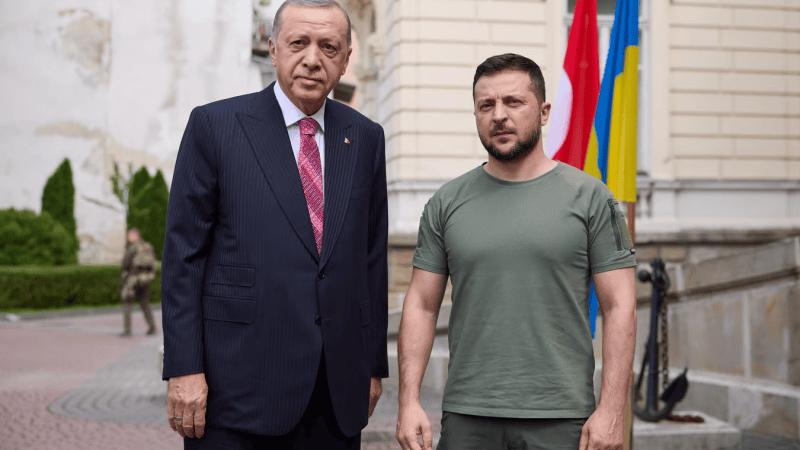
Photo. X/ Twitter
Ukrainian President Volodymyr Zelenskyy has arrived in Istanbul for talks with Turkish President Recep Tayyip Erdoğan, seeking both renewed diplomatic efforts to end Russia’s war and a major expansion of defence-industrial cooperation. Kyiv wants Türkiye to become a central partner in negotiations, but it also sees enormous opportunities in the Turkish arms industry. Crucially, Ukraine could offer Turkish manufacturers something few countries can provide: the opportunity to test and develop their weapons in real combat against Russian forces, alongside European and American military systems.
Zelenskyy arrived in Istanbul on 31 October at Erdoğan’s invitation. The discussions focus on Russia’s war against Ukraine, Black Sea security and deeper bilateral cooperation. His diplomatic agenda also includes contacts with Türkiye’s intelligence chief İbrahim Kalın, Foreign Minister Hakan Fidan and President of Defence Industries Haluk Görgün. Turkish Defence Minister Yaşar Güler welcomed Zelenskyy on arrival, while Kalın participated in the presidential talks. The involvement of Türkiye’s political, intelligence, military and defence-industrial leadership demonstrates the breadth of the relationship Kyiv wants to develop.
For Zelenskyy, one of the main objectives is to bring Türkiye back into a central role in negotiations over ending the war. Ankara played an important part during the first months of Russia’s full-scale invasion, hosting Russian-Ukrainian talks and helping negotiate the 2022 Black Sea Grain Initiative with the United Nations. Türkiye subsequently hosted further negotiations in 2025 and has maintained working relations with both Moscow and Kyiv. Ukraine now hopes Erdoğan can again use his political contacts to facilitate negotiations, including discussions involving the United States. Zelenskyy has already indicated that important diplomatic initiatives could move forward in November, making Turkish involvement particularly significant.
Ukraine wants access to Türkiye's enormous defence industry
However, the visit is about much more than diplomatic mediation. Ukraine wants closer cooperation with the Turkish defence industry, including joint production, technology transfers and the development of new military systems. Türkiye has built a substantial industrial base capable of producing combat drones, precision-guided weapons, missiles, electronic warfare systems, armoured vehicles and warships. For Ukraine, this represents an opportunity to secure additional weapons while developing its own defence industry through cooperation with Turkish manufacturers. For Ankara, Ukraine offers access to battlefield experience accumulated during almost five years of full-scale war against Russia.
The most important opportunity concerns testing and improving Turkish weapons under actual battlefield conditions. Ukraine could become a proving ground for the next generation of Turkish military technology. Turkish companies could gain experience using their systems against Russian air defences, electronic warfare equipment, drones and other military capabilities. They could also assess how their weapons perform within a battlefield environment where American and European equipment is already extensively employed. This would allow Turkish manufacturers to compare operational effectiveness, identify technological limitations and improve their systems much faster than through conventional military exercises. Such cooperation could be particularly valuable for unmanned aircraft, loitering munitions, precision-strike weapons, electronic warfare and counter-drone systems.
Türkiye already has considerable experience testing its domestically produced weapons during military operations, particularly in Syria. During Operation Spring Shield in Idlib in 2020, Turkish forces employed Bayraktar TB2 and ANKA-S drones alongside artillery, electronic warfare and other military capabilities. Turkish-made systems were used against Syrian government forces equipped with Russian-manufactured weapons, including Pantsir air defence systems. The operation demonstrated Ankara’s ability to integrate drones, reconnaissance, electronic warfare and precision strikes, although Turkish unmanned aircraft also suffered losses as Syrian and Russian-backed defences adapted.
Ukraine would offer Türkiye a substantially more demanding operational environment than Syria. Russian forces have developed extensive electronic warfare capabilities, layered air defences, sophisticated counter-drone tactics and rapidly evolving battlefield technologies. At the same time, Ukrainian forces operate Western artillery, missiles, air defence systems, drones and other equipment supplied by the United States and European countries. Turkish weapons could therefore be evaluated not only against Russian technology but also alongside Western systems conducting real combat operations. For Türkiye, the potential benefits would extend beyond individual weapons: it could accelerate research, improve combat doctrines and strengthen the international competitiveness of its defence industry. This remains a strategic opportunity rather than an announced new programme to deploy or test specific Turkish weapons in Ukraine.
The relationship already includes major industrial projects. Türkiye’s STM is building two Ada-class corvettes for the Ukrainian Navy. The first, Hetman Ivan Mazepa, was launched in October 2022 and began sea acceptance trials in May 2024. The second, Hetman Ivan Vyhovskyi, was launched in August 2024 and is scheduled for delivery in 2027. The programme includes technology transfer and demonstrates that cooperation extends beyond the Bayraktar drones Ukraine used earlier in the war. In September 2026, Zelenskyy and Erdoğan also discussed a potential new drone agreement, while their April meeting addressed joint defence-industrial projects and the exchange of Ukrainian expertise.
Black Sea attacks make Turkish mediation increasingly urgent
The security of commercial shipping is another central issue. Since late June 2026, at least 25 Turkish-owned vessels, including four sailing under the Turkish flag, have reportedly been struck in the Black Sea. This has directly affected Turkish commercial interests and increased Ankara’s concerns about the expanding threat to civilian shipping. Türkiye has already proposed a new arrangement to Russia and Ukraine aimed at suspending attacks on commercial vessels. A draft memorandum presented on 17 September drew on the mechanisms of the 2022 grain agreement, which Türkiye helped establish.
On 28 October, just three days before Zelenskyy’s visit, Turkish Defence Minister Yaşar Güler issued another warning to Moscow and Kyiv. Ankara reserved the right to take legal action over attacks against Turkish-flagged or Turkish-owned ships, while calling for an immediate end to strikes on civilian shipping. The importance of the issue extends well beyond Turkish interests. Since September 2023, Ukraine’s maritime corridor has transported approximately 209.3 million tonnes of cargo, including 124.1 million tonnes of grain, using more than 8,200 vessels. Any serious disruption to these routes would affect Ukrainian exports, international food markets and the commercial interests of several Black Sea countries.
Economic cooperation also provides additional opportunities. Bilateral trade between Ukraine and Türkiye reached approximately $7.9 billion in 2025, while both governments are aiming for $10 billion. A free trade agreement entered into force on 1 October 2026, with further tariff reductions scheduled to apply from January 2027. This creates another framework for industrial cooperation, including investment, production and the development of supply chains.
For Ukraine, the objective is therefore to build a much broader strategic partnership with Türkiye. Ankara could help facilitate negotiations, strengthen Black Sea security and expand the production of weapons needed by Ukrainian forces. In return, Ukraine offers its technological expertise, combat experience and the possibility of assessing Turkish military systems in one of the most demanding operational environments in the world.
Türkiye has already demonstrated the effectiveness of its military technology in Syria. Ukraine could provide the next stage: a battlefield where Turkish weapons can be tested against Russian forces while operating alongside American and European systems. For Ankara’s defence industry, such experience could be enormously valuable. For Kyiv, deeper cooperation could mean more weapons, additional production capacity and access to technologies that could strengthen its ability to resist Russian aggression.