












- ANALIZA
- WIADOMOŚCI
Anti-aircraft fog of war around Moscow [REPORT]

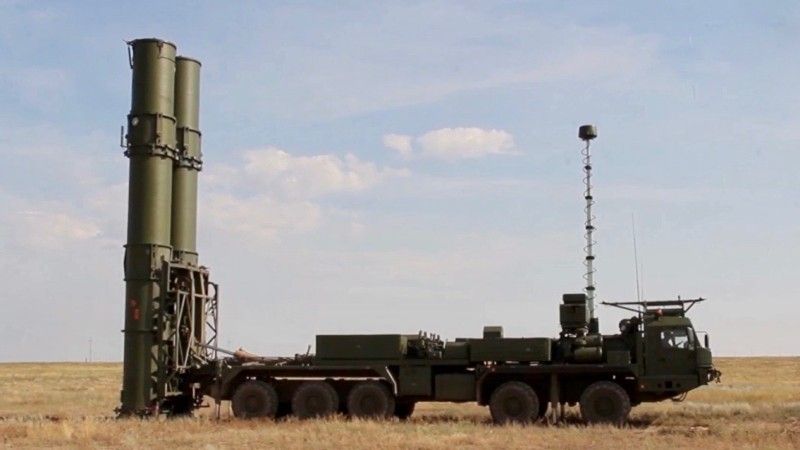
Moscow’s air defence was a priority for the Soviet military practically from the moment the state capital was moved there. As early as the 1920s and 1930s, construction of an entire system began.
Citizens of the USSR attached great importance to the defence of their capital during the Second World War and in the subsequent post-war years. One of its elements was air defence, later supplemented by missile defence. After the collapse of the USSR and the emergence of Russia, nothing changed. The state capital remains the most important place.
For practically entire decades, Moscow’s air and missile defence system underwent constant changes. Newer and newer weapon systems were introduced, which entailed a range of organizational changes and new infrastructure investments. But that is a topic for a separate book — or even several.
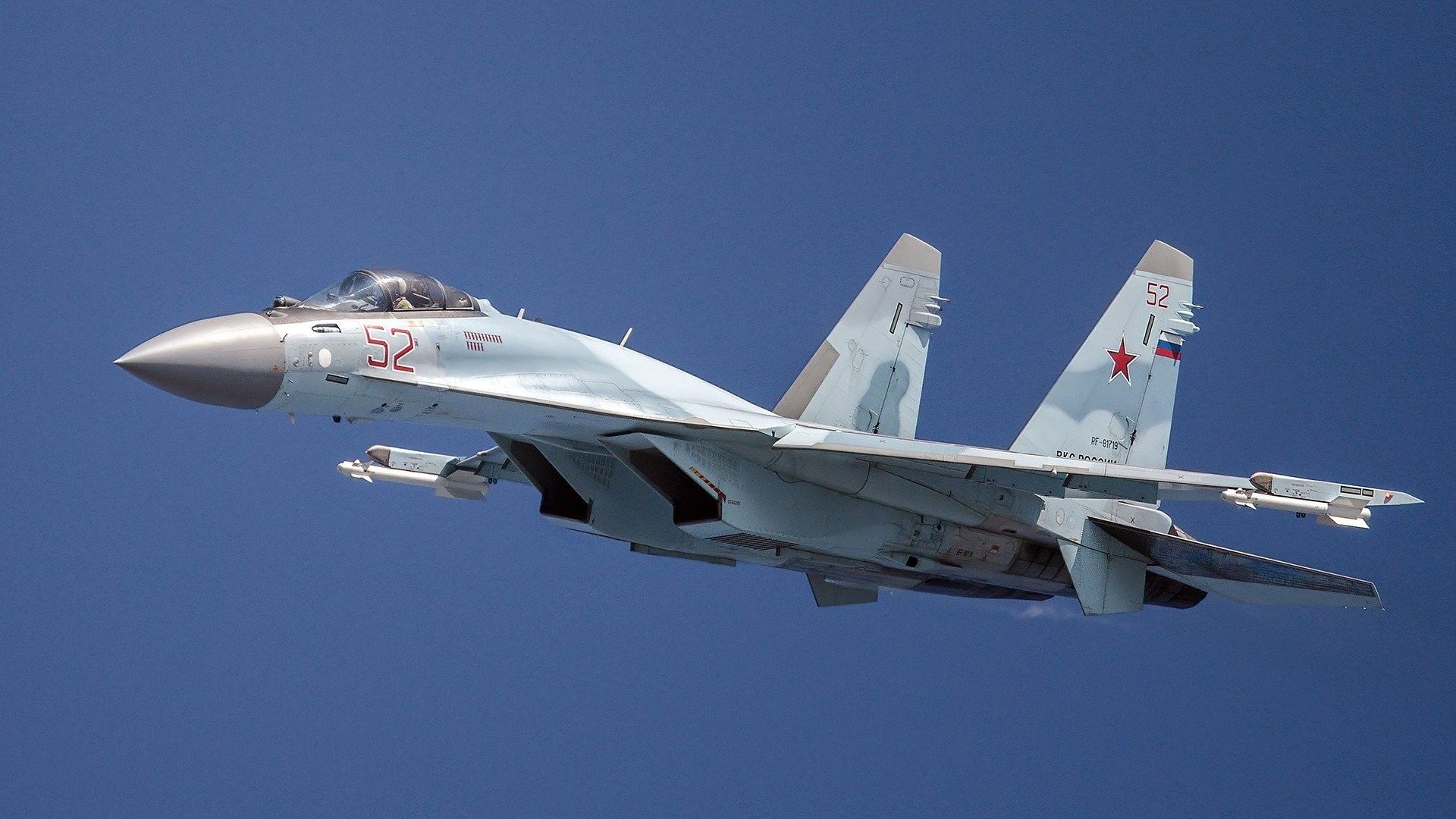
At the beginning of 2022, before Russia’s invasion of Ukraine, and currently, responsibility for defending Moscow from the air rests with the 1st Special-Purpose Air and Missile Defence Army. In 2022, it consisted of three divisions. These were:
- the 4th Air Defence Division, with its headquarters in Dolgoprudny near Moscow;
- the 5th Air Defence Division, with its headquarters in Petrovskoye near Moscow;
- the 9th Missile Defence Division, with its headquarters in Sofrino-1 near Moscow.
From a strategic point of view, the 9th Division is the most important. Its armament included 68 launchers for A-135 anti-missile interceptors with nuclear warheads. This system is in the process of being replaced by the A-235 system, which is currently undergoing testing. The division is intended to defend Moscow against enemy strategic ballistic missiles — primarily those of the United States.
The air defence of interest to us was provided by the aforementioned 4th and 5th Divisions. Each of them consists of four surface-to-air missile regiments and one radio-technical regiment:
- the 4th Division has the 93rd, 210th, 584th and 612th Surface-to-Air Missile Regiments, as well as the 25th Radio-Technical Regiment;
- the 5th Division has the 549th, 606th, 614th and 629th Surface-to-Air Missile Regiments, as well as the 9th Radio-Technical Regiment.
In the past, these regiments were the first in the USSR to receive the S-300 Favorit surface-to-air missile system, and in Russia they were the first to receive the S-400 Triumph system, which is a development of the S-300.

Photo. mil.ru
Even before 2022, the Russians began strengthening their air defence forces with a new type of unit. These are surface-to-air missile regiments of the mobile reserve. The addition „mobile reserve” comes from the establishment table designation for this type of regiment and does not appear in its official name. Such a regiment is fully armed with self-propelled Pantsir-S air defence systems. Previously, Pantsir-S systems were incorporated into regiments being re-equipped with S-400 systems.
These new Pantsir-S-only regiments began to be formed at the level of individual Aerospace Forces armies and were not incorporated into the divisions of those armies. Several of them were created, and they constitute an army-level reserve. In the 1st Special-Purpose Air and Missile Defence Army that interests us here, a unit of this type was also formed; it received the name 799th Surface-to-Air Missile Regiment, Mobile Reserve.
The dramatically unfavourable course of Russia’s 2022 aggression caused its own territory to become a target of attacks by the Ukrainian army. Ukrainian unmanned aerial vehicles began appearing near Moscow, causing consternation in the Kremlin.
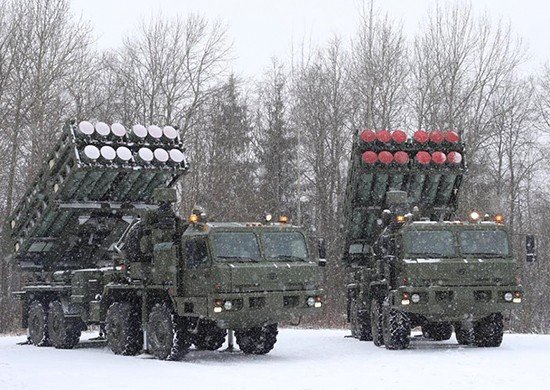
Photo. S-350 SAM systems.
In connection with this, the Russian Armed Forces began another reform of their structure, an increase in personnel numbers and, where possible, the procurement of larger quantities of military equipment. Air defence systems became one of the obvious priorities. Work on further types of missile systems was intensified. Design and implementation work stretching over many years on systems such as the S-350 Vityaz and S-500 Prometey resulted in the first systems entering service with the army.

At this point, it must be clearly stated that Moscow’s air defence has been enveloped in a dense fog of war. Information about it is very heavily censored. During wartime this is obvious, but in this case it is protected particularly strongly. This results from the city’s unique importance in the Russian system of power and propaganda. It is not known whether the 1st Army detached any of its units or subunits for the war with Ukraine. Probably not, and if so, only to a small extent. The main burden of air defence in the war has fallen on Ground Forces units and units detached from the remaining Aerospace Forces armies. Moscow’s defence, however, began to be strengthened.
Already in 2023, the 799th Surface-to-Air Missile Regiment, Mobile Reserve, was reorganized into the 99th Air Defence Brigade, Mobile Reserve, and the 64th Special-Purpose Missile Defence Missile Brigade was formed. The headquarters of the 99th Brigade, like the earlier 799th Regiment, is stationed in Chastsy near Moscow, while the headquarters of the 64th Brigade is in Kaluga.
For now, it is not known what the 64th Brigade is armed with, but the 99th Brigade is armed with Pantsir-S systems. Numerous videos and photographs show them being deployed at many positions around Moscow and within the city itself. Some of them are even placed on the roofs of high-rise buildings in order to improve the ability to detect and engage targets against which it is not worthwhile to use expensive S-400 missiles.

Photo. Russian Ministry of Defence/Wikipedia/CC4.0
In 2025, meanwhile, the headquarters of a new Air and Missile Defence Division was formed in Pavshino near Krasnogorsk. In the same locality, a new Surface-to-Air Missile Regiment forming part of it was established. This division and its first regiment, whose numerical designations are not yet known, are being equipped with the new S-500 Prometey air defence systems.
The fog of war does not yet allow an assessment of how strong the reinforcement of Moscow’s defence really is. For that, one would need to know at least the numbers of new air defence systems and new early-warning radar stations. But the very creation of new organizational structures — namely a new division and two new brigades near Moscow — indicates that Russian priorities in this field have not changed. And in the future, it should be expected that despite major difficulties with supplies and subcontractors, the Russian arms industry will continue producing air defence assets around the clock.


