- WIADOMOŚCI
- ANALIZA
French Rafale sales are accelerating

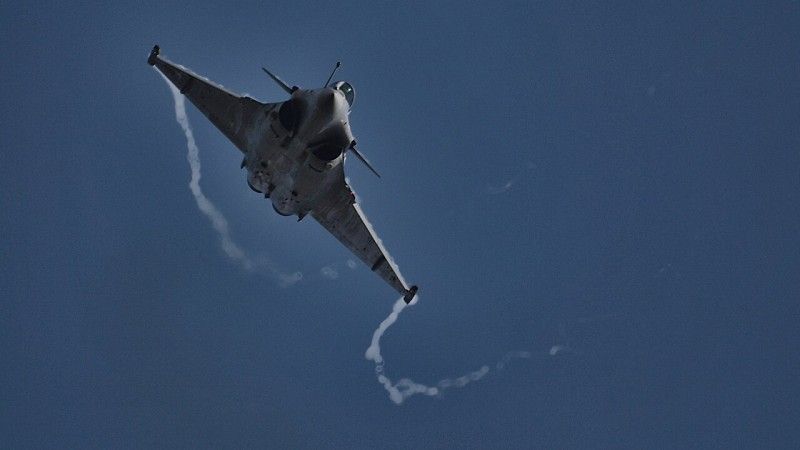
The Rafale is no longer selling only to France’s traditional partners. In recent years, Dassault Aviation has entered markets in the Balkans, the Middle East and Asia, often replacing Russian aircraft and competing directly with American and European fighters. The success is based not only on the aircraft itself, but also on the way France structures its offers: used or new fighters, export financing, local production and, in some cases, greater freedom from US export restrictions.
Croatia was one of the first examples of this approach. Zagreb purchased 12 second-hand Rafale F3-R aircraft taken directly from French stocks. This allowed deliveries to begin much faster than with newly manufactured fighters. Since January 2026, Croatian Rafales have been responsible for national air policing within NATO’s integrated air-defence system. Croatia has also indicated that it wants to modernise the fleet to the F4 standard.
Serbia represents a different model. Belgrade ordered 12 new Rafale F4.1 fighters for €2.7 billion. They will replace Soviet-designed MiG-29s and are expected to receive equipment adapted to Serbian requirements. France also provided export financing. This is important because Serbia was historically dependent on Russian military equipment, but sanctions and problems with spare parts have made that relationship increasingly difficult to maintain.
Indonesia is an even larger success. Jakarta ordered 42 Rafales for $8.1 billion after abandoning an earlier plan to acquire Russian Su-35s. The first aircraft have already reached Indonesia. The case is significant because Washington succeeded in discouraging Jakarta from buying Russian fighters, but the replacement contract went to France rather than the United States. Indonesia is currently the only Rafale operator in Southeast Asia, but Dassault is also competing in the Philippines and remains present in discussions concerning Malaysia’s future fighter requirements.
One of the Rafale’s advantages on the export market is its political flexibility. The aircraft is not dependent on the same US-controlled export architecture as many competing platforms. This gives Paris more freedom to negotiate the aircraft, weapons and future modifications directly with customers. For countries trying to diversify their military relationships, this can be almost as important as the technical characteristics of the fighter itself.
See also 

India demonstrates how far Dassault is prepared to adapt the model. New Delhi already operates 36 Rafales and has ordered 26 Rafale Marine aircraft. It is now negotiating the acquisition of another 114 fighters. The French offer reportedly includes assembly of most of these aircraft in India and a significant share of local components. At the same time, Paris continues to protect the most sensitive technologies, including the source code of the radar, mission computer and SPECTRA self-protection system.
The number of potential customers is therefore becoming as important as the existing order book. Iraq is discussing 14 Rafales, while Egypt has reportedly requested proposals for another 24 aircraft. These are not yet contracts, but they could add further pressure to a production line that is already supplying France, the UAE, Indonesia, Serbia and India.
Dassault is responding by increasing production. The company and around 500 French suppliers are working towards a rate of four Rafales per month by 2029, with five per month discussed for around 2030. France has even agreed to postpone the delivery of 20 aircraft for its own forces from 2031–2032 to 2033–2034.

At the same time, Dassault is accelerating work on the Rafale F5. Éric Trappier expects the new standard to enter French service around 2033–2035, with an export version available from 2035. There is currently no foreign partner involved in the co-development of the F5. Future industrial cooperation is possible, but for now the programme remains French-led.
The important point is that France is not selling the same Rafale package everywhere. Croatia received second-hand aircraft, Serbia new fighters with specific equipment, Indonesia a large fleet produced in France, and India is demanding local assembly and much greater industrial participation. Dassault is selling one aircraft through several different political and industrial models. This flexibility is becoming one of the main reasons why the Rafale continues to win new markets.