












- WIADOMOŚCI
- ANALIZA
How the EU and NATO produce decisions on defence?

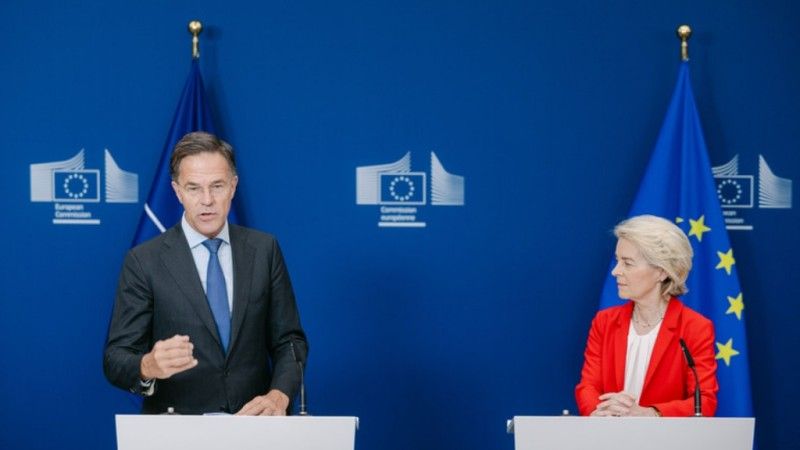
In an ideal world – at its most simplified – the United Nations would be responsible for global political issues, the European Union for economic matters, and NATO for security and defence. Reality, however, is far more complex, and the ideal world does not exist.
The institutional paradox of collective security
Politics, economics, and security remain closely intertwined, mutually reinforcing and conditioning one another. As a result, all of these organizations engage in activities of a military nature, conducting operations and missions aimed at enforcing or maintaining peace - from UN blue helmets to the various EU and NATO military activities that matter globally. Moreover, the scope of their military activity often extends geographically beyond formally defined treaty frameworks, with the exception of the UN, whose mandate should concern all 193 member states, representing the vast majority of recognized countries worldwide.
For this reason, it is worth analysing the mechanisms of political-military decision-making in the organizations closest to Poland - the European Union and NATO - which we joined only after breaking free from the Soviet sphere of influence. These organizations, like the UN, are today struggling with serious internal crises: disputes among member states and Brexit, ambiguous relations between some members and external actors, as well as challenges to their constitutional foundations and threats of withdrawal. All of this takes on particular significance amid growing political entropy, war on the eastern border, geopolitical disputes over Greenland, and questions about cohesion and durability.
Different decision-making architectures in the EU and NATO
In large organizations, decisions are prepared by specialized committees before being approved at the highest level. This also applies to security and defence policy. Among dozens of different committees and working groups in the EU, this role is played by the Political and Security Committee (PSC), while in NATO it is the Defence Policy and Planning Committee (DPPC). Both bodies operate prior to the formal adoption of decisions within the EU’s Common Security and Defence Policy (CSDP) or within NATO, yet they function in different institutional contexts.
In the EU, national positions are transmitted through Permanent Representations operating within a partially supranational ecosystem created by the European External Action Service (EEAS), the European Commission, and the rotating Presidency of the Council of the EU. In NATO, this process also takes place through Permanent Representations, but within a clearly intergovernmental environment, with greater distance between national capitals and the NATO International Staff (IS).
In both organizations, the formulation of positions and decisions arises through national inter-ministerial coordination and is introduced early into circulation through agenda discussions, non-papers, and informal coalitions. In the EU, this process is more routinized and procedurally embedded, whereas in NATO it is more political and strictly defence-oriented.
At the level of the PSC and DPPC, delegates act simultaneously as representatives of national policy and as co-creators of collective policy, although the proportions differ. In the PSC, this role is reinforced by linkages with other EU policies and strategies, such as sanctions, development, or industrial policy. In the DPPC, convergence is narrower and more operational, determined by Alliance defence planning and military requirements. In both bodies, repeated interactions foster the harmonization of language and the identification of „red lines,” although in NATO relations are more hierarchical, while in the EU they are more egalitarian and procedurally negotiated.
Drafting documents remains a key mechanism of assimilation, yet here too differences are visible. In the EU, Council conclusions and strategic documents are usually prepared by the EEAS or teams led by the Presidency, strongly embedded in legal logic and institutional coherence. In NATO, documents prepared by the International Staff or the International Military Staff (IMS) are less burdened by legal requirements and more oriented toward political-military coherence. In both cases, amendments, corrections, reservations, and compromise formulas are used, but in the EU constructive ambiguity plays a more significant managerial role, whereas in NATO greater precision is required - especially where operational or planning military consequences arise.
Mechanisms for escalating disputes also differ. In the EU, contentious issues move from the PSC to the Committee of Permanent Representatives (COREPER), and then to the Foreign Affairs Council (FAC) or the European Council, where compromises are reached. In NATO, escalation occurs from the DPPC to the North Atlantic Council (NAC), and then to foreign or defence ministers, with a much more limited scope for linking issues beyond security. As a result, in NATO national priorities are weighed mainly according to their strategic-military significance, whereas in the EU they are subject to a broader political balance.
The transposition of collective decisions into national systems proceeds similarly, though not identically. In both organizations, decisions return to capitals through cables, briefings, and coordination notes, and their implementation is interpretative. In the EU, this process is more strongly filtered by legal obligations, the requirement of coherence with other EU policies, and the indirect influence of the European Commission. In NATO, it is more political and voluntary, with less legal pressure but stronger allied peer pressure.
The greatest differences emerge at the stage of operationalization. In NATO, defence planning under the NATO Defence Planning Process (NDPP), force goals, exercises, and metrics exert direct and lasting pressure on national policies, making operational adaptation a key disciplining mechanism (such as the now-famous percentages of GDP devoted to defence). In the EU, instruments such as the Capability Development Plan (CDP), Permanent Structured Cooperation (PESCO), or force generation processes tend to lead to gradual convergence rather than binding adjustment.
In summary, both the CSDP and NATO are based on co-creation of policy rather than delegation of competences, on the conscious use of ambiguity, and on dependencies arising from language and procedures. The key difference is that NATO operates in a more hierarchical, defence-oriented, and operationally binding manner, whereas the EU functions through a more procedural system, legally and politically embedded, in which assimilation and transposition into national systems are broader and more strongly dependent on domestic context.
Civilian control and military feasibility under conditions of consensus
In NATO, all decisions are taken by consensus. The European Union operates differently, applying a mixed model in which decision-making procedures depend on the political weight of the issue and its impact on member-state sovereignty.
In the field of security and defence - covering the CSDP, PESCO, and the commitments under Article 42(7) of the Treaty on European Union (an equivalent of NATO’s Article 5, though stronger because it obliges assistance) - unanimity is the rule. States cannot be outvoted, and a decision is adopted only if no formal objection is raised. The system is complemented by constructive abstention/opt-out mechanisms, allowing a state not to participate in a given initiative without blocking it.
In most EU internal policies (the internal market, environment, transport, energy, trade), qualified majority voting is the standard. For a decision to be adopted, it must obtain the support of 55% of member states (at least 15 of 27) representing at least 65% of the EU population. Consensus may be politically desirable but is not legally required. Decisions can be taken despite opposition from some states.
Between these models lie particularly sensitive areas, such as taxation or selected elements of budgetary policy, where unanimity formally applies, though the treaties allow for a gradual transition to majority voting.
In the EU, consensus in defence matters is „almost obligatory.” Not everyone must actively participate. In this way, the Union combines the protection of state sovereignty with a practical ability to act among those willing and able to cooperate.
Notably - especially in the current period of political turbulence - it was Denmark that for nearly three decades made use of an opt-out clause in defence matters. This was abolished on 1 July 2022 following a referendum, ending a period in which Copenhagen relied almost exclusively on NATO for its security, viewing the EU primarily as a political-economic project. Although Denmark continues to maintain other opt-outs, including from the euro area and from justice and home affairs, the military opt-out ceased to apply. This opened the way for its full participation in the EU’s Common Security and Defence Policy, and the decision was widely seen as an important political signal, especially in the context of European security after Russia’s invasion of Ukraine.
In consensual decision-making models within the PSC and DPPC, a member state’s softening of its position in order to reach agreement may affect the effectiveness of collective defence and, indirectly, the national defence model. However, this impact is primarily procedural rather than material or doctrinal.
In practice, such „loosening” rarely entails a formal change in domestic policy. Most often, it takes the form of more flexible instructions for permanent representations, procedural softening of „red lines,” acceptance of ambiguous or conditional wording, and signalling consent through the absence of objection. These actions reduce the costs of consensus and are discursive and procedural in nature, rather than directly binding.
Over time, however, these practices may accumulate in the collective policy-making process. When many states simultaneously lower their procedural barriers, documents begin to reflect the „lowest common denominator,” encoding assumptions that overestimate real political availability or under-specify conditions for the use of means. Because subsequent decision cycles rely on previously agreed texts, initial concessions reinforce path dependence. The result is not a direct weakening of capabilities, but the risk of planning based on procedural optimism rather than clear national commitments - something particularly visible in force generation for joint operations.
This mechanism may also operate at the national level. Repeated acceptance of compromise language in the PSC or DPPC means that collective language becomes a reference point in domestic coordination. Consensus-based documents may be used to justify national compromises, gradually influencing planning, scenarios, readiness levels, or budgetary frameworks even without formal changes to law or doctrine. In this way, external procedural accommodation may indirectly shift national reference points.
This effect is neither automatic nor unlimited. In the EU, differentiation mechanisms—such as constructive abstention, differentiated participation, or legal effects—allow consensus to be separated from national policy. In NATO, operational planning, force generation, and exercises more quickly expose excessive loosening, serving a corrective function. Key national veto points also remain, such as parliamentary oversight, constitutional constraints, and budgetary decisions, which lie beyond the reach of PSC and DPPC processes.
As a result, procedural softening of positions in the PSC or DPPC may, over successive cycles, weaken the signalling of constraints and generate dependent assumptions that can to some extent reduce the resilience of collective defence planning. These assumptions may then get through national defence models, for example through planning, even without formal policy change. This is a risk of gradual drift rather than inevitable degradation of defence policy, constrained by national control mechanisms and feedback loops.
Relations between political-military structures in the EU and NATO
In the European Union, the relationship between the PSC and the EU Military Committee (EUMC) is based on the principle of political oversight of military decisions, not co-decision. The PSC, as the highest permanent Council body for security and defence, is responsible for strategic direction and political control. The EUMC, composed of the Chiefs of Defence of the member states (represented on a daily basis by their military representatives), serves as the EU’s highest military body but has no decision-making powers.
In practice, the PSC prepares and coordinates political decisions formally adopted by the Council of the EU, while the EUMC translates them into military terms. The EUMC’s role is advisory - risk assessment and military guidance - but it neither approves nor blocks political decisions. On this basis, the EU Military Staff (EUMS) develops concrete operational concepts, plans, and courses of action. A feedback loop operates: the EUMC informs the PSC of military constraints, risks, and planning consequences, which may lead to adjustments of political objectives. Ultimately, the PSC defines the „what” and the „why,” while the EUMC and EUMS specify the „how.” The relationship is hierarchical. The military remains subordinate to political authority while retaining a permanent advisory function.
In NATO, by contrast, the relationship between the DPPC and the NATO Military Committee (MC) is parallel and complementary. The DPPC, the Alliance’s key political body for defence policy, capability planning, and strategic implications, shapes the political-planning framework. It is responsible for political objectives, coherence of national defence policies, deterrence and defence frameworks, and budgetary and industrial implications. It does not issue military orders or conduct operations.
The MC, NATO’s highest military body, is composed of the Chiefs of Defence of member states or their military representatives. It provides collective military advice to the NAC and translates political decisions into guidance for NATO command structures. The MC is not subordinate to the DPPC and does not approve its decisions, just as the DPPC does not interfere in the MC’s military recommendations. The NAC integrates the input of both committees into binding Alliance decisions.
NATO’s decision-making process is based on continuous feedback. DPPC work on capability targets, planning assumptions, and long-term priorities is shaped by MC analyses, while MC recommendations are guided and constrained by DPPC political decisions approved by the NAC. Unlike the EU, where the PSC exercises direct political control over military decisions, NATO relies on collective civilian oversight and parallel political-military cooperation.
As a result, in the EU the relationship is hierarchical - politics oversees the military - while in NATO it is complementary and mutually corrective. Politics and the military operate in parallel, with the NAC integrating both dimensions into Alliance decisions.
Security as a process or as an illusion?
Where does the frequently voiced disappointment with the European Union and NATO come from? Do these organizations fail, or do they consistently implement a model of „security as a process”? Within the PSC and DPPC, does consensus increasingly crowd out real decisions, compromise replace commitments, and mandates give way to procedures?
The PSC and DPPC, like PESCO or the NDPP, function as mechanisms of policy assimilation. They absorb national positions and produce collective „yes, but…” outcomes. They ensure procedural continuity and institutional stability, but at the same time encourage the dilution of decisions, relativization of responsibility, and strategic drift. Ultimately, responsibility disappears into „documents of minimal risk.”
The paradox is that consensus is both a strength and a weakness. It binds the community together but often slows reaction and weakens warning signals. In crisis situations, however, it can act as a catalyst for action. Does security, as a result, cease to be a real competence and become merely an ongoing process?
The European Union and NATO will most likely endure. Procedures will function, documents will circulate, and decision-making filters will operate. The question remains, however, whether this will be enough. Can procedural efficiency replace strategic effectiveness, or will it merely make us ever better analysts of our own helplessness?
Conclusion
These reflections are not intended solely as a critique of the bureaucratic dimension of the EU and NATO. Above all, they illustrate how complex and arduous the process of decision-making is - often on matters of fundamental importance for Europe and the world. Such decisions are the result of the work of thousands of people and hundreds of decision-making bodies. Collective decisions in defence are always a compromise between what is politically acceptable at the national level, strategically necessary, and militarily feasible.
The path to final outcomes - if they are achievable at all - is never simple. The stakes often involve the lives and health not only of soldiers, but also of civilians whom they assist and, in whose defence, they may be sent to fight.
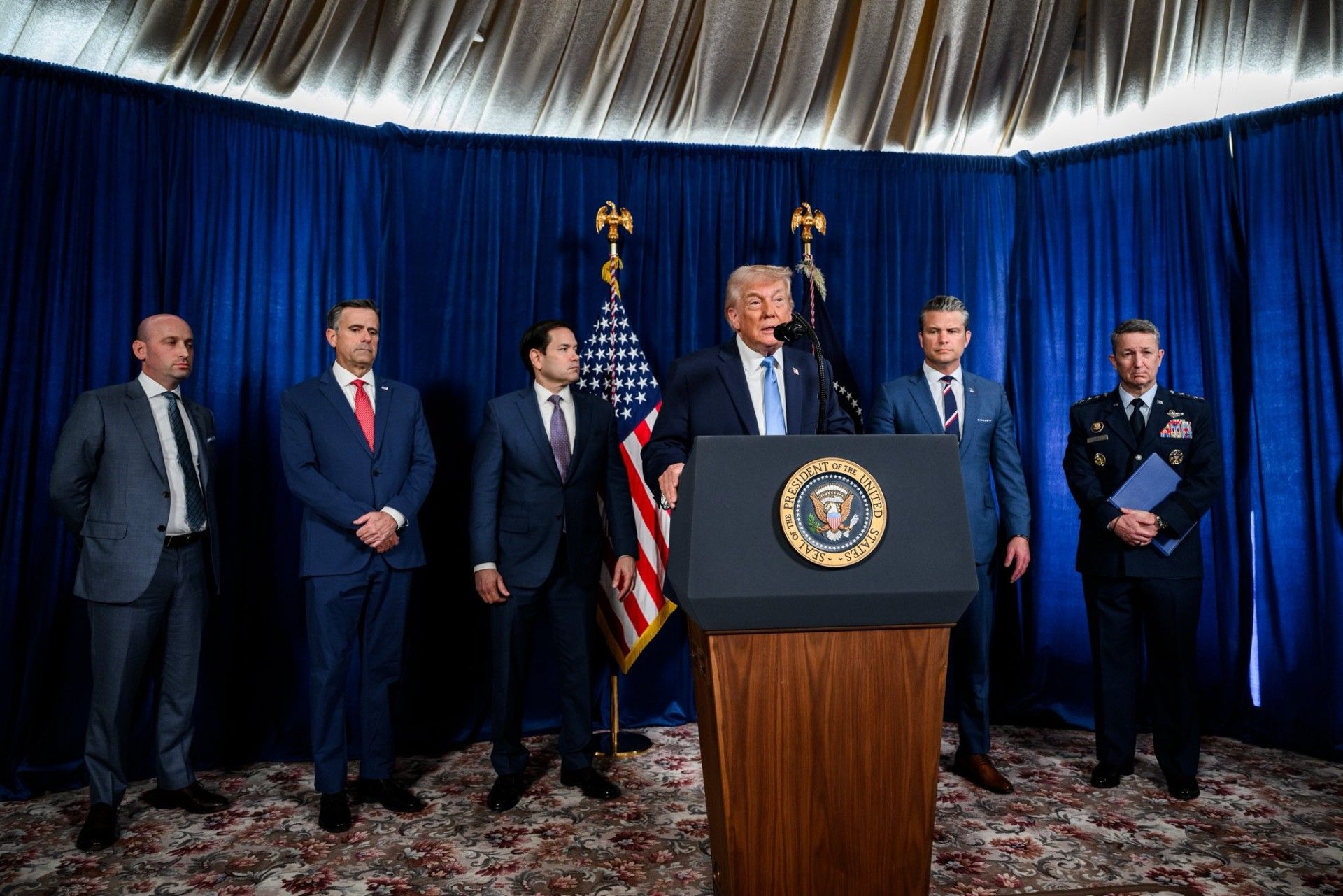
In the case of NATO and the European Union, decisions are not made arbitrarily by the will of a single person or an organizational „sheriff.” Such a position simply does not exist. This may be surprising, but neither NATO nor the EU has a single leader. The decision-maker is the collective of 27 or 32 states, acting within their shared - though not always unanimous - wisdom.
Much remains to be done. Even so, this model is a far better alternative than the imposition of will by the strongest or unilateral decisions determining the fate of the world.
Dr. Andrzej Fałkowski, Lt. Gen. (ret.), former Deputy Chief of the General Staff of the Polish Armed Forces (DchoD) and Polish Military Representative to the Military Committees of NATO and the European Union.


