












- WIADOMOŚCI
New Patriot capabilities. Search launched for low-cost missiles

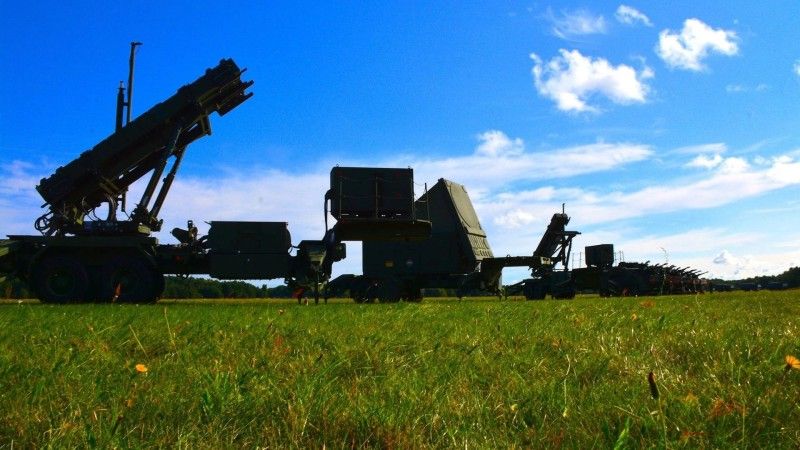
Photo. 3rd “Warszawska” Air Missile Defence Brigade
Lockheed Martin has received a contract to develop a system enabling PAC-3 MSE missiles to be fired without relying on the Patriot radar. Meanwhile, the U.S. Army is looking for a supplier of a new type of low-cost missile that could be launched from Patriot launchers integrated with IBCS.
In a brief announcement, the Pentagon reported the award of a USD 61 million contract covering the development and demonstration of a containerized PAC-3 MSE missile launcher and a containerized Remote Interceptor Guidance 360 data-link system. The agreement is to include, among other things, test firings and hardware-in-the-loop laboratory testing, as well as delivery of three RIG-360 system sets. The schedule is fairly tight, as the contract is to be completed by May of next year.
RIG-360 is a data-link system that allows information to be transmitted from the fire-control system to the missile in MIM-104 Patriot air-defense systems. Initially, this concerns Patriot PAC-3 MSE missiles, and ultimately other missile systems as well.
RIG-360 may strengthen the capabilities of Patriot systems integrated with the IBCS air-defense battle-management system. IBCS enables engagements against targets observed by sensors integrated into IBCS, not only by the radar of a given Patriot battery. However, while targets within the recognized air picture generated by IBCS can be detected by other sensors — for example, Sentinel short-range radars and, in the near future, also F-35 fighters — in the current Patriot configuration, the actual transmission of IBCS-generated data to the missile takes place through the fire-control radar, meaning either the Patriot radar or the new LTAMDS radar.
This will significantly increase the flexibility of the air- and missile-defense system. It will also enhance its survivability, as the use of heavy Patriot radars that emit substantial electromagnetic radiation can be reduced to a greater extent. In the Polish Patriot/IBCS configuration, once RIG-360 is introduced, domestic radars — for example, the Sajna type — will also gain the ability to provide target designation.
RIG-360 was initially developed using Lockheed Martin’s internal funds, but it is now a U.S. Army program. In May 2025, one of the U.S. Army organizations responsible for missiles and integrated fires — PEO Missiles and Space, Integrated Fires and Mission Command — awarded Lockheed Martin a contract worth USD 117 million. The current agreement is another contract under this effort.
PAC-3 MSE missiles are currently the primary missile type in production for MIM-104 Patriot systems, including both phases of Poland’s Wisła system. They are intended mainly to neutralize ballistic missiles through direct impact and kinetic-energy effects on the target — the so-called hit-to-kill method. They can also defeat targets such as combat aircraft, cruise missiles, and other aerial platforms. They are equipped with an active radar seeker, so there is no need for continuous target illumination by the battery’s fire-control radar.
Search for a Low-Cost Interceptor underway
The integration of RIG-360 is not the only recent U.S. activity aimed at expanding Patriot’s capabilities. The U.S. Army has also issued a request for information concerning a Low Cost Interceptor for the Patriot system integrated with IBCS. The new missile is to be compatible with the M903 launcher — used in newer Patriot versions, including Poland’s Wisła system — and with IBCS.
The new missile is intended to engage:
- aerodynamic targets, including jet aircraft;
- cruise missiles;
- short-range and "near-range" ballistic missiles.
In practice, this means a missile that could supplement the heavier and more expensive Patriot interceptors, including in the mission of countering ballistic missiles. It is assumed that a capability demonstration should take place as early as this year.
The Americans are aware that meeting these assumptions will be difficult. Therefore, potential contractors have several ways to respond to the request:
- delivery of a complete missile costing no more than USD 1 million, at a technology readiness level of at least 6 — a functional model or prototype;
- delivery of a propulsion system, namely a solid-fuel rocket motor, costing no more than USD 0.25 million;
- delivery of a guidance seeker costing no more than USD 0.25 million;
- preparation of a fire-control and flight-control solution compatible with IBCS, costing no more than USD 0.25 million;
- integration of the three components listed above, potentially supplied by different contractors, so that the total cost remains below USD 1 million.
For components and their integration, a lower technology readiness level is acceptable. On the other hand, if a supplier of a complete missile is not ready to provide it for testing in the fourth quarter of fiscal year 2026, the supplier is asked to indicate when delivery would be possible.
Considering that the PAC-3 MSE missile — the primary weapon used in Patriot systems to defeat ballistic missiles, including short- and medium-range missiles — currently costs USD 4–5 million, the task is very ambitious both in terms of scope and schedule. At the same time, if a supplier of a complete missile is not ready to provide it for testing in the fourth quarter of fiscal year 2026, it is asked to state when delivery would be possible.
Incidentally, a decade ago Poland was searching for a complementary missile for the Wisła system under a program with the same codename, Low Cost Interceptor. The SkyCeptor system was considered — an „Americanized” version of the Stunner missile used in the David’s Sling system — but ultimately no order was placed, among other reasons because of differences between the Polish and American sides regarding the expected cost as well as the system’s performance parameters. A similar solution is now being sought by the Americans. For now, however, this is only a request for information — part of a market analysis — and, as was the case in Poland, it does not necessarily mean that a full-scale program will be launched.


