












- ANALIZA
- WIADOMOŚCI
PONAR Wadowice thinks a few steps ahead

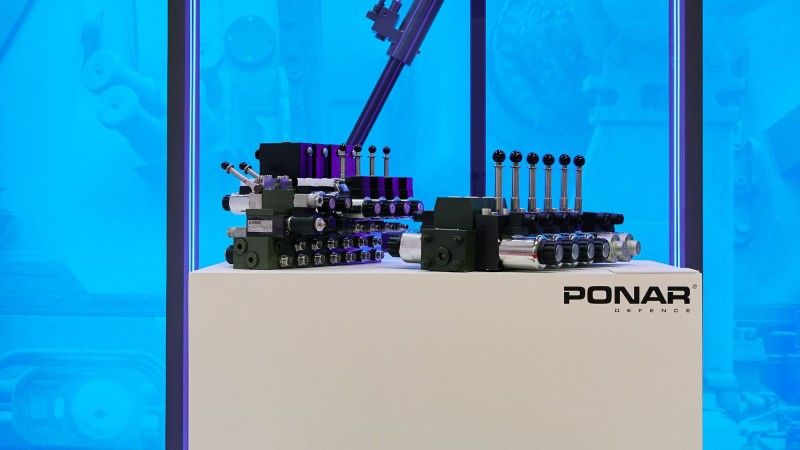
Most military vehicles produced in Poland today contain components made by PONAR Wadowice. To meet demand for years to come, the Lesser Poland company is investing not only in production but also in servicing and maintaining hydraulic power systems.
A sponsored article. PONAR Wadowice is partner of the article
Experience in the defence industry shows that long-term planning simply pays off. The rapid development of PONAR Wadowice in recent years confirms this. The Lesser Poland manufacturer of hydraulic power systems has been a fully fledged player in this segment for almost a decade. Previously the company supplied components to many players in the Polish defence sector, but without much fanfare. At that time, the lion’s share of revenue came from civilian market production. Some questioned the wisdom of the company’s investments in military products, arguing that only large firms had a chance in this demanding sector.
That perception changed in 2017, when PONAR Wadowice delivered complete hydraulic equipment for 79 anti-aircraft missile systems ordered by the Polish Armed Forces. New hydropneumatic wishbones for artillery command and command-and-staff vehicles were then being prepared for serial production.
It was at that point that the company’s management decided to build a special production hall at its Łaziska Górne branch. A visit to that facility is a humbling lesson for any armchair tinkerer such as the author of this text. Every component, from inconspicuous actuators to wishbones, must guarantee trouble-free operation for many years in extremely demanding conditions. The amount of work required to achieve that level of repeatability and reliability is considerable.
Integration, research, assembly
In Łaziska Górne the business model of this key defence subcontractor took shape. Most often a base chassis supplied by the client arrives at the plant. There, PONAR installs hydraulics that it has designed, manufactured, integrated and rigorously tested. The customer collects the finished vehicle on site and gains access to a range of data recorded and meticulously catalogued by PONAR’s in-house testing apparatus. Those parameters can later be used for diagnostics or to compare the in-service product’s properties with those of a brand-new part. For the customer and end user, this is an invaluable opportunity to plan the service life of equipment that will be in use for decades.
With support from the Kraków Technology Park, an ultramodern production hall of almost 1,000 m² is being built in Wadowice. Construction machinery has also arrived at the Łaziska Górne branch. Thanks to a European Union Just Transition Fund grant of over PLN 15.4 million, a low-emission facility will be erected there to manufacture special systems and devices.
As Piotr Rosikowski PhD Eng., Director of Engineering and Development at the Lesser Poland company, explains to me, products bearing the PONAR Wadowice emblem go into most military vehicles produced in Poland. But the supplier’s responsibility does not end with production. „We are aware that these machines will soon be coming back for service and overhaul. That is why we decided to expand our facilities again,” the director says.
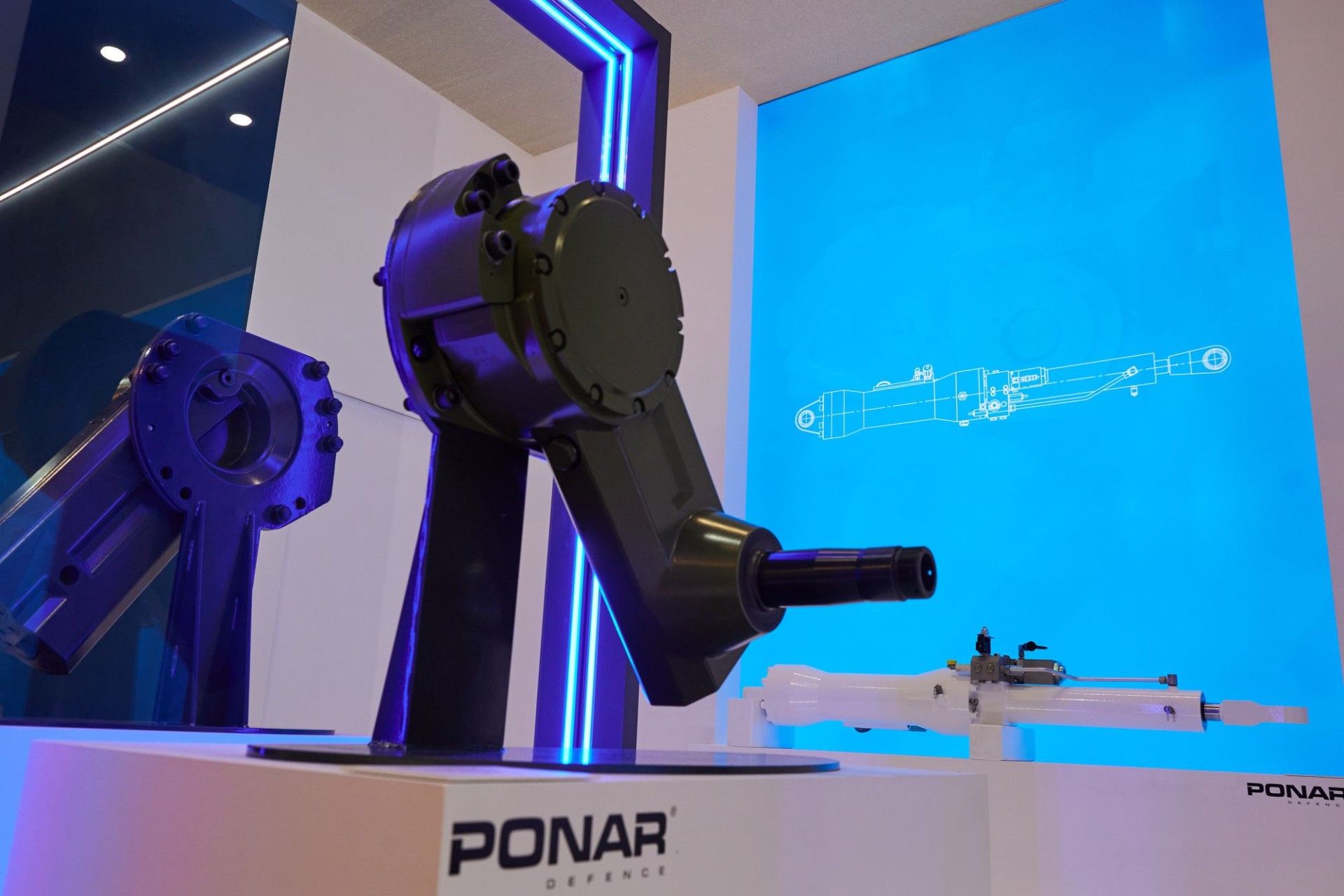
Photo. PONAR Wadowice S.A.
"People here aren't afraid of work"
„We are investing in a broad service infrastructure. We do this so that the equipment we have supplied over recent years can be serviced and overhauled,” Rosikowski PhD Eng. tells me. „In Łaziska Górne we combined the service and production departments because these areas overlap. This restructuring is linked to a new organisational scheme and puts a very strong emphasis on the service side,” he continues. Components produced by PONAR Wadowice are used in combat. Equipment returns to the factory for service and overhauls. Comprehensive servicing requires not only new premises, test stands and equipment, but above all, personnel.
„Silesia is a special place,” Director Rosikowski says. The heartland of Polish hard-coal mining is undergoing a difficult and painstaking economic transformation. PONAR Wadowice gladly hires specialists from that industry. The benefits are mutual. „People who developed skills in mining over many years are sought after by us. These are people with experience in producing and servicing equipment for heavy, mining conditions. We hire them and develop our service-and-production capabilities,” Rosikowski tells me.
He cites the example of the Bolesław Śmiały mine, just a stone’s throw from the Łaziska Górne plant. It is one of the largest such operations in the country. A decade ago it was producing 6,500 tonnes of hard coal a day. The date for the end of exploitation of the deposit has been set for 2028. „We are ready for that. In fact, former miners already work with us and apply their heavy-industry experience,” Rosikowski says. The engineer is eager to point out that PONAR’s recruitment procedures typically generate a very long list of candidates.
Operating in two sectors
Southern Poland, and Silesia in particular, after years of stagnation is becoming a dynamic centre of the defence industry. Companies like PONAR Wadowice are contributing to a just economic transition in the region by wisely managing its most valuable resource — human capital. This is a significant help not only for the extractive industry but also for closing automotive plants, which until recently produced hundreds of thousands of internal-combustion engines a year.
Demand is so substantial that there will be room for every company ready to offer military users a high-quality product. Securing supply chains through domestic companies with Polish capital is an investment in the long-term stability of the defence industry across Europe. It is also a demonstration of care for the taxpayer’s interest, ensuring that money allocated to the defence budget stays in the country rather than flowing overseas.
But PONAR does not live by military production alone. Dr Eng. Rosikowski emphasises that his employer does not intend to abandon the company’s civilian arm — it remains the firm’s main source of revenue. „It’s risky to stand on one leg. Besides defence, we are strongly developing the civilian and dual-use segments. We recognised the opportunity associated with production for the defence sector, which is very demanding. That is why we hire personnel and expand our structures. We want to apply the experience we are gaining today in extreme conditions, from Alaska to the Sahara.”

Photo. PONAR Wadowice
Just transformation of Silesia
Once, for every Silesian miner there were five other workers in the extractive sector. Today the experience of many generations pays off at PONAR Wadowice. „As a company with a 60-year tradition, we come from mining and heavy industry. Today we have shown that transitioning from extractive industry to defence is possible, that a just transition is achievable,” Director Rosikowski says. As a result, building the company’s product catalogue has become a kind of feedback loop. Experience from civilian and military sectors benefits both fields, translating into higher quality for all customers. It’s a bit like a car mechanic learning to service cars of many makes before finding a specialty.
Expanding both PONAR Wadowice factories is a means to a concrete end. The new service centre will handle systems and components of hydraulic power systems, including hydropneumatic wishbones. The Lesser Poland company supplies many parts for heavy tracked equipment, including self-propelled howitzers, command and command-and-staff vehicles, and infantry fighting vehicles that are just entering service with the Polish Armed Forces. At the same time, design offices are quietly working on next-generation solutions.
Engineers are already working on hydropneumatic suspension modules for wheeled vehicles, as well as semi-active modules with adjustable ride height. Key component deliveries for long-range radar stations are underway. But you start building a house by pouring the foundations, not by putting up the roof. Developing both branches and PONAR’s service infrastructure is not only a reaction to rising demand for products from Wadowice and Łaziska Górne; above all, it’s a way to guarantee the company’s long-term development.
Development funded from own resources
„We developed all the products with our own money. Nobody gave us anything,” Rosikowski PhD Eng. says. He stresses that drawing on resources from an unexpected quarter — the shrinking mining sector — proved a bull’s-eye. Suddenly it turned out that the phasing-out sector is a key source of human capital for the state’s defence needs.
That strategy, adopted several years ago, now gives PONAR Wadowice an additional growth impulse and the motivation to expand capacity in its existing areas of activity. „When, more than a decade ago, we said we would invest private capital in the defence sector, many advised against it. It’s years of research, approvals and testing, and after all, there won’t be a war… In February 2022, when everyone woke up to the wartime reality, PONAR already had products ready for the defence sector,” the director concludes.
If I were being spiteful, I’d ask those former sceptics whether they’re embarrassed today. But I’ll spare the barbs. Instead, I’ll go back to rooting for a Polish company with Polish capital, Polish plants and Polish employees that wants to support the country’s defence while contributing to a just economic transition across the voivodeship. The Polish defence industry still has a long road to travel before it achieves full self-sufficiency in the land domain. The activities of firms such as PONAR Wadowice are gradually bringing us closer to that goal.
A sponsored article. PONAR Wadowice is partner of the article

Photo. PONAR Wadowice S.A.


