












- WIADOMOŚCI
- ANALIZA
Wars over resources: A persistent driver of security and conflict
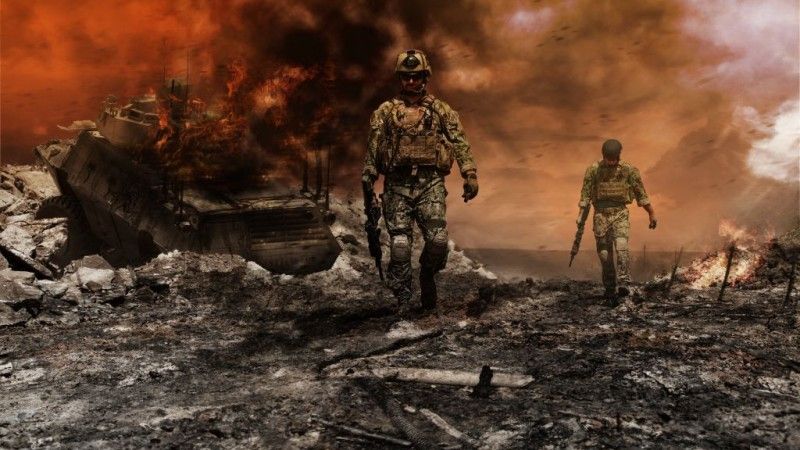
From the perspective of security studies, wars rarely originate in abstract ideas or ideological declarations. More often, they emerge from material constraints: shortages of water, arable land, food or energy. Before the emergence of organised states, standing armies and political doctrines, human communities operated at the limits of environmental capacity. In such conditions, conflict was not a matter of choice but of survival.
In the beginning, there was scarcity
When resources became insufficient, communities faced two strategic options: relocation or confrontation. Migration, however, rarely eliminated risk. It frequently resulted in competition over space and resources elsewhere, triggering further instability. From a security standpoint, early warfare can therefore be understood as a rational response to environmental pressure in a finite system.
The earliest conflicts were thus fundamentally ecological. Land and water were not strategic abstractions but direct determinants of survival. One of the earliest documented examples is the conflict between the Sumerian city-states of Lagash and Umma, fought over irrigated farmland. Recorded on stone stelae, this struggle is often regarded as the first documented war over resources. It illustrates a recurring pattern: where access to critical resources is contested, political organisation and military force follow.
Power over water
Ancient states rapidly learned that control over resources could provide a more durable basis for power than battlefield success alone. In Mesopotamia, strategic advantage derived not primarily from troop numbers but from control of irrigation infrastructure. Water management systems constituted critical infrastructure long before the term existed. Their disruption functioned as an early form of strategic warfare, capable of neutralising an adversary without direct combat.
Egypt offers a similar case. Despite its reputation for stability, the Egyptian state depended on precise management of the Nile’s hydrological cycle. Military expeditions into Nubia served not only to secure raw materials but also to reinforce strategic depth along the river system. Years of weak flooding posed systemic risks to political order. Governance, from a security perspective, was inseparable from managing environmental vulnerability.
A fragile web of dependencies
The Bronze Age introduced a new security dynamic: long-distance resource dependence. Bronze production required copper and tin, often sourced from geographically distant regions. This created early transregional supply chains, enhancing economic capacity but increasing strategic vulnerability.
The collapse of Bronze Age systems demonstrates a recurring lesson in security history. Highly interconnected systems amplify risk when redundancy and resilience are insufficient. Disruption of trade routes, whether through conflict, migration or environmental stress, could rapidly undermine political authority. Strategic overextension, rather than external conquest alone, contributed to systemic failure.

Empires and granaries
Classical antiquity further institutionalised the link between security and logistics. Athens« naval power was a strategic necessity rooted in food security. Control of maritime routes ensured access to grain supplies from the Black Sea region. Naval dominance was therefore a defensive requirement, not merely an instrument of expansion.
Rome expanded this logic into an imperial system centred on logistical control. Provinces functioned as supply nodes, while the army protected transport corridors. Food shortages in Rome represented not only social crises but direct threats to regime stability. Ensuring uninterrupted supply flows became a core security function of the state. Military campaigns increasingly aimed at stabilising supply networks rather than acquiring territory for its own sake.
The World as warehouse
Colonialism globalised this security logic. Territories were integrated into imperial systems primarily as sources of strategic materials. Populations were subordinated to extractive imperatives, and violence became a routine instrument of control.
From a defence perspective, colonial economies were designed to ensure secure, low-cost access to critical resources. Slavery and forced labour were not peripheral abuses but structural components of this system. The postcolonial legacy remains evident today in states whose security vulnerabilities stem from economic dependence on a narrow range of exports.
Energy as a condition of stability
The twentieth century marked a decisive shift. Industrial warfare and mechanised armies made energy availability a primary determinant of military capability. Oil became indispensable for mobility, logistics and industrial production. Strategic planning increasingly revolved around access to energy reserves and transport routes.
The Second World War confirmed that fuel supply could determine operational success or failure. After 1945, the emergence of nuclear weapons introduced uranium as a strategic resource with unprecedented implications. Resource conflict now carried existential risk. During the Cold War, competition over energy and minerals was frequently displaced into proxy conflicts, particularly in regions supplying raw materials to industrialised powers.
New resources, old mechanisms
Contemporary conflict has evolved in form but not in substance. Direct military confrontation is often replaced by sanctions, technological denial and disruption of supply chains. Yet the strategic logic remains resource-driven.
Lithium, cobalt, nickel and rare earth elements are now critical to defence technologies and energy systems. In parallel, human-made resources have acquired strategic significance. Data, digital infrastructure and advanced computing capabilities constitute new forms of strategic depth. Control over these assets affects intelligence, command systems and economic resilience. Warfare increasingly targets systems rather than territory.
Environmental history as strategic insight
Environmental history provides valuable analytical tools for understanding these dynamics. Among its leading scholars is a Polish scientist Professor Adam Izdebski, whose work integrates historical analysis with environmental science. His research demonstrates how climate fluctuations, environmental degradation and demographic pressure have repeatedly shaped political stability and conflict outcomes.
For defence and security studies, this approach is particularly instructive. It highlights that environmental constraints are not external variables but core components of strategic planning. States that ignore ecological limits do so at significant risk.
The treasures of the Earth
A complementary perspective is offered by Ed Conway inMaterial World. Conway examines six foundational materials — sand, salt, iron, copper, oil and lithium — that underpin modern civilisation and, by extension, modern security architectures. His central argument is that technological progress does not eliminate material dependence. Instead, it redistributes strategic vulnerability across supply chains that are often poorly understood and weakly protected.
A melting world
Climate change is altering the strategic environment. Melting glaciers affect river systems critical to regional stability. Water scarcity increasingly functions as a threat multiplier, intensifying existing tensions.
The Arctic and Antarctica are entering strategic calculations as ice retreat reveals resources and new maritime routes. While Antarctica remains formally protected, long-term scarcity may challenge existing legal regimes. From a security standpoint, these regions represent emerging theatres of competition.

Resource conflict in the present: A statistical snapshot
While historical cases illustrate the enduring logic of resource-driven conflict, contemporary data confirms that this dynamic is not diminishing. On the contrary, material scarcity and competition over critical resources remain among the most consistent predictors of instability in the international system.
According to United Nations assessments, around 40 per cent of all intrastate armed conflicts since 1990 have been linked to natural resources, including land, water, minerals, timber and hydrocarbons. Crucially, conflicts associated with resource exploitation are twice as likely to relapse after a peace agreement than conflicts without a significant resource dimension. From a security perspective, this indicates that resource-related violence is not episodic but structurally persistent.
Water scarcity stands out as a particularly acute driver. Since the early 1990s, researchers have documented over 1,900 incidents of water-related conflict worldwide, ranging from diplomatic disputes and economic coercion to sabotage and armed clashes. The pace of such incidents has accelerated markedly since 2010, reflecting the combined pressures of population growth, climate change and infrastructure vulnerability. Today, more than half of the global population lives in river basins shared by two or more states, making water governance an increasingly central security concern.
Energy and mineral resources show similar patterns. In the past decade, disputes involving oil, gas and mining projects have become a dominant category in international arbitration. In 2025, investment-state disputes linked specifically to natural resources reached their highest level in ten years, signalling rising strategic friction over access, regulation and control. This trend is particularly visible in relation to critical minerals such as lithium, cobalt and rare earth elements, which are essential for defence technologies, renewable energy systems and advanced electronics.
The strategic importance of these materials is reinforced by concentration risks. Today, over 60 per cent of global cobalt production originates in the Democratic Republic of the Congo, while the processing of rare earth elements is even more geographically concentrated, with China controlling the vast majority of global refining capacity. Such asymmetries increase supply-chain vulnerability and incentivise states to pursue defensive stockpiling, export controls or political leverage over producers and transit routes.
Taken together, these statistics underline a central conclusion for contemporary security studies: resource-related conflict is neither a historical anomaly nor a transitional phenomenon. It is a persistent feature of the international system, now operating through complex supply chains, legal regimes and technological dependencies. Modern warfare may target infrastructure, markets and data rather than territory alone, but the underlying strategic logic remains firmly rooted in competition over finite material foundations.
Poland and the new geography of resources
For Poland, the transformation of the global energy system presents both risk and opportunity. The transition away from coal and fossil fuels requires a redefinition of national resource strategy. In this context, the Baltic Sea assumes growing strategic importance.
The Baltic offers energy potential, infrastructure opportunities and a platform for regional security cooperation. Collaboration with Nordic partners — Sweden, Finland, Denmark and Norway — is particularly significant. These states combine environmental policy with advanced defence planning and technological innovation. Strengthening cooperation in the Baltic region enhances resilience, deterrence and shared situational awareness.
Cooperation and sharing as hope for the future
The history of resource conflict underscores a consistent lesson for security planners. Control without cooperation produces instability. From Lagash to contemporary supply chain competition, conflicts over resources persist because scarcity interacts with power asymmetries.
In an era of finite resources and interconnected systems, security can no longer be achieved solely through dominance. Sustainable defence increasingly depends on cooperation, shared governance and collective resilience. In strategic terms, cooperation is not idealism. It is a pragmatic response to the material limits of the world we inhabit.
I would like to thank Wiktoria Zgórzak for her valuable input and comments while writing this article.


