












- WIADOMOŚCI
- KOMENTARZ
Invitation to U.S. diplomacy program withdrawn amid climate reporting

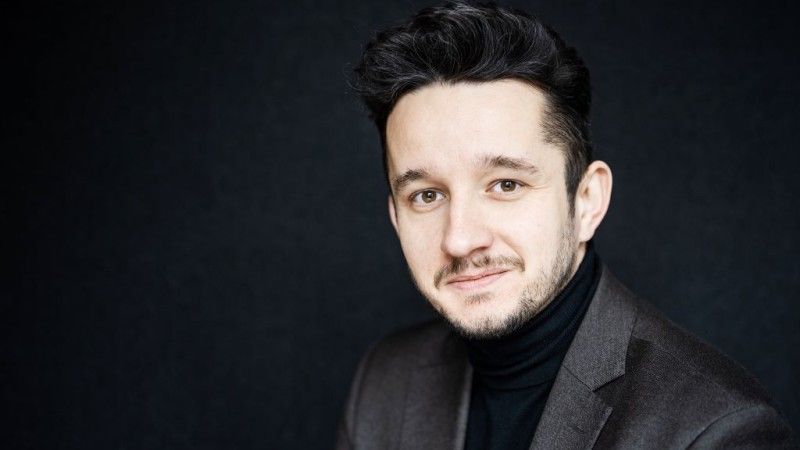
I was invited by the U.S. Department of State to participate in the International Visitor Leadership Program – a flagship initiative of American public diplomacy. Just a few days before the program was set to begin, my invitation was withdrawn – and no one will say why.
The story I am about to tell happened nearly a month ago — and I still find it hard to believe that it actually occurred. Yet the fact remains: by the decision of the U.S. Department of State I entered an exceptionally small, two-person group of journalists whose invitations to the International Visitor Leadership Program (IVLP) were withdrawn. What is more, I have reason to believe that this action was taken because of my reporting on climate change and president Trump’s energy policy. But let’s start with the facts.
My shot
The story begins a few months ago, when the U.S. Embassy in Warsaw informed me that I had been nominated for the IVLP program. It was a great honor – especially since, as I later learned, I was to be the only journalist in an eight-person group of participants nominated from various European countries.
The program, titled”Energy as an Economic Driver,” was scheduled for almost entire October. The program’s focus perfectly aligned with my daily work. I am an energy journalist covering the global energy transition as well as climate policy. I have also taught courses on these topics at the University of Warsaw, and I am currently preparing to defend my doctoral dissertation on gas market security.
I completed all the formal steps. My participation was confirmed; my visa was granted; I adjusted my personal and professional life to accommodate the trip. I arrived in the United States two weeks before it was set to begin due to participation in the Climate Week conference organized in New York City.
Then, on October 1 – just several days before the program’s launch – I was informed by the U.S. Embassy in Warsaw that my invitation had beenwithdrawn; I was also instructed to return to Poland.
That was all.
No reason was given. It has not been disclosed who made this decision. My request for clarification was met with silence. I was told repeatedly by the officials that they are „not able to address my specific questions”.

Connecting the dots
Such a message would be disappointing under any circumstances. But it is especially troubling when it comes from an institution representing a democratic government that prides itself on transparency, accountability, and freedom of speech. Once I had recovered from the initial shock, I decided to investigate the matter as thoroughly as I could. After several weeks of inquiry, I managed to uncover certain details that gave this story an entirely new meaning.
When I returned to Poland, I relied on my private journalistic sources to determine why this had happened to me. From three independent individuals, I learned that the entire matter had a political basis.
First and foremost, I was told that after I had already departed for the U.S., the State Department conducted a „reassessment” of my nomination, which resulted in the withdrawal of my invitation. The decision must have been made at a high level, and it had to have been prompted by a significant political signal. My sources suggested that information may have reached the State Department from elements of the Polish right, which oppose the energy transition and climate policy. These individuals consider me a personal adversary, and thanks to their strong connections with the current U.S. administration, they could potentially have influenced the State Department leadership.
Moreover, I learned unofficially that the formal basis for withdrawing my invitation was the discovery of content in my work that is „inconsistent with the president’s executive orders.”
What could have been the argument against me? Perhaps the fact that I support moving away from fossil fuels. Or that I see value in the EU and U.S. pursuing climate policies aimed at slowing global warming. Or that I criticize politicians – including American ones – for statements and decisions that contradict well-established scientific knowledge on climate issues.
To be clear: I am not a climate activist who blocks streets or pours paint on artworks. I approach climate policy primarily from an economic perspective. But if a politician –whether the President of Poland or the President of the United States – claims, for example, that global warming is a hoax, it is my role as a journalist to place those statements in the context of climate scientists« findings, which show something entirely different.
First Amendment
The people I spoke with about this matter – including former and current diplomats, foreign correspondents, and Polish and European politicians – also pointed out that only one similar case is known. In 2019, Finnish journalist Jessikka Aro was nominated by the U.S. Department of State for the prestigious International Women of Courage Award, which included participation in the IVLP program. Just days before her departure to the United States, Aro was informed that she would not receive the award. Officially, the State Department cited a „communication error.” Only after an investigation by the U.S. Senate Committee on Foreign Relations did it emerge that the award had been rescinded because of her critical posts about Donald Trump.
Was it similar in my case? I do not know; all the information I have gathered is unofficial and comes from my private sources. Nevertheless, I intend to take official steps to determine why this decision was made.
This whole episode reminds me of the beginning ofThe Godfather, when Amerigo Bonasera addressed Vito Corleone with the words, „I believe in America.” There was bitterness in them, because Bonasera lamented that American institutions had bowed to pressure and denied him justice. But there was also hope for a better outcome and gratitude that could not be overshadowed by personal grievances. That is why I, too, want to say:I believe in America.


