












- ANALIZA
- WIADOMOŚCI
Portugal's new capacity mechanism Is a direct answer to Europe's worst blackout in twenty years

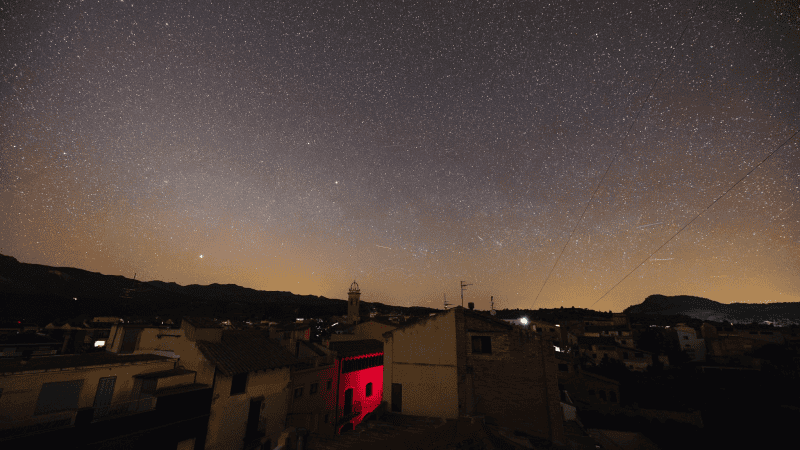
Photo. X.com/@JamesBreeden
Portugal’s new capacity mechanism is a direct answer to Europe’s worst blackout in twenty years.
Portugal is preparing a new capacity mechanism to safeguard its electricity supply during peak demand. Officials present it as a natural next step in the country’s energy transition, as a way to keep the lights on as electric vehicles, industrial electrification and economic growth push consumption higher. That framing is accurate, but it understates the more specific reason this mechanism exists: fourteen months ago, Portugal’s own grid collapsed for the better part of a day, and the final technical investigation into why was only published this past March.
A failure that exposed the gap
The electrical grid of mainland Spain and Portugal went totally dark on 28 April 2025 at 12:33 CET. Within twenty seconds, the southern part of Spain was estimated to have experienced the loss of 2.2–2.5 GW of generation capacity, which was primarily due to large solar facilities. Voltage rose to 435 kV from 400 kV. At 12:33:24, the power system of Iberia became completely unsynchronised from the rest of mainland Europe; AC ties to France were disconnected owing to loss-of-synchronism protection, and high-voltage direct current connections to France ceased to supply any power. Total disconnection of 31 GW of load occurred. It took until the early hours of 29 April to restore power in Spain; some regions remained without electricity for up to sixteen hours. Eight fatalities occurred in both countries due to the event; most resulted from fires resulting from candles and generator fumes. This power outage was classified by ENTSO-E’s expert group, consisting of forty-nine members, as the worst blackout in Europe in two decades; their final report came out on 20 March 2026.
What the report does not say is as important as what it does. At the moment of collapse, renewables accounted for roughly 78% of Iberian generation, with solar alone contributing close to 60%, and ENTSO-E was explicit that this share was not the cause. The problem was operational: a significant share of solar capacity was running in fixed-power-factor mode, meaning it provided no reactive-power support to the grid and instead amplified the voltage swing once generation began dropping. That, combined with thin stabilisation margins and an interconnection ratio of only around 3.4% against an EU target of 10–15%, left the Iberian Peninsula with very little room to absorb the shock once it began cascading. That is the technical backdrop against which Lisbon’s new mechanism should be read, not as a generic transition-era policy update, but as a direct institutional response to a systemic near-failure.

What Portugal is actually proposing
The mechanism follows a security-of-supply assessment carried out by the Directorate-General for Energy and Geology (DGEG), in cooperation with grid operator REN and regulator ERSE, using European-standard methodology. The assessment sets a formal reliability benchmark of 1.46 hours per year of acceptable supply risk (loss-of-load expectation), calibrated through consultation with consumers and industry.
The mechanism itself is designed to be technology-neutral: generation assets, storage facilities and demand-response providers will all be eligible, and remuneration will go to whichever resources prove available during the system’s most strained hours. The government has now begun pre-notifying the European Commission, the first procedural step toward clearing EU state-aid rules. In parallel, Portugal is pursuing combined-cycle gas investment, a planned auction for 750 MVA of battery storage, pumped-hydro expansion and a greater role for demand-side management – a portfolio that reads less like a backstop for fossil generation and more like an attempt to formally price flexibility itself.
The data support the urgency. In 2025, Portugal generated a record 37 TWh of renewable electricity, covering 68% of national demand, down slightly from 70% in 2024, a drop REN attributes directly to technical restrictions imposed to protect system security after the blackout. The country still imported 9.3 TWh net (17% of demand), and overall consumption grew 3.2% year-on-year. In other words: more renewable output than ever, alongside a system operator visibly more cautious about how hard it can lean on that output.
The demand side is changing faster than the supply side
Portugal’s emphasis on demand-response eligibility looks increasingly well-timed in light of a separate ENTSO-E report published on 8 May 2026. The pan-European grid operators’ association warned that without proper management, growing data-centre demand could force TSOs to curtail renewable generation rather than expand it. Europe currently hosts more than 10,500 data centres with at least 50 kW of IT load, representing roughly 12.7 GW of installed capacity, and the EU’s forthcoming Cloud and AI Development Act is expected to roughly triple that market within five to seven years.
ENTSO-E’s argument is not purely cautionary. The report frames large data centres – particularly hyperscale facilities, which have far more control over their own load than tenant-constrained colocation sites – as potential flexibility assets in their own right: capable of providing fast frequency response, primary and secondary reserves, congestion management, and demand-side participation in day-ahead and intraday markets. But that potential depends on regulatory frameworks catching up before the load does. For a country like Portugal, which is simultaneously absorbing EV growth, industrial electrification and a renewables share north of two-thirds, the distinction between data centres as a stability risk and data centres as a stability resource may end up being one of the more consequential regulatory decisions of the next five years, and it is precisely the kind of resource a technology-neutral, demand-response-inclusive capacity mechanism is built to capture.
See also 

A telling comparison: Poland's capacity market
Poland offers a useful counter-case, not because its market is poorly designed in principle, but because of what nearly a decade of operation has revealed. Established by a December 2017 law and operational since 2021, Poland’s rynek mocy is projected by think tank Forum Energii to cost roughly PLN 200 billion in current prices between 2021 and 2046. The household-level capacity fee is set to rise from PLN 11.40 to PLN 17.20 per month in 2026 alone – 8.1% of an average electricity bill. Contracts run for up to 17 years; if the mechanism is extended by another decade, agreements signed in 2040 would remain in force until 2056.
The structural criticism, made by Forum Energii itself, is that the mechanism has overwhelmingly rewarded inflexible coal and gas capacity rather than the kind of flexible, storage- and demand-side resources that a renewables-heavy system actually needs. That is precisely why Polish authorities are now negotiating a successor framework, informally referred to as the “capacity tripack”, with the European Commission, ahead of the current scheme’s wind-down.
The wider lesson
Set side by side, the two cases suggest something more general about how capacity mechanisms age. A scheme built to keep existing thermal plants profitable tends to entrench them, regardless of whether the system still needs them to run that way. A scheme built, even reactively, in Portugal’s case, after a literal systemic failure, around flexibility, storage and demand response is better positioned to absorb the next decade’s structural shifts, whether that shift comes from electric vehicles, industrial electrification, or a tripling of data-centre capacity. Poland is now spending political capital trying to redesign a mechanism after the fact. Portugal is attempting to design flexibility into its mechanism from day one. Whether Brussels approves it on those terms, starting with the pre-notification process now underway, will say a good deal about how seriously the EU intends to treat flexibility, rather than raw capacity, as the binding constraint on Europe’s electricity security.


