- WIADOMOŚCI
Safety, energy, and digitalisation. Defence24 in Karpacz


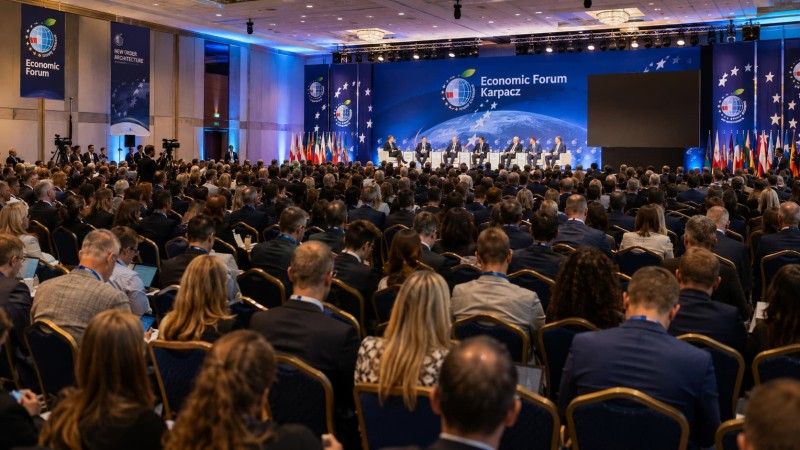
The focus of the talks will be on areas of strategic importance for the state and the economy: security, energy transition, and digitalisation. Ahead of us is the XXXV Economic Forum in Karpacz. One of the most significant elements will be the discussions organised on 8–10 September in a special area hosted by the Defence24 Group, which for the first time will create its own space for meetings and talks during the event.
For three days in September, Karpacz will once again become a meeting place for representatives of public administration, business, science, local government, and social organisations. The XXXV Economic Forum will take place on 8–10 September under the theme “Architecture of the New Order – Stability in Times of Change”.
In this year’s edition, the Defence24 Group will create its own space during the Forum for the first time. Its format will be geared towards intimate meetings, direct talks, and discussions regarding challenges that are increasingly affecting both the functioning of the state and the development of the Polish economy.
We will discuss the main areas related to security, energy transition, and digitalisation. These are fields that, until a few years ago, often functioned as separate topics in public debate. Today, it is increasingly difficult to analyse them in isolation.
State security depends not only on military potential but also on the resilience of critical infrastructure, stable energy supplies, the security of ICT systems, and the ability of national industry to function under crisis conditions. In turn, digital transformation and the development of new technologies create both new opportunities for the economy and entirely new categories of threats.
Cybersecurity and AI in the Forum programme
These issues are also integrated into the programme of the entire XXXV Economic Forum. This year’s agenda has been divided into eight main thematic areas, which include the AI Forum and the Digitalisation Forum.
The former is to focus on the use of artificial intelligence in business, administration, and the economy, the consequences of the technological revolution, and the challenges associated with AI regulation.
The Digitalisation Forum, meanwhile, will cover issues including digital threats and the protection of critical infrastructure. In practice, this means that technologies and cybersecurity will be one of the essential elements of the broader discussion on the economy and security in Karpacz.
This is no coincidence. Digitalisation has ceased to be a field concerning only the technology sector. IT systems are now responsible for the functioning of energy, banking, transport, healthcare, administration, and industry.
At the same time, the development of artificial intelligence opens another field of economic and technological competition. States must address not only the question of how to use new tools but also access to computing infrastructure, data, competencies, and technologies developed by the world’s largest providers.

Over 6,000 participants in Karpacz
The organisers of the XXXV Economic Forum expect over 6,000 participants this year, and the event programme is set to include over 500 debates, panels, and other substantive events.
The slogan of this year’s edition – “Architecture of the New Order – Stability in Times of Change” – refers to a situation in which previous models of economic and political cooperation are under increasing pressure. The war in Ukraine, geopolitical tensions, competition between the world’s largest economies, changes in global supply chains, and the dynamic development of technology necessitate a discussion on new ways of building the resilience of states and enterprises.
The Forum programme (more information here will also include issues concerning international policy, financial markets, healthcare, regional policy, and sustainable development.
This year’s event will also be opened by the presentation of the next edition of the SGH and Economic Forum Report, prepared by experts from the SGH Warsaw School of Economics. The publication will include analyses of the most important economic and social problems in Central and Eastern Europe.