- WIADOMOŚCI
- ANALIZA
- KOMENTARZ
You are not safe anywhere. The realities of the activities of Belarusian opposition members

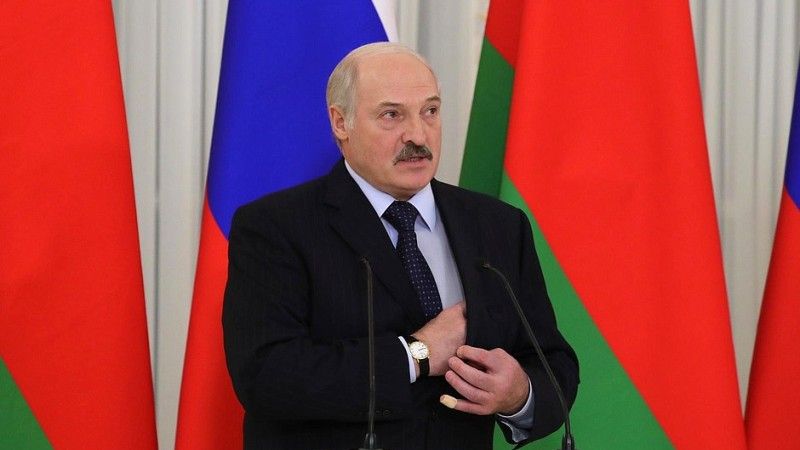
Years of Alyaksandr Lukashenka’s rule in Belarus have led to the fragmentation of the Belarusian opposition. At present, there are no genuine opposition centers operating inside the country, and Lukashenka continues to rule with an iron fist. The opposition has been forced to operate outside the country’s borders.
A turning point came with the Belarusian presidential election of August 9, 2020. As a result of the regime’s repression of the opposition, many activists were forced to leave the country, including Sviatlana Tsikhanouskaya, Lukashenka’s challenger in the election. The opposition leader continued her activities abroad. The Coordination Council (a quasi-opposition parliament) and the United Transitional Cabinet (a government-in-exile) were established.
Currently, opposition activists focus primarily on reminding Western countries about the situation in Belarus and helping the local diaspora. They do so by participating in meetings with politicians and decision-makers in foreign states and international organizations, attending sessions of international bodies, taking part in global forums and cultural events, and organising their own initiatives and meetings. The ultimate goal of the Belarusian opposition in exile is the transfer of power in the country and the holding of democratic elections.

Security concerns
The Belarusian opposition operates outside its homeland primarily for security reasons. At present, it is impossible to conduct safe opposition activities within the country. Arrests of individuals opposing the regime occur regularly. According to the Human Rights Center Viasna, more than 1,100 Belarusians can be classified as political prisoners.
Security problems for opposition members do not end once they leave the country. Activists are persecuted and intimidated in various ways—from private messages and announcements in state media to physical confrontations. One particular practice of the Belarusian regime deserves attention: courts in Belarus issue in absentia sentences against opposition figures abroad. For example, on March 6, 2023, the exiled leader of the Belarusian opposition, Sviatlana Tsikhanouskaya, was sentenced in absentia to 15 years in prison. The charges primarily concerned “conspiracy to seize state power by unconstitutional means” and “deliberate actions aimed at inciting hostility and social discord based on differing social affiliations, committed by a group of persons.”
It is worth citing several specific examples of actions taken by Lukashenka’s regime against the Belarusian opposition.

The Case of Pavel Latushka
Pavel Latushka is likely the second most important figure in the Belarusian opposition in exile, after Sviatlana Tsikhanouskaya. He serves as deputy head of the United Transitional Cabinet and head of the National Anti-Crisis Management (NAU)—an opposition body responsible for the transfer of power in Belarus until a new president is elected.
Because of his position, he faces regular threats directed at him, ranging from private messages to public comments. The danger to the opposition figure is not limited to threats alone. Like Tsikhanouskaya, Pavel Latushka was sentenced in absentia. Due to his activities, he received an 18-year prison sentence in Belarus. His cousin, Anatol Latushka, is currently serving a 6.5-year sentence in a Belarusian prison for hooliganism, desecration of state symbols, and participation in protest marches.
Pavel Latushka has also faced physical attacks. The most recent incident occurred on July 2, 2025. During a ceremony at the University of Warsaw, the opposition figure was about to speak when someone in the audience threw a small object at him and accused him of treason. During the attack, the perpetrator stumbled and lost balance, which allowed for his detention. Latushka was unharmed. The attacker, who was attending a course for young researchers, may have been Belarusian. It is not ruled out that the attack was carried out on orders from Belarusian security services. Latushka revealed that before the event, he had received threatening emails warning him, among other things, of being struck in the head. After the attack, he received another email stating that “this was a warning.”

The Case of Anzhalika Mielnikava
Anzhalika Mielnikava was the chairwoman of the Belarusian Coordination Council and became involved in the opposition after the rigged elections of August 2020. In March 2025, she flew to Dubai with her two daughters. Since then, all contact with her has been lost. She is considered missing, and her associates are “convinced that the regime’s security services may have been involved in her disappearance.” It remains unclear whether Mielnikava had been cooperating with Belarusian security services from the beginning, was forced into cooperation recently, or whether an attempted recruitment failed and Mielnikava was abducted or assassinated.
Information has surfaced indicating that her phone was used on Belarusian territory on March 19. Investigations by journalists from Insider and Polityka revealed that Mielnikava had developed a relationship with a man who turned out to be an officer of the Belarusian KGB. It should be noted that the plan for potential infiltration of the opposition by Belarusian intelligence likely failed. If it had succeeded, the Belarusian side would have publicly boasted about it—which did not happen.
The Case of Vasily Veremeychyk
Vasily Veremeychyk was a member of the Coordination Council and a veteran of the war in Ukraine, where he fought in the Kalinouski Regiment. He was a former officer of the Belarusian army who defected to the democratic forces. He was abducted in November 2025 in Vietnam. Belarusian security services provoked a fight that led to his arrest. He was subsequently deported from Vietnam to Belarus. He was shown on state television and now faces the death penalty.
See also 

The Case of Anatol Kotau
On August 21, 2025, Anatol Kotau, an activist with the Belarusian Sports Solidarity Foundation, went missing. That day, he flew from Warsaw to Istanbul, after which all contact with him was lost. Kotau lived permanently in Poland, where he primarily assisted refugee athletes. Like many others, he had been sentenced in absentia in Belarus to 12 years in a penal colony.
Turkish police reported that Kotau had sailed on a private yacht to Sochi, Russia. It is suspected that his departure from Turkey was not voluntary. Unlike in the case of Anzhalika Mielnikava, Kotau is being actively sought by his relatives, and his disappearance has been reported in several countries.
Thaw in Relations with Minsk
Since Donald Trump assumed the US presidency, a shift has been observed in US–Belarus relations. The Democratic administration had treated Alyaksandr Lukashenka as a dictator and the regime in Minsk as an unworthy partner for maintaining good relations. The regime was isolated. After the change of administration in Washington, dialogue between the United States and Belarus was clearly renewed. We have observed occasional amnesties of political prisoners by Belarus in exchange for the easing of sanctions imposed on the country. Although former prisoners are subsequently expelled to Lithuania or Ukraine, their overall situation has improved. It is worth considering whether the previous Western policy of isolating Minsk was truly effective, and whether the American approach might be a better way to address the issue of political prisoners. It must be remembered that isolating Lukashenka leaves him with no choice but to deepen Belarus’s integration with the Russian Federation.

The use of political prisoners as bargaining chips by the Belarusian regime is nothing new. Such actions are purely pragmatic and transactional. The examples of persecution I have cited are meant to illustrate the nature of the actor we are dealing with. The current authorities in Belarus cannot be regarded as a credible partner. The complete lifting of sanctions will not lead to positive internal changes. However, it appears that isolating Belarus does not improve the situation either.
Europe should observe US actions and develop its own approach. Negotiations with Lukashenka should definitely be undertaken. The American example shows that this may be a way to achieve at least partial understanding with Belarus. Europe continues to struggle with the organised transfer of migrants exerting pressure on the EU’s eastern border. States are forced to expend resources and maintain military presence along the frontier, while the real problem has remained unresolved for years. Potential negotiations could help improve the situation on the eastern border. It is in the West’s interest to have a European Belarus—one that extends our border eastward and separates us from the Russian Federation. However, it must be acknowledged that Belarus’s integration with Russia is already at an advanced stage, and reversing or replacing it will be difficult.