












- WIADOMOŚCI
East Front News #54: Exports of Polish Arms and France's New Strategic Review

East Front News is a weekly newsletter summarizing the past week’s most important events concerning security and the situation in the Central and Eastern Europe region. It includes original opinions and comments, along with key news items significant from a Polish perspective. If you would like to receive this newsletter, please sign up by clicking .
New France's New Strategic Review and role of Poland
France’s updated National Strategic Review, released on Bastille Day 2025, marks a decisive shift in tone and priorities. It names Russia as the central long-term threat to European security and calls for full national and societal mobilisation to prepare for potential high-intensity conflict by 2030. The document underscores the urgency of strengthening NATO’s European pillar and highlights cooperation with key regional allies—most notably Poland. Warsaw is singled out as a frontline partner capable of bolstering collective deterrence, with the 2024 Treaty of Nancy formalising a new level of bilateral defence cooperation, including joint exercises and arms industry integration.
The French strategy aligns with broader regional trends: like Poland’s recent military investments and growing leadership on NATO’s Eastern Flank, France aims to project strategic autonomy while reaffirming its role within the Alliance. Both nations share concerns over a diminished U.S. security presence in Europe and are responding with increased defence budgets, stronger alliances, and a push for European-led capabilities. France’s openness to dialogue on the role of its nuclear deterrent in European defence marks a notable departure from past policy—and is a signal aimed directly at partners like Poland seeking credible guarantees in an increasingly unstable environment.
Author: Dr. Aleksander Olech
See also 

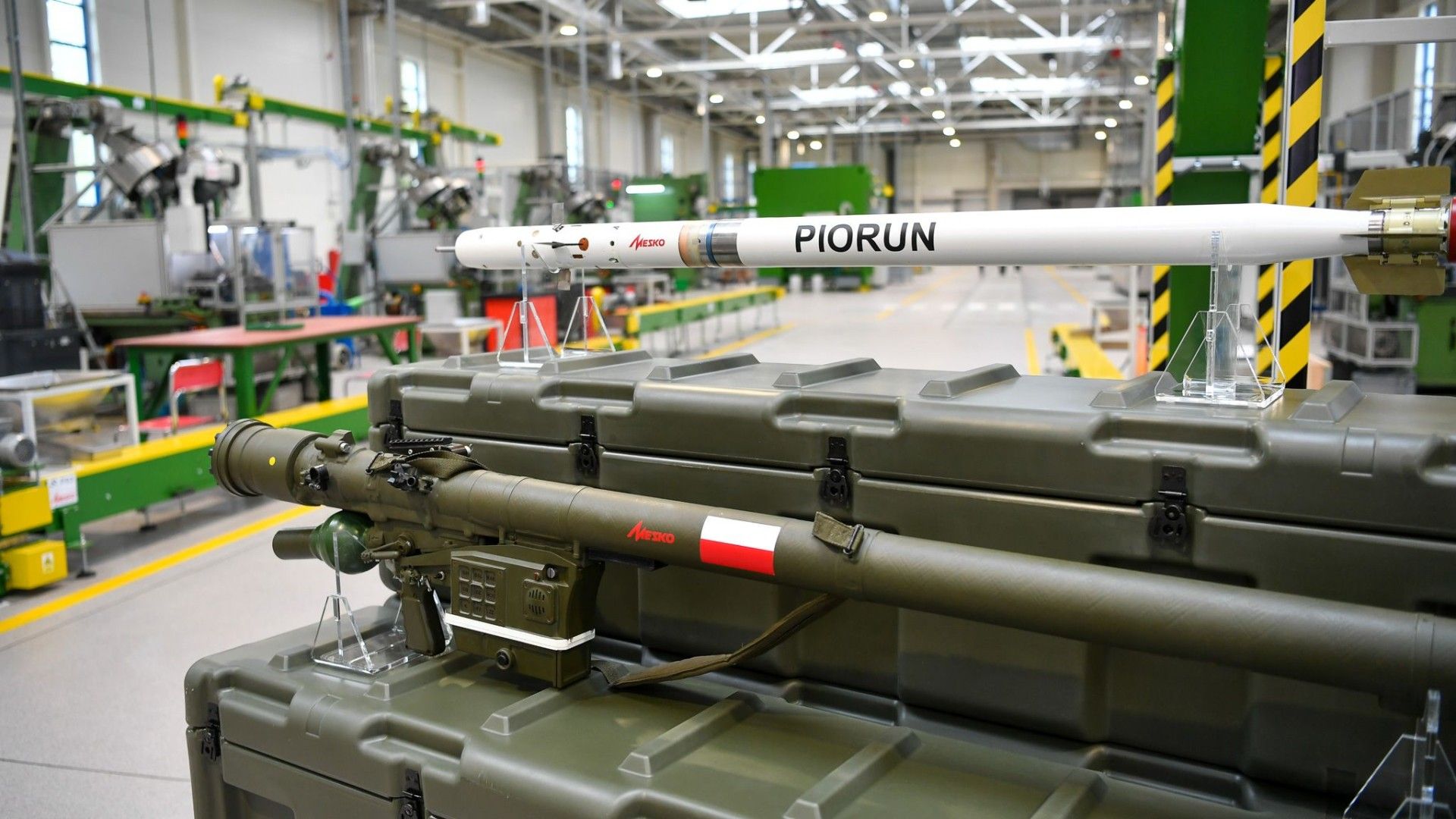
Piorun MANPADS for Moldova and Other Exports of Polish Arms in 2024
Initial data on Polish arms exports in 2024 are now known. They have been submitted to the UN register. However, we must still wait for the more detailed annual reports published by the Ministry of Foreign Affairs.
Since 2022, Poland has consistently not disclosed figures for equipment gifted to Ukraine. Only data on commercial sales by trading entities are published.
In 2024, the Polish defence industry and arms‑trade intermediaries exported:
- 295 armored fighting vehicles of various types to Ukraine;
- 18 self‑propelled 155 mm Krab howitzers to Ukraine;
- 78 self‑propelled 122 mm 2S1 Gvozdika howitzers to Ukraine;
- 10 towed 85 mm D‑44M anti‑tank guns to Ukraine;
- 10 S‑70i helicopters to the Philippines;
- 3 S‑70i helicopters to the USA;
- 67 Piorun missiles to Estonia;
- 12 Piorun missiles to Latvia;
- 44 Piorun missiles to Moldova;
- 40 Piorun missiles to Norway.
Author: Jarosław Ciślak
New Army Garrison Commander In Poland
A new commander has arrived at U.S. Army Garrison Poland in Poznań. Colonel Jeremy A. McHugh now faces significant challenges in continuing to maintain the numerous facilities scattered across Poland, and, above all, in supporting the practical aspects of daily strategic, deepened military cooperation between the United States and Poland amid a highly complex regional situation.
Author: Dr Jacek Raubo

Poland and France Enhance Cooperation on Cruise Missiles, with Submarines in Context
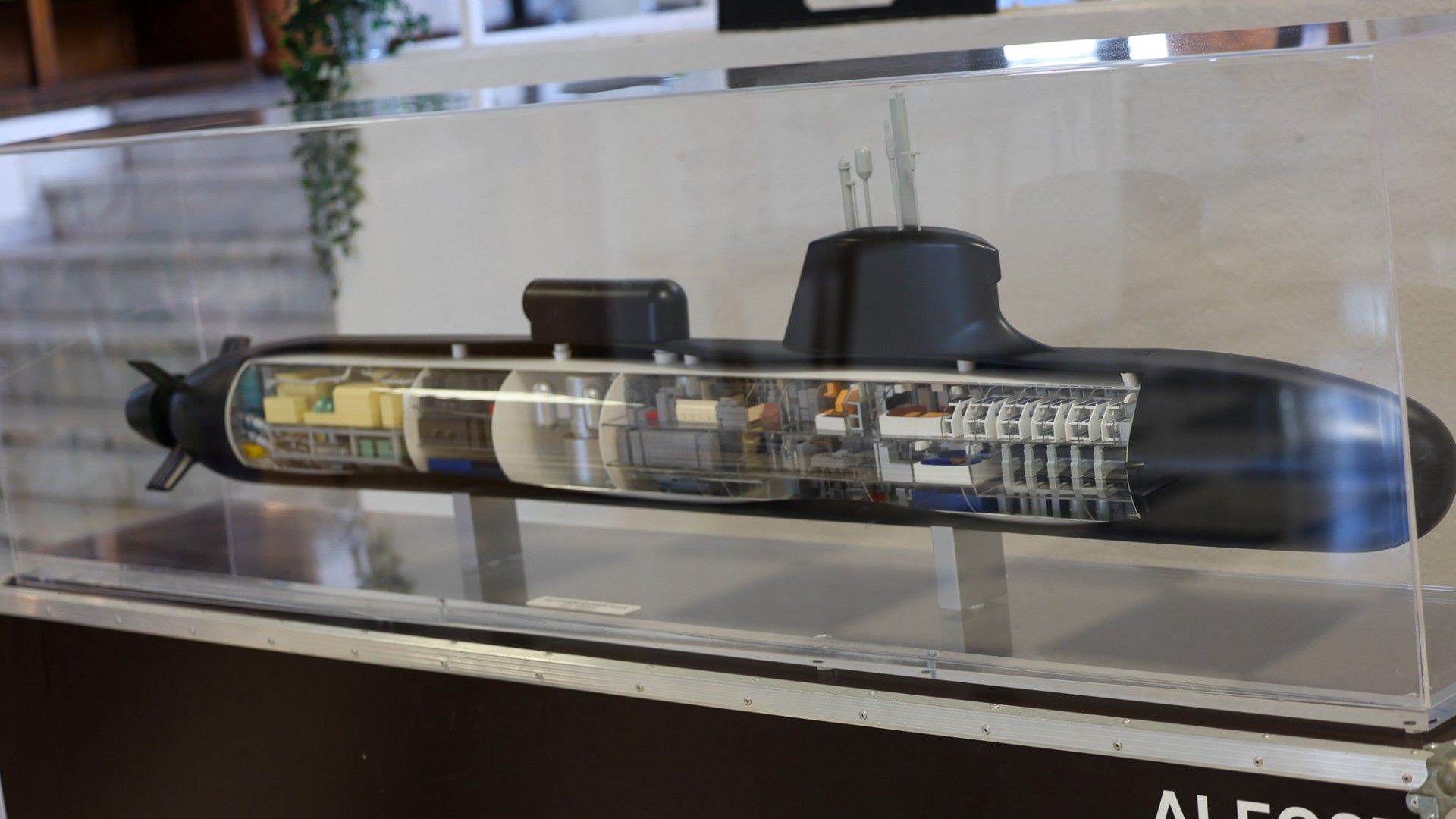
Deputy Minister of National Defence Paweł Bejda continues his visits to countries that have offered their submarines for Poland’s „Orka” programme. This time his destination was France, specifically Toulon.
France became the next stop in the Ministry’s process of selecting a company to provide the Polish Navy with modern submarines. During the visit, the minister met, among others, with the Director General of the DGA Agency, Emmanuel Chiva.
In addition to examining Naval Group’s offer for the Navy, Minister Bejda signed a letter of intent on Polish-French cooperation in the field of land-based cruise missiles.
Author: Michał Górski
Romania to Become First NATO Member to Acquire Israeli Iron Dome System
Romanian Defence Minister Ionuț Moșteanu has officially confirmed plans to acquire the Israeli-made Iron Dome short-range air defence system, with an agreement expected to be signed by fall 2025. He stated that the decision was driven by the system’s proven effectiveness in intercepting Iranian and Hamas strikes, as well as Romania’s growing need to protect its cities and critical infrastructure. Like Poland, Romania has experienced incidents of missiles and drones straying onto its territory from the nearby Russian-Ukrainian battlefield.
If successfully integrated, the Iron Dome would not only enhance Romania’s airspace security but also contribute to the broader air defence posture of NATO’s Eastern Flank, supporting NATO’s Integrated Air and Missile Defence (IAMD) missions in the region. Notably, this move could prompt other Alliance members to consider adopting the Iron Dome or similar systems. In this context, Poland’s recent purchase of Israeli maritime radars reflects the growing interest among Eastern NATO countries in battle-tested Israeli technologies.
Author: Kacper Kremiec
Poland Made Its Arms Imports Classified
For many years, the effectiveness of actions by the United Nations and its agencies has commonly been called into question. Unfortunately, the UN Register of Conventional Arms is an example of this.
For 2024, Poland for the first time omitted data on imports of major conventional weapons from its report. Since 2022, it has also not reported to the Register the numbers of major arms donated to Ukraine.
Of course, one could attempt to „circumvent” the Polish omission by checking other countries« export declarations to Poland. But that is not a reliable method, since many states have still not submitted their 2024 reports, among them major arms exporters such as the USA and France. Moreover, some export entries concern weapons sent to Poland for further re‑export, or for testing, or for purposes not further specified.
Author: Jarosław Ciślak

Russia and China Deepen Military Ties Without Trust
Despite a dramatic expansion in military and technological cooperation since Russia’s invasion of Ukraine, the Russia-China partnership remains defined by pragmatism over trust. According to CEPA’s June 2025 report „Partnership Short of Alliance”, Beijing and Moscow have grown increasingly intertwined through arms sales, joint exercises, and battlefield logistics—but without formal defence commitments. While China now supplies Russia with critical components like microchips and nitrocellulose to sustain its war effort, it carefully avoids delivering tanks or artillery that could trigger Western sanctions. Beijing’s strategy is calculated: support Russia just enough to weaken the West without undermining its own access to global markets.
The report highlights serious undercurrents of mistrust. A leaked Russian FSB document allegedly labels China a „dangerous adversary,” accusing it of spying, recruiting Russian engineers, and preparing for influence operations in the Arctic and Far East. Meanwhile, doctrinal gaps and incompatible command structures still limit operational integration. Military exercises like Joint Sea and anti-satellite tests serve more as strategic messaging than proof of seamless coordination. For the West—and especially NATO members like Poland—this partnership poses a dual-front challenge, particularly if crises in Ukraine and Taiwan escalate simultaneously. Yet, the absence of a formal alliance gives the West a narrow window to apply targeted pressure without unifying the two powers in a binding military bloc.
Author: Dr. Aleksander Olech

Polish Minister of Foreign Affairs: Russian military actions are becoming more targeted
During the Lublin Triangle anniversary celebrations in Lublin, Minister Radosław Sikorski announced that Russia has changed its approach to warfare in Ukraine. Instead of randomly shelling cities, Russian forces are increasingly directing precision attacks against industrial targets and critical infrastructure. This is a new phase of the war, which, according to Sikorski, aims to weaken Ukraine’s economic potential and cause long-term damage to its functioning as a state. The most striking example of this change is the attack on the night of July 15th-16th on the Barlinek Group factory in Vinnytsia, a Polish investment operating in Ukraine. Russia used approximately 400 drones and at least one Iskander-M ballistic missile, directly targeting the production facility. The strike injured six people, two of whom suffered severe burns. Rebuilding the factory could take up to six months, resulting in significant financial losses and disruption to the local supply chain.
Minister Sikorski assessed that such actions should be unequivocally treated as war crimes, as the targets are civilian objects with no military significance. He also emphasised that Russian aggression is moving ever closer to the borders of Poland and NATO, requiring an international response. This shift in Russian strategy demonstrates that the war is becoming increasingly systemic, and attacks on industry are intended to undermine the foundations of Ukrainian independence. For the West, this means not only continued military support but also the protection of infrastructure and strategic investments.
Author: Justyna Smoleń
Attack on Polish factory in Ukraine – a warning for Poland?
During the night of July 15-16, Russian forces targeted a Barlinek Group facility specialising in wood flooring production in the Ukrainian city of Vinnytsia. According to company’s board none died, however the loses are high and they might stop the factory’s functioning at least for 6 months. It’s evident the attack was intentional, given that it came from three directions. This strike against a facility with Polish capital is not only physical but symbolic as well - Moscow may be testing Poland’s and indirectly the other allies« reactions and simultaneously provoke Warsaw into moves that could later be characterized as aggressive.
At this point, a lot of unknowns remain - what really is the scale of the damage caused by the attack, as well as Poland’s decisions in the face of this event. One thing is certain - tensions in relations with Moscow are rising, particularly given the increasing migratory pressure near the border with Belarus or the closure of the Polish consulate in Kaliningrad.
Author: Amelia Wojciechowska

Poland remains the largest beneficiary of the new EU budget for 2028-2034
The European Commission has presented the draft of the new European Union budget for 2028-2034, amounting to a record €2 trillion. According to EU Budget Commissioner Piotr Serafin, Poland, despite its ongoing economic growth, will continue to be the largest beneficiary of EU funds. Over €100 billion is expected to flow to Poland from the cohesion policy and the Common Agricultural Policy. Serafin emphasised that direct payments to farmers will remain at current levels, and the membership fee will not increase. New revenue sources, including fees on imported high-emission products and a tax on digital giants, are intended to ensure stable financing without placing an excessive burden on member states.
Polish Minister of Finance Andrzej Domański emphasised that Poland will be the largest recipient of funds from the largest-ever EU budget. He noted that these funds will be allocated, among other things, to investments in security, regional development, agriculture, and innovation, which are intended to strengthen the competitiveness of the Polish economy and accelerate the country’s modernisation. The new financial framework also places strong emphasis on defence and technology spending. This is a response to changing geopolitical conditions and the need to increase the Union’s resilience to external threats.
Author: Justyna Smoleń
If you would like to receive this newsletter, please sign up by clicking.
East Front News is a weekly newsletter and article on Defence24.com summarizing the past week’s most important events concerning security and the situation in the Central and Eastern Europe region. It includes original opinions and comments, along with key news items significant from a Polish perspective.
Jakub Palowski, Deputy Ed. in Chief and Michał Górski


