












- WIADOMOŚCI
East Front News #78: EU army debate returns

East Front News is a weekly newsletter summarizing the past week’s most important events concerning security and the situation in the Central and Eastern Europe region. It includes original opinions and comments, along with key news items significant from a Polish perspective. If you would like to receive this newsletter, please sign up by clicking
Greater Poland armoured vehicles centre
The Greater Poland armoured vehicles centre, led by Wojskowe Zakłady Motoryzacyjne (WZM) in Poznań, is becoming one of the most important hubs for the maintenance and support of armoured vehicles in Poland. By uniting the capabilities of several industrial partners, the centre provides comprehensive servicing across the entire life cycle of military vehicles, ensuring high readiness levels for the Polish Armed Forces and, if required, allied forces stationed in Poland.
WZM is developing advanced competences for Leopard 2 and M1 Abrams tanks, including deprocessing, repairs, training and the gradual transfer of higher-level maintenance technologies. Agreements with companies such as General Dynamics, BAE Systems, Allison, Rolls-Royce and RENK are building a complete domestic support base not only for tanks, but also for support vehicles and powerpacks. This strengthens Poland’s industrial independence and positions Poznań as a key armoured logistics and service centre in the region.
Author: Damian Ratka
Chinese hackers breach the UK foreign office
The suspected cyberattack on the UK Foreign, Commonwealth and Development Office in October 2025 has raised serious concerns about the security of government systems and the protection of sensitive personal data. Reports suggest that visa application services were targeted, potentially exposing information on Hong Kong residents and political dissidents who sought refuge in the UK. Although ministers insist the breach was contained quickly, analysts believe the China-linked group Storm-1849 may be responsible, highlighting persistent vulnerabilities in Whitehall’s digital infrastructure.
Beyond the technical impact, the incident has intensified political debate over the UK’s approach to China. Critics argue that economic engagement is being prioritised over national security, despite growing evidence of espionage and cyber activity linked to Beijing. The breach underlines the need for urgent reforms, including modernising legacy systems, adopting zero-trust security and reassessing China’s status under UK national security law, as cyber resilience is increasingly central to sovereignty and public trust.

Author: Andrew Marszewski
Greenland is not the 51st state
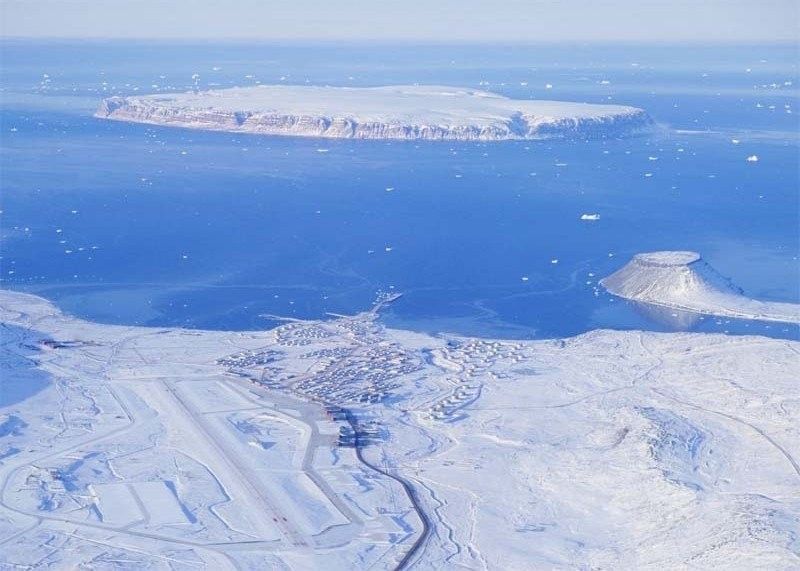
Greenland’s strategic value is driven less by its size than by its position in the Arctic: a gateway between North America and Europe and a key vantage point for early warning and air defence. From a polar perspective, the shortest routes for long-range threats run across the Arctic, which
is why the long-standing US presence at Thule remains central to Washington’s security thinking. As melting ice opens new shipping corridors and increases the region’s commercial relevance, Greenland’s location also becomes a geopolitical choke point for monitoring future trade routes.
At the same time, Greenland’s autonomy and domestic politics make outright acquisition politically toxic, even if cooperation with the United States is widely accepted in principle. Nuuk seeks partnerships that respect local control, while Denmark rejects any notion of a sale and has pushed a Nordic line on Arctic sovereignty amid sharper US rhetoric in early 2026. The broader dilemma is how to expand security and economic engagement in the Arctic without triggering a sovereignty backlash in Greenland or a cohesion crisis inside Nato.

Author: dr Wojciech Lieder
Greenland's riches: opportunity or a myth?
Greenland’s resource story has long been marketed as an Arctic bonanza, but the record so far is far more modest. Hopes for an oil boom peaked in the early 2000s, supported by estimates of sizeable offshore potential, yet decades of drilling produced mostly dry or uneconomic wells and no commercial production. In 2021 Greenland halted new oil and gas licensing, citing environmental concerns and weak profitability, effectively closing the chapter on the „black gold” narrative.
Attention has shifted to rare earths and other critical minerals, where Greenland does have notable geological potential, but turning that into a viable industry is constrained by Arctic realities: high costs, limited operating seasons, infrastructure gaps, labour shortages, regulatory and tax complexity, and political limits such as restrictions around uranium. Several projects are progressing, yet mining remains in its early stages and Greenland is not the only place with such deposits. Crucially, Washington does not need to own Greenland to benefit, as Nuuk remains open to foreign investment and the real challenge lies in building resilient supply chains independent of China.
Author: Magdalena Melke
100,000 EU troops and the return of the European army debate
The idea of a standing European force has resurfaced as fears grow that the United States could reduce its military presence in Europe. EU Defence and Space Commissioner Andrius Kubilius suggested that Europeans should be able to replace around 100,000 US troops if necessary, arguing that the current model of ad-hoc mission forces is no longer sufficient in a more
dangerous security environment. He also called for faster decision-making structures, including a possible European Security Council format that could even involve the United Kingdom.
The proposal immediately exposed old divisions. Several governments, including Sweden, rejected the concept of an EU army and stressed that Nato remains the cornerstone of collective defence. In practical terms, moving from small battlegroups and a 5,000-strong rapid deployment capacity to a 100,000-strong force would require major institutional change, permanent command structures, shared financing and scarce enablers such as airlift, air defence, logistics and ammunition. The debate highlights a growing tension between political ambition and the hard realities of European military capability.
See also 

Author: Jakub Bielamowicz
Georgia at the crossroads between Europe and isolation
Georgia remains a strategically important transit state for energy and trade between Europe and the South Caucasus, yet its political direction is increasingly troubling EU partners. The ruling Georgian Dream party has tightened control over institutions, pressured the opposition and limited political competition, raising concerns about democratic backsliding and the credibility of Georgia’s European path. Weak transparency and corruption risks also create opportunities for sanctions circumvention, which undermines EU policy and regional trust.
At the same time, Georgia’s position in regional transport corridors is becoming more fragile as alternative routes gain momentum. For Europe and for Poland in particular, a marginalised Georgia would weaken diversification strategies and reduce EU influence in the South Caucasus. The article argues that claims of neutrality are unrealistic in a hard-power environment and risk pushing the country into a grey zone of influence. Supporting Georgian civil society, rule of law and continued European engagement is therefore presented as a matter of strategic self-interest.
Polish navy gains expanded powers in the Baltic Sea Polish President Karol Nawrocki signed the „Safe Baltic Act” last Friday. The legislation significantly expands the powers of the Polish navy amid the Baltic Sea’s growing strategic importance for national security. Under the legislation, Polish forces are now authorized to use military force to defend critical infrastructure, including rapidly developing offshore wind
farms and key energy pipelines. The law also enables the deployment of Polish naval forces in international waters under the broadly defined reason of monitoring Polish external security, especially on the Baltic. Such deployments will no longer require the president’s signature but can be approved directly by the Ministry of National Defence. These changes are expected to make Poland’s Baltic defence posture more agile and proactive, while sending a clear deterrent signal to Russia.

Author: Natalia Potera
New design of Defence24.com
Defence24.com has launched a new website as part of its transformation into a fully international defence and security platform. The redesign reflects the reality that modern security challenges are interconnected across regions, from the eastern flank and the Middle East to the Indo-Pacific, the Arctic and Africa. The new layout is intended to improve speed of access, clarity of presentation and the depth of analysis, making it easier to follow complex geopolitical and defence trends.
The updated platform also supports the growing international character of the project, with an expanding network of contributors, analysts and partners from different countries. Defence24.com aims to focus on quality rather than volume, offering informed commentary and strategic insight for decision-makers, industry and the analytical community. The new design is meant to strengthen dialogue between defence, policy and industry, and to provide space for serious, substantive debate.
See also

If you would like to receive this newsletter, please sign up by clicking.
East Front News is a weekly newsletter and article on Defence24.com summarizing the past week’s most important events concerning security and the situation in the Central and Eastern Europe region. It includes original opinions and comments, along with key news items significant from a Polish perspective.


