












- WIADOMOŚCI
East Front News #80: Europe’s Defence Shifts: Poland Leads SAFE Investments

East Front News is a weekly newsletter summarizing the past week’s most important events concerning security and the situation in the Central and Eastern Europe region. It includes original opinions and comments, along with key news items significant from a Polish perspective. If you would like to receive this newsletter, please sign up by clicking
European Commission approves Poland's €43.7bn SAFE defence plan
The European Commission has approved Poland’s national defence spending plan under the SAFE programme, covering 139 projects with a total value of €43.7 billion. The scheme provides low-interest loans aimed at accelerating the procurement of military equipment produced mainly within the European Union, positioning Poland as the programme’s largest beneficiary.
The SAFE Regulation, adopted in May 2025 as part of the EU’s „Ready for 2030” defence package, is intended to enable Member States to rapidly expand defence investments through joint procurement and closer industrial cooperation. Alongside Poland, the European Commission also approved plans submitted by Estonia, Greece, Italy, Latvia, Lithuania, Slovakia and Finland, strengthening collective European defence efforts.
Author: Wojciech Kozioł

A French nuclear umbrella for Europe?
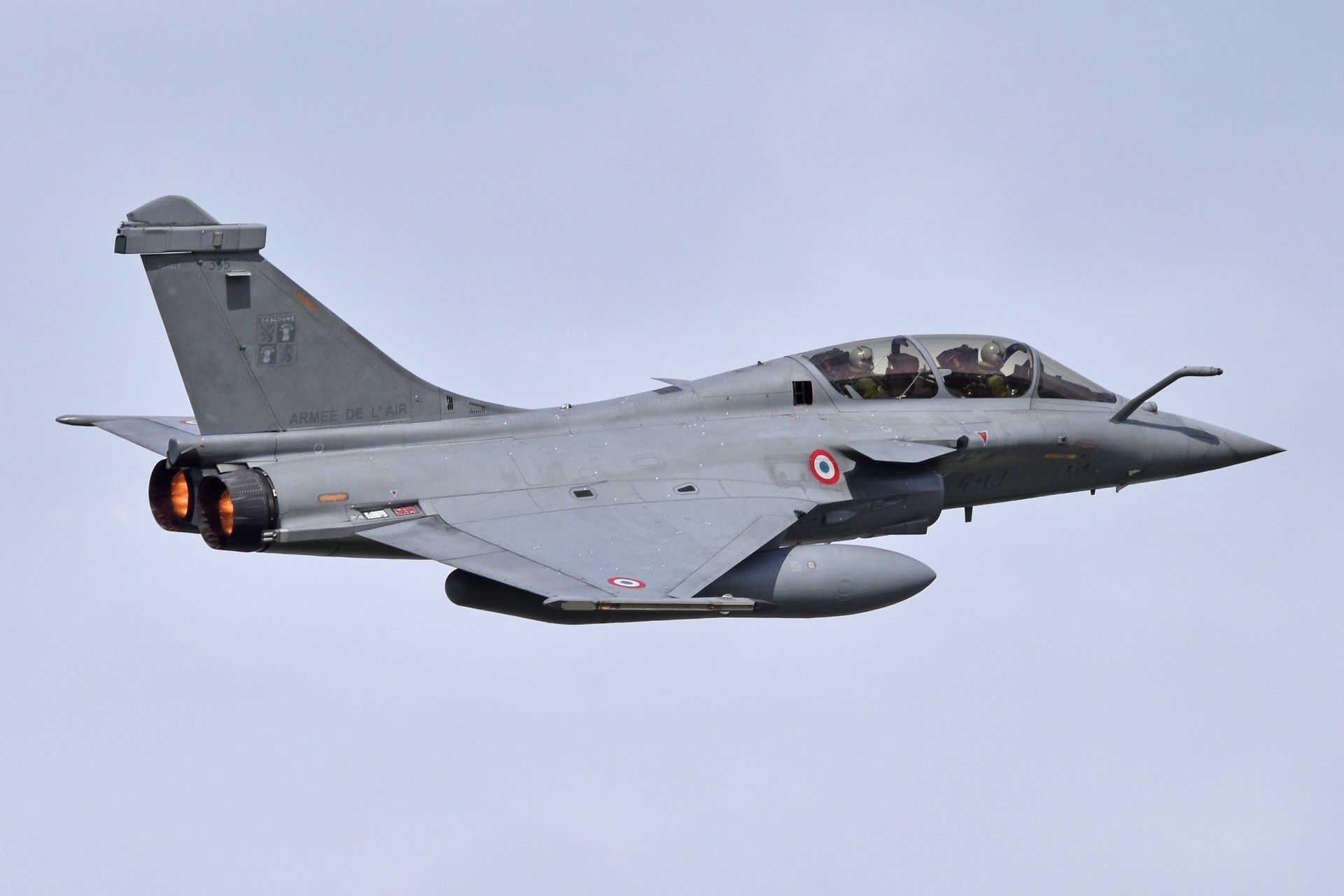
France’s long-standing nuclear deterrence doctrine has returned to the centre of European security debates amid growing uncertainty over the durability of American nuclear guarantees. In response to changes in Russian nuclear doctrine and increasingly confrontational rhetoric from Moscow, French leaders, including President Emmanuel Macron, have openly discussed the possibility of extending France’s nuclear deterrence to other European states. Although no formal arrangements have materialised, Paris has signalled that cooperation with countries such as Poland and the Baltic states remains an option, with practical demonstrations potentially involving Rafale aircraft and air-based nuclear capabilities.
France currently possesses an estimated 290 nuclear warheads, deployed across a sea-based and air-based deterrent, and retains full political autonomy over their use. While French nuclear forces cannot replace the scale of US deterrence, they could complement it, particularly at the political and strategic level, vis-à-vis the Russian Federation. As doubts about US commitment persist and European states reassess their security priorities, the debate over a European—or French-led—nuclear umbrella highlights a broader shift towards greater strategic independence and contingency planning within Europe.
Author: Aleksander Olech
EU–India Free Trade Agreement: Will it deliver?
After nearly two decades of negotiations, the European Union and India have announced the conclusion of a long-awaited Free Trade Agreement, formally unveiled during a visit by EU leaders to New Delhi in January 2026. Politically, the deal is widely seen as a success, driven by shifting global trade dynamics following Russia’s invasion of Ukraine and growing uncertainty surrounding US trade policy. Both sides view the agreement as a way to deepen cooperation between like-minded democratic partners and to strengthen economic resilience amid rising geopolitical tensions.
While the political significance of the agreement is clear, its economic impact remains more uncertain. The FTA introduces tariff reductions across selected sectors, including automobiles, textiles, machinery and pharmaceuticals, while largely excluding sensitive areas such as agriculture. Coupled with a newly signed EU–India Security and Defence Partnership, the deal could help diversify India’s economic and defence ties away from Russia. However, without the final text and given the gradual nature of tariff reductions, the agreement is likely to deliver steady but limited economic gains rather than the transformative boost suggested by official rhetoric.
Author: Adam Burakowski

Baltic security architecture
The experience of the Russian–Ukrainian war in the Black Sea shows how quickly a maritime basin — and even the airspace above it — can be constrained by land-based strike systems, drones, reconnaissance and attacks on infrastructure. The article argues that the Baltic Sea should be seen in similar terms: a closed, weapons-saturated theatre where geography, short reaction times and long-range precision fires limit traditional naval freedom of manoeuvre. In such conditions, the decisive variables are not fleet size alone, but the ability to deny access, survive a first strike, and maintain superior situational awareness across sea, air and underwater domains.
Against a backdrop of persistent hybrid pressure — including GPS jamming, suspicious activity around pipelines and cables, cyberattacks, disinformation and the use of „shadow fleets” — the author highlights the vulnerability of critical infrastructure and the difficulty of fast attribution and response. He argues that strengthening Baltic resilience requires a layered regional
approach: sustained NATO presence, integrated surveillance and C4ISR, rapid crisis-response capabilities, and closer cooperation between armed forces, government agencies and industry. The proposed architecture centres on regional coordination, shared logistics and ports, joint procurement, and greater use of autonomous systems to monitor and protect infrastructure, with Poland and its neighbours aligning complementary strengths into a coherent deterrence-and-defence „shield”.
Author: Andrzej Fałkowski
See also 

Arrest warrant for former Polish Army soldier suspected of collaborating with the Russian intelligence service
On 29 January 2026, the District Prosecutor’s Office in Krakow issued an arrest warrant for a former Polish Army soldier suspected of participating in Russian intelligence activities and spreading disinformation. The decision was made after it was determined that the man was outside the country, most likely in the Russian Federation, which made it impossible to apprehend him and place him in temporary detention. According to investigators, the suspect was active on social media, mainly on TikTok, where, under the account name »PolaknaDonbasie« (Pole in Donbas), he published content consistent with Russian propaganda, referring, among other things, to the war in Ukraine and Poland’s security policy. The case is another disclosed instance of activities carried out on behalf of the Russian services and fits into the broader context of information operations and other hybrid warfare tools used by the Russian Federation against Poland.
Author: Justyna Smoleń
Poland nears 15 bln pln counter-drone deal as part of major defence investment
Poland is going to finalise a major defence investment with a contract valued at approximately 15 billion zł (~€3.2–3.5 billion) for the San multi-layer anti-drone system,
marking one of the largest Polish military procurements in recent years. The deal, expected to be signed by the end of January, involves the construction of 18 San batteries equipped with radars, electronic warfare jammers, 30 mm and 35 mm guns, multi-barrel machine guns and 70 mm missiles designed to detect and neutralise hostile unmanned aerial vehicles.
The project will be led by Polska Grupa Zbrojeniowa in cooperation with domestic partner APS and Norway’s Kongsberg, reflecting growing international collaboration in defence technology. Deliveries of the system are planned through 2027, significantly enhancing Poland’s air-defence capabilities against evolving drone threats.
The San system is being developed as part of Poland’s broader air-defence architecture, integrating with existing and planned programmes to bolster national and regional security.
Author: Amelia Wojciechowska
Europe relegated to a secondary theatre in the new US National Defense Strategy
The new US National Defense Strategy signals that America’s military role in Europe’s defence will be limited, supportive, and conditional. Europeans are expected to assume „primary responsibility” for their conventional defence, including taking the lead in supporting Ukraine’s war effort. US military priorities now centre on the homeland, the Western Hemisphere, and the Indo-Pacific, with Europe relegated to a secondary theatre.
On Russia, the strategy describes Moscow as „a persistent but manageable threat to NATO’s eastern members for the foreseeable future”, while arguing that it is „in no position to make a bid for European hegemony”. This is another reminder that Europe should not treat decisive US intervention as the default and should plan for a gradual reduction of the American military presence. At the same time, the document does not suggest outright disengagement: Washington intends to remain involved in NATO and to support Europe through critical enabling functions such as intelligence sharing, operational planning, and access to advanced capabilities.
Author: Kacper Kremiec
If you would like to receive this newsletter, please sign up by clicking.
East Front News is a weekly newsletter and article on Defence24.com summarizing the past week’s most important events concerning security and the situation in the Central and Eastern Europe region. It includes original opinions and comments, along with key news items significant from a Polish perspective.


