












- KOMENTARZ
- WIADOMOŚCI
France tests military service model

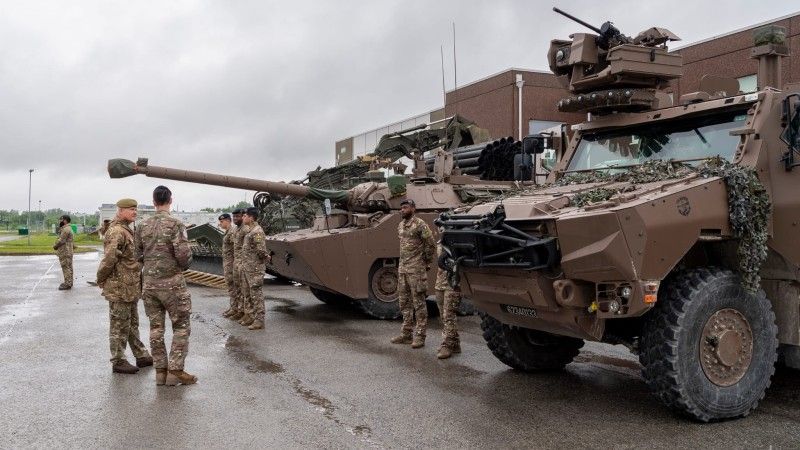
Emmanuel Macron’s decision to introduce a ten-month voluntary national military service should not be seen as a symbolic reform. It is a response to a structural problem within French society, where the link between citizens and defence has been weakening for years. France is not returning to conscription. It is attempting to rebuild a minimum level of responsibility and awareness in a controlled and selective way.
The decline in willingness to defend the country is not a marginal issue. It reflects a broader shift in attitudes, particularly among younger generations, which creates a long-term challenge for the French armed forces. For a country that positions itself as a pillar of European defence, this gap between society and military structures becomes a strategic vulnerability. Equipment, modernisation and nuclear deterrence cannot replace the human dimension of defence.
The Service national militaire (SNM) is designed to address this gap in a pragmatic way. It is not mass mobilisation, but a selective mechanism based on motivation, capability and operational needs. Participants will undergo initial military training and then be integrated into real units on French territory. This creates a direct exposure to military structures, hierarchy and discipline, which is increasingly absent in modern societies.
At the same time, the programme should be understood as part of a broader transformation of the French defence model. France is clearly moving towards a layered system, where the professional army remains at the core, but the role of reserves and trained civilians becomes increasingly important. In this context, reservists are expected to become a key pillar of the French military in the coming years. The question is not whether this direction is correct, but whether it can be sustained at scale.
Initial signals suggest that interest exists. According to Le Monde, the French Army has already received over 2,300 applications for around 1,800 available positions in the first intake. This confirms that there is still a segment of French society willing to engage in defence-related activities. However, this should be interpreted with caution. Early interest is natural in any new programme, but maintaining it over time will be significantly more difficult.

The structure of applications also raises important questions. The overwhelming majority of candidates—around 90%—prefer combat roles such as infantry or artillery, while other areas, including logistics, intelligence or technical support, remain less attractive. This creates a structural imbalance between expectations and actual military needs. If not addressed, it may limit the operational value of the programme.
The scale of SNM will increase gradually, with ambitions reaching tens of thousands of participants in the next decade. However, numbers alone are not decisive. The key issue is whether France will be able to transform this programme into a stable and effective component of its defence system. This requires not only funding and infrastructure, but also long-term societal acceptance.
From a broader European perspective, France is not acting in isolation. Several countries are revisiting forms of national service or expanding reserve systems. This is not a preparation for immediate war, but rather an adaptation to a more unstable and uncertain security environment, where societies themselves become part of the defence equation.
At the same time, it is important to remain realistic. The SNM will not solve the core challenges facing the French armed forces. It will not replace professional soldiers, nor will it significantly increase immediate combat capabilities. Its main value lies in building a reserve base and reconnecting society with defence structures.

The first phase of the programme shows potential, but the real test will come in the coming years. The key question is whether France will be able to maintain interest, ensure quality, and integrate these volunteers effectively into its military system. Without this, the programme risks remaining a well-designed but limited initiative.


