












- WIADOMOŚCI
- KOMENTARZ
- ANALIZA
Baltic 2035: the frontline sea where Europe’s future security will be decided
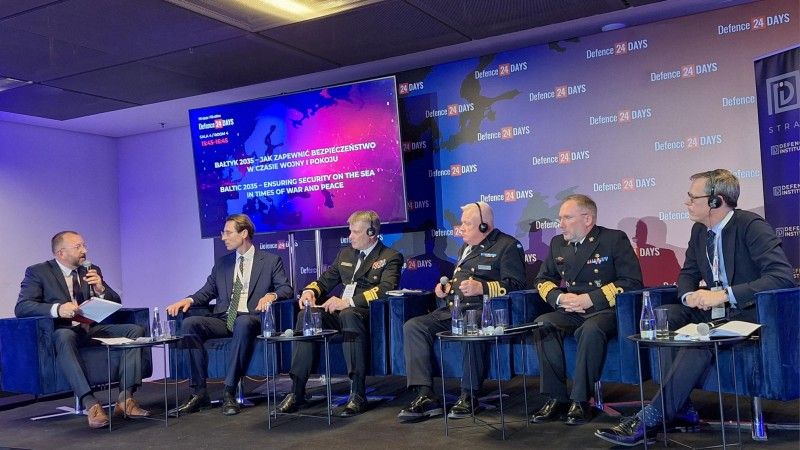
Photo. Defence24
In Warsaw, amid the crowded corridors and clipped military briefings of Defence24 Days, one discussion stood apart for its sense of urgency. The panel titled
The Baltic is no longer Europe’s quiet northern periphery. It has become one of the continent’s most strategically exposed and politically consequential regions, a narrow maritime space where energy security, military deterrence, critical infrastructure and alliance credibility intersect with increasing intensity.
Moderated by Lt. Gen. (Ret.) Dr Jarosław Gromadziński, President of the Defence Institute, the panel gathered an unusually broad and internationally minded group of experts and decision-makers. Among them were Rear Admiral Giedrius Premeneckas, Chief of Defence Staff of the Lithuanian Armed Forces; Kacper Płażyński, Member of the Polish Parliament; Captain (N) OF-5 Mats Agnéus, Advisor for Underwater Domain matters at the Directorate of Strategic Plans and Policy, Defence Staff, Swedish Armed Forces Headquarters; Vice Admiral Piotr Nieć, Deputy Commander of CTF Baltic and Deputy Operational Commander of the Polish Armed Forces; and Mats Wicksell, Executive Vice President and Head of Saab’s Naval business area.
Notably, the discussion reflected the growing strategic weight of Sweden within the Baltic security ecosystem. Stockholm’s perspective was not treated as an external Nordic contribution, but increasingly as a central pillar of regional defence thinking. That shift alone speaks volumes about how profoundly Europe’s strategic map has changed since Russia’s full-scale invasion of Ukraine.
See also 

There was a clear understanding throughout the debate that the Baltic Sea can no longer be viewed merely through the lens of traditional naval operations. The region’s vulnerabilities are now infrastructural as much as military. Pipelines, undersea cables, ports, LNG terminals, logistics corridors and offshore energy installations have all become potential targets in a new era of hybrid confrontation.
That broader understanding formed the intellectual backbone of the Baltic 2035 report, repeatedly referenced during the conversation. The report argues that the Baltic should be understood as a single integrated strategic organism: military, economic, technological and industrial all at once. Such thinking represents a departure from the fragmented policymaking that has often characterised European security planning.
What emerged from the panel was a sense that deterrence in the Baltic region will depend less on symbolic declarations and more on the practical ability of allied nations to secure critical infrastructure, maintain industrial resilience and guarantee uninterrupted maritime access under conditions of sustained pressure.
Rear Admiral Premeneckas spoke from the perspective of a frontline state acutely aware that geography offers no strategic comfort. Lithuania, like the other Baltic nations, understands that the next decade will demand unprecedented levels of coordination between allied navies, intelligence structures and infrastructure operators.
Vice Admiral Piotr Nieć emphasised the operational dimension of that challenge. Maritime security today extends well beyond fleets and patrols. It involves persistent surveillance, rapid-response capability, multi-domain integration and constant readiness against both conventional and hybrid threats. Vice Admiral Piotr Nieć stressed that NATO’s Baltic operations are already becoming increasingly unified. He pointed to the creation of CTF Baltic in Rostock as a practical example of growing operational integration across the region’s maritime forces. In his view, modern Baltic security depends not only on fleets, but on constant surveillance, infrastructure protection and rapid multi-domain coordination.

Yet perhaps the most striking interventions came from the Swedish side of the table.
Captain Mats Agnéus and Mats Wicksell represented two complementary dimensions of Sweden’s growing importance: strategic military competence and advanced industrial capability. Sweden’s accession to NATO has fundamentally altered the Baltic balance, but the panel made clear that Stockholm’s value lies not merely in geography. Sweden brings decades of expertise in naval warfare, submarine operations, dispersed resilience and defence-industrial innovation.
Wicksell’s presence was particularly significant. Saab’s naval division, formerly Kockums, has become synonymous with the type of long-term maritime thinking Europe increasingly requires. Discussions around shipbuilding capacity, underwater systems and regional industrial cooperation underscored a broader truth: Europe cannot defend the Baltic without rebuilding serious industrial depth.
That is precisely why projects such as Port Haller carry such strategic importance. Port Haller is a proposed deep-sea Ro-Ro (roll-on/roll-off) port in Choczewo, Poland, designed as a strategic maritime hub near the first Polish nuclear power plant. In strategic terms, Port Haller represents far more than the expansion of a single maritime facility on Poland’s coast. It reflects a broader rethinking of how the Baltic region must organise itself economically, logistically and militarily in an age of prolonged instability. The era in which ports could be viewed purely as commercial gateways has ended. Across Northern Europe, maritime infrastructure is increasingly understood as critical national security architecture.
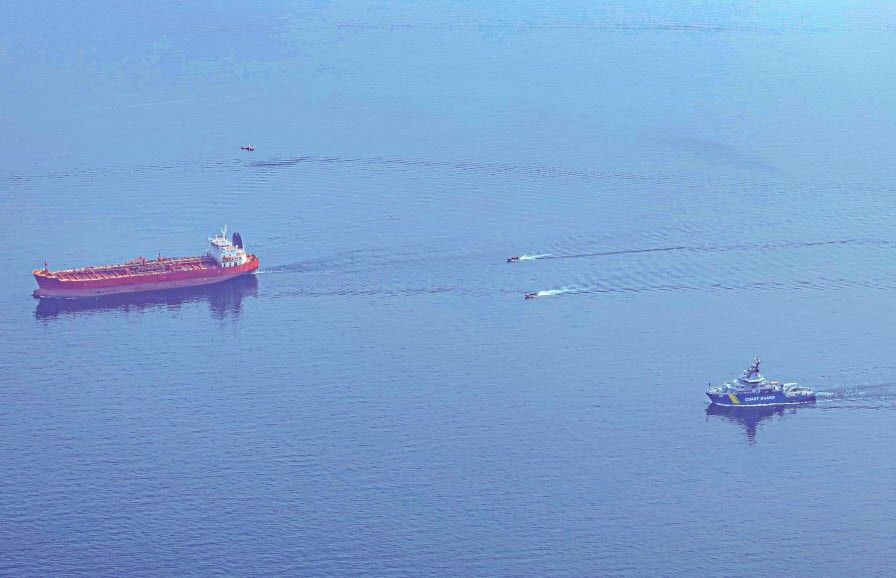
The Baltic Sea region depends on uninterrupted connectivity. Trade flows, energy deliveries, military mobility and industrial supply chains all converge through ports and coastal infrastructure. Any disruption, whether through sabotage, cyberattack, military escalation or political coercion, would ripple across the entire region with immediate consequences. This reality has transformed ports into strategic assets of the highest order.
Port Haller therefore occupies a particularly important place within the wider debate about regional resilience. Its significance lies not only in its direct economic value, but in its potential to strengthen the connective framework linking allied states around the Baltic basin. Modern ports are no longer isolated national projects; they form part of an integrated regional network that underpins collective security.
The initiative was strongly promoted during the debate by Kacper Płażyński, who presented the port not simply as a commercial investment, but as a strategic infrastructure project crucial for the resilience of the entire Baltic region.
That network stretches from Polish terminals and logistics hubs to Swedish industrial centres, Finnish transport corridors and the naval infrastructure of the Baltic states. The panel repeatedly hinted at a broader strategic truth: the Baltic region’s security will depend on whether these systems can operate cohesively under pressure.

Infrastructure integration is becoming a form of deterrence in itself. A resilient regional port system enables faster allied reinforcement, more efficient military logistics and greater energy diversification. It reduces dependence on vulnerable chokepoints while increasing strategic flexibility during crises. In practical terms, ports capable of handling both civilian trade and military deployment become essential pillars of NATO’s northern posture.
This is especially relevant after Sweden’s accession to NATO. The growing alignment between Polish and Swedish strategic thinking — strongly visible during the panel — points towards a future in which the Baltic Sea is treated not as a collection of separate national spaces, but as a single interconnected operational environment. Maritime infrastructure will ultimately determine whether that vision succeeds.
The panellists also highlighted an uncomfortable but unavoidable reality: Europe spent decades assuming that economic interdependence alone would guarantee stability in the Baltic region. That assumption has collapsed. Infrastructure can now be weaponised just as easily as territory.
Recent incidents involving undersea cables, energy infrastructure and maritime disruptions have demonstrated how vulnerable advanced economies remain to hybrid tactics operating below the threshold of conventional war. The Baltic Sea has effectively become a laboratory for these forms of pressure.
The panel repeatedly returned to the notion that the Baltic region needs not only stronger armed forces, but also stronger connective tissue: ports capable of supporting allied deployments, transport corridors resilient to disruption, and industrial ecosystems able to sustain prolonged strategic competition.
See also

This is why the Baltic 2035 conversation mattered.
Too often, European debates about defence drift towards abstraction: percentages of GDP, summit declarations, procurement announcements. The Warsaw panel instead focused on the physical reality of security: sea lanes, shipyards, industrial capacity, logistics and infrastructure.
There was also an unmistakable undercurrent running through the discussion: time is short.
The Baltic region is adapting quickly, but adversaries are adapting too. Russia’s shadow fleet activities, acts of sabotage targeting undersea infrastructure and increasingly aggressive military signalling have transformed the Baltic into a testing ground for twenty-first century confrontation below the threshold of open war.
Against that backdrop, allied cohesion becomes essential. The strong Swedish representation at the panel was therefore more than symbolic. It reflected a growing regional consensus that security in Northern Europe can only be achieved collectively, through integrated planning, industrial cooperation and shared strategic awareness.


