












- WIADOMOŚCI
Dutch defence spending hits a financing problem

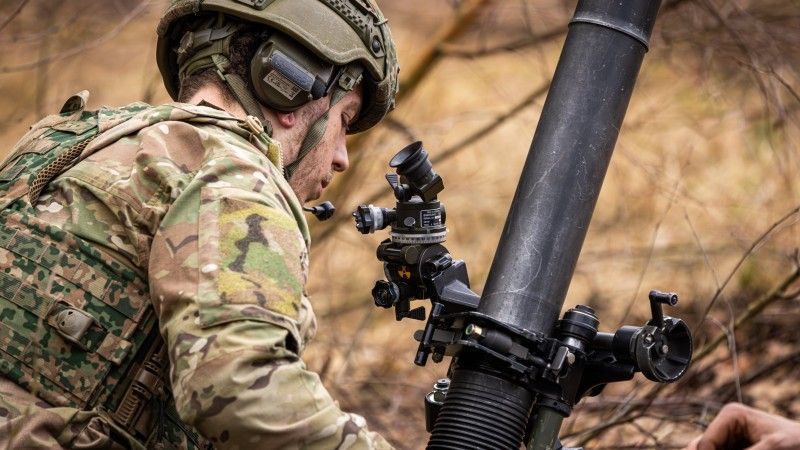
Photo. NATO Multinational Battlegroup Lithuania / X
The Netherlands wants to spend more on defence, rebuild its own military capabilities and continue supporting Ukraine. However, increasing budgets is only the first step. The more difficult question is how to finance the rapid expansion of the domestic defence industry when private capital remains cautious and companies themselves are still too small to absorb the scale of investment now being discussed.
Reuters reports that talks between the Dutch government and major insurance companies over defence investment have effectively stalled. Dutch insurers control around €455 billion in assets, but they want greater government involvement in screening defence companies before committing capital. Their problem is not simply political reluctance. Defence remains a relatively opaque sector, while ESG rules require investors to know where companies sell their products and whether they are involved in controversial weapons or exports to high-risk countries.
At the same time, the Netherlands is moving towards 3.5 per cent of GDP in core defence expenditure by 2035, which could require an additional €16–19 billion annually. The government also wants roughly half of future defence procurement to come from Dutch and European suppliers. This creates a clear contradiction: the state wants the domestic industry to expand quickly, but private investors are still waiting for mechanisms that reduce regulatory and political risk.
There is also a problem of scale. The Dutch defence industry generated around €10.2 billion in revenue in 2025, while PwC estimates that Dutch manufacturers may need to increase their combined output three- or fourfold by 2030. The Netherlands has strong companies in naval construction, radar, aerospace, UAVs and C4ISR, but many smaller suppliers remain too small to attract institutional investors. A dedicated fund worth €300–500 million could help bridge this gap, especially for companies trying to expand production.
In this context, bonds may become more important than direct equity investment. Dutch insurers are naturally more comfortable with fixed-income instruments, while France has already demonstrated how state-backed defence bonds and dedicated investment funds can channel private money into the sector. Such instruments would also transfer part of the responsibility for assessing defence companies from individual insurers to the state or public financial institutions.

The problem is becoming more urgent because the Netherlands has increasingly limited room to support Ukraine directly from existing military stocks. Amsterdam has already transferred F-16s, elements of Patriot systems and large quantities of other equipment. As national inventories decline, support for Kyiv will increasingly depend on financing new production, joint procurement and long-term contracts rather than simply removing equipment from military warehouses. The same process is visible across Europe.
On the one hand, the Netherlands has money and political willingness to strengthen defence. On the other, capital, industry and government are still not moving at the same speed. This is the wider European challenge because defence spending can rise quickly on paper, but production capacity cannot. If European states want to rebuild their own forces while continuing to support Ukraine, they will need not only larger budgets, but also financial mechanisms capable of turning private capital into new factories, ammunition and military equipment. As for now, Europe is planning and Russia is striking.


