












- ANALIZA
- WIADOMOŚCI
Effectiveness of UK-France cooperation on the English Channel versus smugglers' adaptive capabilities

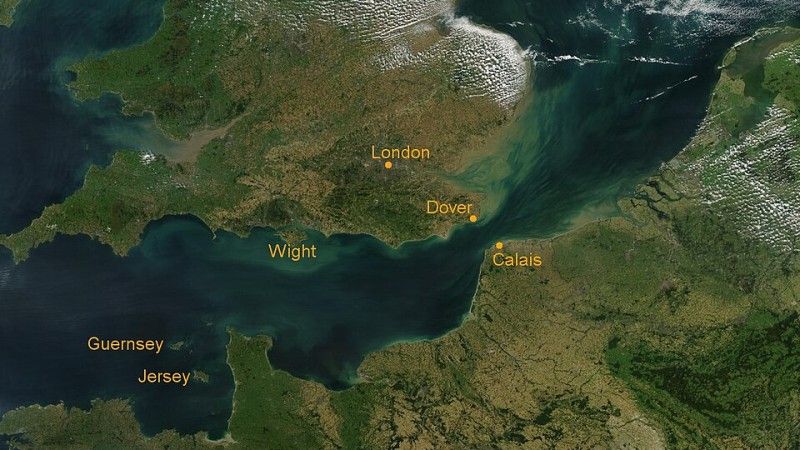
Photo. NASA / Wikimedia Commons
France and the United Kingdom have for years been joining forces in efforts to curb illegal migration across the English Channel. Are joint operations able to fully eliminate smuggling activity between the two countries?
UK-France
During a meeting between the UK’s new Prime Minister, Andy Burnham, and French President Emmanuel Macron, the topic of French-British cooperation on the English Channel was among the issues discussed. The joint efforts focus primarily on reducing illegal migration to the United Kingdom by sea. Smugglers most often use overloaded small boats to transport migrants. Between June and August 2026, 102 such boats were documented illegally reaching British shores, the lowest summer figure since 2019. Nevertheless, the UK is not resting on its laurels and recognises the particular importance of cooperation with its French ally. But can this bilateral cooperation realistically lead to the complete eradication of people smuggling into the UK, or is it merely creating obstacles that force smugglers to adapt their existing strategies?
France plays a key role in the agreement between the two countries, making efforts to prevent attempts to cross the Channel from its territory. Since the UK’s 2024 election, cooperation has helped prevent more than 42,000 people from illegally crossing the Channel and has led to the detention of 480 smugglers in 2025. In April, the British government agreed to give France £660 million for, among other things, increasing the number of officers tasked with tracking down and dismantling smuggling gangs, as well as purchasing batons, shields, and tear gas. The agreement also provides for infrastructure investments and the strengthening of intelligence units.
To discourage migrants from attempting to illegally reach the UK by sea, in August 2025, France and the UK introduced a „one-for-one” programme. Under this arrangement, the UK returns some arriving individuals to France while simultaneously accepting the same number of migrants from France who did not attempt an illegal Channel crossing. As of early March 2026, 377 people had been sent back to France under the programme, while 380 had arrived in the UK, meaning its impact on migration trends has been relatively small.

Smugglers' adaptation skills
Smuggling services can still count on demand among desperate migrants. Organisations involved in the smuggling of people across the English Channel are adapting their methods in response to intensified action against small boats. On Monday, a 15-metre boat carrying 230 people reached British shores, and this was not the first crossing this year involving such a large and overloaded vessel. In this way, smugglers are able to transport more people while reducing the number of trips. Such heavily loaded boats, even larger ones, carry a greater risk of sinking. As a result of increased checks, smugglers are also changing their routes to avoid being caught. Smuggling networks are extensive and change their methods in order to maximise profits.
Faced with smugglers’ shifting strategies, during the most recent meeting between the two heads of state, France agreed to send 45 additional officers to the Normandy coast. France’s specialised intelligence unit is also to be expanded. The actions of French and British services are producing visible results, but so far they are not sufficient to completely stop attempts to cross the Channel. To effectively dismantle smuggling networks, action is needed to break down the entire system, reaching all the way back to the countries of origin. Through cooperation, France and the UK are gradually reducing the number of boats illegally setting off across the Channel, but as smugglers change tactics, a lower number of boats may not translate into a lower number of people attempting illegal migration.


