












- WIADOMOŚCI
- KOMENTARZ
Facing the Elephant of Munich

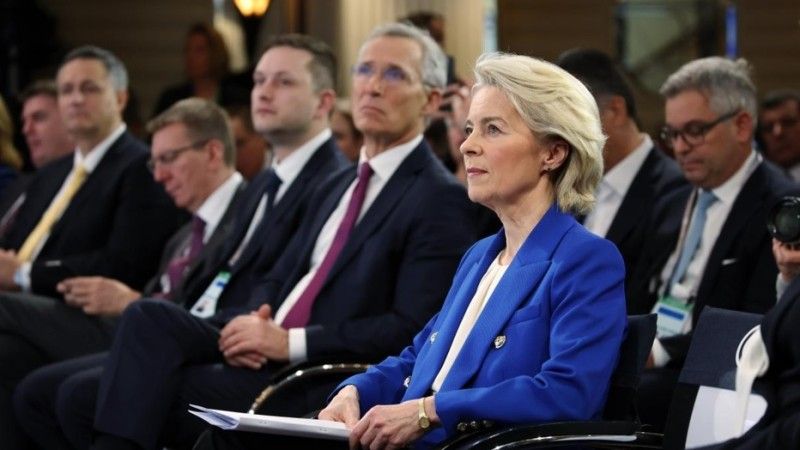
The cover of this year’s Munich Security Conference report depicted a crumbling elephant, a symbol of a world order in decay and a reminder that what once appeared structurally permanent may no longer be a given. But is it all truly as bleak as it seems?
The transatlantic link is not yet lost
The speech of U.S. Secretary of State Marco Rubio was among the most anxiously anticipated moments of the conference, especially after last year’s confrontational remarks by Vice President J. D. Vance.
Rubio’s tone turned out to be more conciliatory than expected. He referred to the United States as a „child of Europe” and reaffirmed the „intertwined” destiny of both sides of the Atlantic. Yet beneath that rhetorical courtesy, the main message remained unchanged: Europe must assume greater responsibility for its own security as the United States no longer sees itself as a „polite and orderly caretaker of European stability.” Rubio’s speech also criticised the EU’s current migration and climate policies, painting them as an obstacle to our shared security.
Of course, it remains to be seen what this speech actually translates to. However, despite the overwhelmingly negative headlines on the state of the transatlantic link, the speech points out elements that could become a source of increased cooperation. These areas include reindustrialisation, supply chain resilience, and technological cooperation, which could be realised through joint investments, closer transatlantic collaboration in setting technology standards, fostering innovation, and establishing shared early-warning systems, along with coordinated export controls.
Amid the increasingly turbulent political climate between Europe and the United States, many point out what differentiates us these days. But perhaps we should shift our focus to what still connects us before it’s too late. This is not to suggest that points of friction, such as the Greenland dispute, should be ignored. Rather, while acknowledging areas of tension, the transatlantic community should also give due recognition to the elements of cooperation and continuity.
Getting serious about the European pillar of NATO
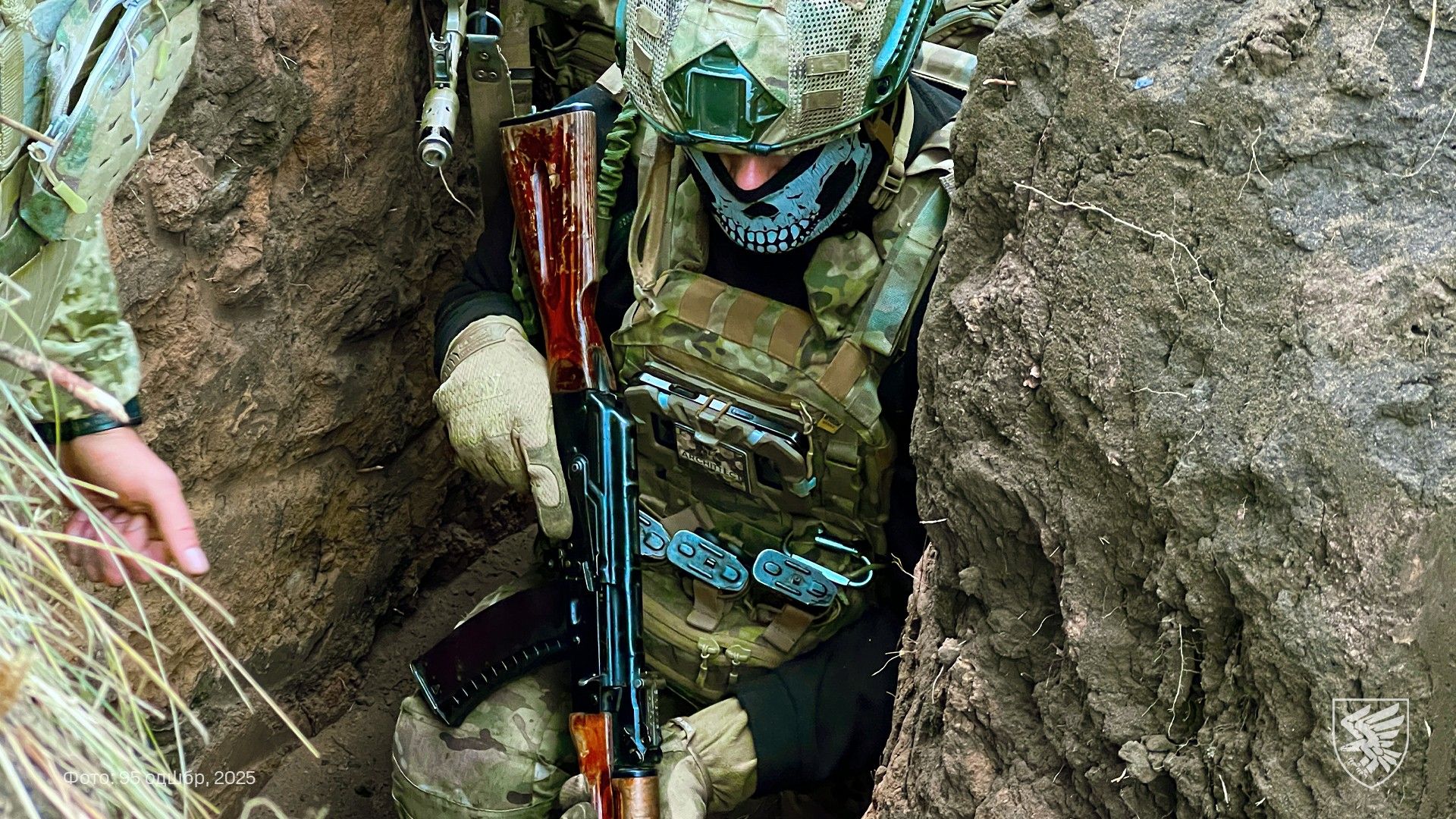
Another key point in strengthening U.S.-European relations lies in how we navigate the growth of Europe’s defence capabilities. However, the debate often falls into a false dichotomy, pitting European strategic autonomy against NATO, when in reality, both should mutually reinforce each other.
The European Union’s comparative advantage has long been its economic might. Militarily, however, progress is more uneven. This year’s conference highlighted a growing emphasis on Article 42.7 of the Treaty on European Union alongside NATO’s Article 5, signalling a desire for greater European ownership of defence. Yet both clauses leave the „means” of assistance undefined. Without credible capabilities, legal commitments alone cannot sustain effective deterrence, and the EU still lacks the institutional depth required to fully underpin such a role.
Although Europe’s defence capabilities have expanded significantly, it is likely to remain dependent on the United States for years to come, particularly regarding critical military enablers. Greater European autonomy must therefore evolve in tandem with, not in opposition to, Washington.
One viable pathway lies in strengthening the European pillar within NATO, gradually shifting operational and material responsibilities from American to European leadership, as seen in recent command transitions. NATO already possesses tested structures in comparison to the EU. The EU’s comparative advantage lies in its economic might, regulatory power, and defence-industrial scaling potential, all of which could reinforce national militaries rather than duplicating NATO frameworks. The sharper division of labour between NATO and the EU is thus paramount for increased operational efficiency.
The real danger truly lies within
European-level strategy cannot be divorced from domestic politics. The upcoming elections in France, Germany, and Poland, alongside rising support for nationalist and populist movements, will shape Europe’s future security policies.
Domestic polarisation increasingly complicates foreign policy alignment. In Poland, frictions between the President and the Prime Minister have led to fragmented and at times inconsistent strategic communication. Furthermore, the political divide between „pro-American” and „pro-European” camps is particularly hazardous for a country whose security architecture rests on both pillars.
Furthermore, while values undoubtedly matter, they rarely determine electoral outcomes unless their practical relevance is clearly demonstrated to voters. Therefore, pro-European leaders must make a more compelling case to their citizens about the strategic, economic, and security risks associated with distancing themselves from both the European Union and NATO.
Internal division and polarisation weaken collective credibility and directly benefit actors such as Vladimir Putin, whose strategic objective includes driving wedges across the Atlantic.

It is not enough to be good
During the conference, the Prime Minister of Poland remarked, „We have to be strong; we must not stop being good.” The sentiment, though admirable, is not enough by itself; the action behind it must also be effective, or else the stated ambition becomes obsolete. As Keir Starmer argued, „We must build our hard power, because that is the currency of the age.”
The „good” of securing Europe and defending the European „way of life” must be embedded in strong transatlantic cooperation and homegrown capabilities; weaknesses in either will directly serve our adversaries« interests. The objective should not be to replace the United States, but to reinforce the alliance. What must change is the currently prevailing binary mindset; the misleading „either-or” framing that pits European autonomy against the transatlantic link.
The real choice is not between Europe and America, but between a maintained transatlantic link and strategic fragmentation that creates space for Russia to exploit. The transatlantic link is not yet lost. It is up to us how we navigate the new geopolitical realities.


