












- WIADOMOŚCI
Germans will track Russian radars. New tasks for the brigade in Lithuania

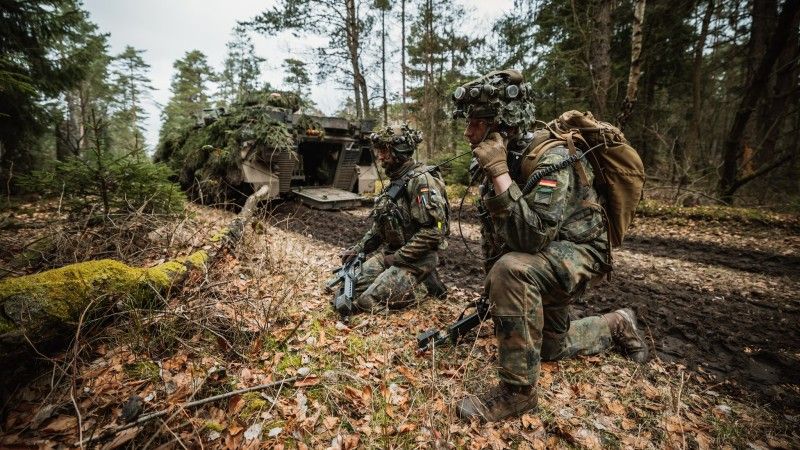
The German brigade in Lithuania is set to use electronic reconnaissance for the early detection of military activity in the Kaliningrad Oblast and Belarus. Details were provided to Reuters by Vice Admiral Thomas Daum, head of the Bundeswehr’s Cyber and Information Domain Service.
According to a Reuters dispatch from 28 October, German soldiers will collect information on Russian and Belarusian radars and other military sources of electromagnetic emission. The data will be used to update electronic warfare databases utilised by German and allied forces. This is intended to enable, among other things, the recognition of new radars appearing on the Belarusian side.
The Bundeswehr is also testing drone detection, signal interception, and jamming equipment in Lithuania. Sensors transmitting information from the battlefield to remote analysts are also being trialled.

Daum linked the need to develop these capabilities with Russian activities below the threshold of open armed conflict. In his assessment, previous covert penetration of Western computer networks is giving way to actions aimed at causing damage. “In the cyber and information domain, there is no war yet, but there is no peace either,” he told Reuters.
This marks another step in the permanent presence of German troops in Lithuania. The 45th Armoured Brigade, formally established on 1 April 2025, is responsible for this mission. According to the Bundeswehr, the unit is expected to reach full readiness by the end of 2027 and will number approximately 4,800 soldiers.
The brigade is intended to strengthen the deterrence and defence of the Baltic states. The Bundeswehr also lists the defence of the Suwałki Gap, connecting Poland with Lithuania, among its tasks. The main basing locations for the German forces are being developed in Rūdninkai and Rukla.


