












- WIADOMOŚCI
Greece becomes a key US platform in south-eastern Europe

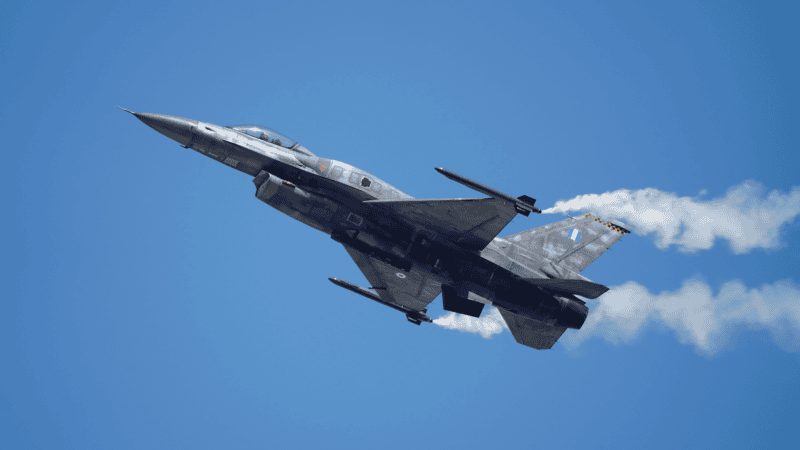
Photo. Nick (CC BY 2.0)
The latest US–Greece Strategic Dialogue confirms that Washington increasingly treats Greece not only as a southern NATO ally, but as a platform for defence, energy security, critical infrastructure and advanced technologies in south-eastern Europe. The headline is the announcement of $4 billion in Foreign Military Sales supporting Greece’s long-term defence plan, but the wider message is broader: Athens is becoming more deeply embedded in the American security architecture.
The defence part of the statement is the most visible. The United States and Greece reaffirmed their long-standing military cooperation, announced the FMS package, finalised Greece’s participation in the US National Guard State Partnership Program with Florida, and underlined interoperability through the provision of Stryker vehicles to Greece. This shows that the relationship is moving beyond declarations and into force development, training links and concrete capability transfers.
The strategic value of Greece is also connected to geography. Athens sits at the intersection of the Eastern Mediterranean, the Balkans, the Black Sea approach and the wider Middle East. For NATO, this matters because Greece can support deterrence, logistics, maritime security and allied mobility in a region where Russian influence, energy competition and Middle Eastern instability overlap. The US statement also refers to law enforcement cooperation, counterterrorism and illegal migration, showing that Washington sees Greek security through a wider regional lens.
The economic and technological part of the dialogue is equally important. The two sides highlighted investment screening, protection of critical infrastructure, cybersecurity, high-performance computing, advanced technologies and Greece’s status as a Pax Silica signatory. This is no longer only a military partnership. It is also about controlling strategic technologies, securing supply chains and preventing hostile actors from gaining access to sensitive infrastructure.

Energy remains the other major pillar and that is why Washington and Athens pointed to the Vertical Gas Corridor, hydrocarbon exploration and deeper energy ties following the November P-TEC ministerial. In practice, this strengthens Greece’s role as an energy and infrastructure hub for south-eastern Europe.
The message is quite clear because for the United States, Greece is becoming a state through which defence, energy, maritime access and technology policy can be linked in one regional strategy. It remains to be seen how France – a main ally – will respond with its military and energy projects.


