












- WIADOMOŚCI
- ANALIZA
Insights on European Security from the Munich Security Report

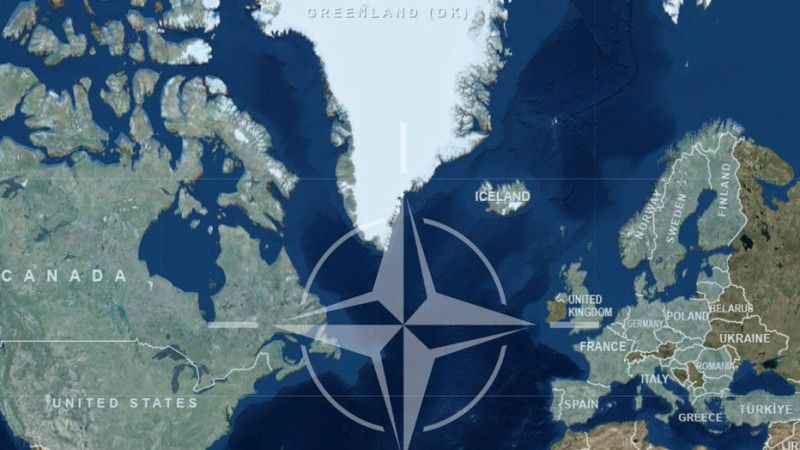
The latest Munich Security Report paints a picture of a deteriorating security environment in which Europe faces both a more conditional transatlantic partnership and an emboldened Russia.
The international (dis)order
„Wrecking-ball politics.” „Sweeping destruction.” „The demolition men.” All these themes appear at the forefront of the newest Munich Security Report, reflecting the eroding state of the post-Cold War order and the re-emergence of spheres of influence as organising principles of international politics. For Europe, the centre of this transformation is the Russian full-scale invasion of Ukraine. Equally significant is the growing divergence in how Europe and the United States perceive and prioritise global challenges, as the report notes a visible crack in the value-rooted consensus that historically underpinned transatlantic cooperation.
European security in transition
Europe has long anchored its security in the transatlantic pillar. That pillar remains in place, but its foundations are increasingly fragile, corroded by the spheres of influence logic, a shift towards a deal-based order, and the personalisation of politics. The report suggests that Europe currently oscillates between denial and acceptance regarding the United States« strategic reorientation. On the one hand, Washington’s prioritisation of the Indo-Pacific and the Western Hemisphere signals a gradual deprioritisation of Europe. On the other hand, material indicators of American engagement in Europe, though decreasing, remain substantial. For example, the anticipated Global Force Posture Review has not (yet) translated into major troop withdrawals, the reductions in countries such as Romania have been limited, and the continued U.S. role within NATO remains critical for deterrence.
Despite the continued presence, however, the United States has, for years, encouraged Europe to increase its defence spending and assume greater responsibility for its own security; it is not something unique to President Trump’s administration. The report notes that between 2021 and 2025, European NATO members increased defence budgets by an estimated 41 per cent. This is a tangible shift, although capability gaps persist. In parallel, discussions about European leadership within NATO’s command structures suggest a gradual recalibration of responsibilities. While it is premature to label this a structural transformation, it may signal a real movement toward the so-called „European NATO.”
Europe's dependencies and strategic risks
Despite budgetary increases and structural recalibration, Europe remains heavily dependent on the United States in several critical capability areas, including air and missile defence, strategic airlift, ISR, and other high-end enablers. As such, the report underscores that financial commitments do not automatically translate into operational autonomy.
The threat environment further complicates this landscape. According to the report, the Russian hybrid activities have intensified across Europe in 2025. In addition, the assessments referenced in the document suggest that Russia could initiate a „local war” against a neighbouring state within six months of a potential ceasefire in Ukraine, or a „regional war” in the Baltic Sea area within two years. While such projections remain contested, they nevertheless reinforce the need for preparedness rather than hoping such a situation will never occur.
The report also highlights Europe’s political hesitation in certain domains. The inability to decisively utilise frozen Russian assets to support Ukraine, as well as the continued shortfall in joint procurement targets, are clear examples illustrating the gap between declared ambition and real-life implementation, which is often inhibited by intra-alliance disagreements.
Harnessing agency through creative destruction
Drawing on Joseph Schumpeter’s notion of „creative destruction,” the report argues that systemic change often emerges through disruption rather than incremental adaptation. For Europe, the current moment may represent such a turning point, challenging though it is.
Even if a ceasefire in Ukraine were achieved, structural vulnerabilities would remain. This year’s Munich Security Report suggests that the transatlantic relationship will likely continue to be essential but more conditional, Russian revisionism will persist, and capability shortfalls will not disappear automatically without a sustained investment and political will.
For Europe, the report’s underlying message is crystal clear: hope is not a strategy. Regardless of what occurs during this year’s Munich Security Conference, Europe must translate its growing awareness of risk into sustained capability development, deeper defence integration, and greater political courage. The longer it remains in the acceptance-denial limbo, the narrower its strategic options may become.


