












- WIADOMOŚCI
Poland and Germany sign a new defence agreement

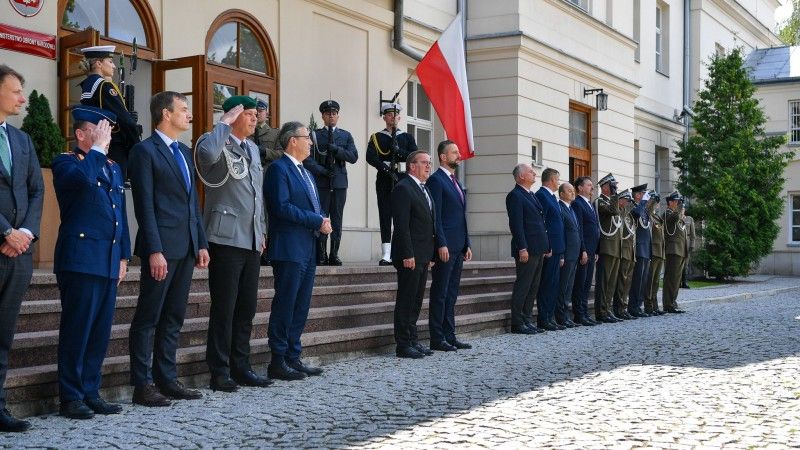
Poland and Germany have signed a new defence cooperation agreement in Warsaw. The document replaces the 2011 framework arrangement and focuses on practical cooperation in areas such as military mobility, logistics, the Baltic Sea, cyber defence, space and protection of critical infrastructure.
The agreement does not include bilateral security guarantees beyond NATO and EU commitments. It is also not a treaty requiring ratification and does not provide for a permanent German military presence in Poland. Its value will therefore depend less on the wording of the document and more on what both governments do next.
One of the most important elements is the possibility of German engineering units supporting Poland’s East Shield programme. This could include work on trenches, anti-tank barriers and other fortifications along Poland’s eastern border. The agreement also covers deterrence, military mobility, protection of maritime routes and stronger cooperation on NATO’s eastern flank.
The document was signed by Władysław Kosiniak-Kamysz and Boris Pistorius on the 35th anniversary of the Polish-German Treaty of Good Neighbourship. It is politically symbolic, but symbolism will not be enough. The real test will be joint exercises, the presence of German soldiers in practical training, Berlin’s contribution to NATO and cooperation between the two defence industries.

Poland should not reject cooperation with Germany simply because the agreement lacks additional guarantees. Germany will have one of Europe’s largest defence budgets, significant industrial capacity and an important role in NATO logistics. If this document leads to real exercises, faster military movement, stronger cyber defence and direct support for the eastern flank, it may become a useful format.
The agreement should therefore be judged in practice. What matters is whether Berlin openly strengthens deterrence against Russia, whether German forces train with Polish units and whether both countries turn political declarations into infrastructure, capabilities and industrial projects. For now, however, it is just a signed document. No more and no less.


