












- WIADOMOŚCI
The EU shows its defence ambitions before the NATO summit

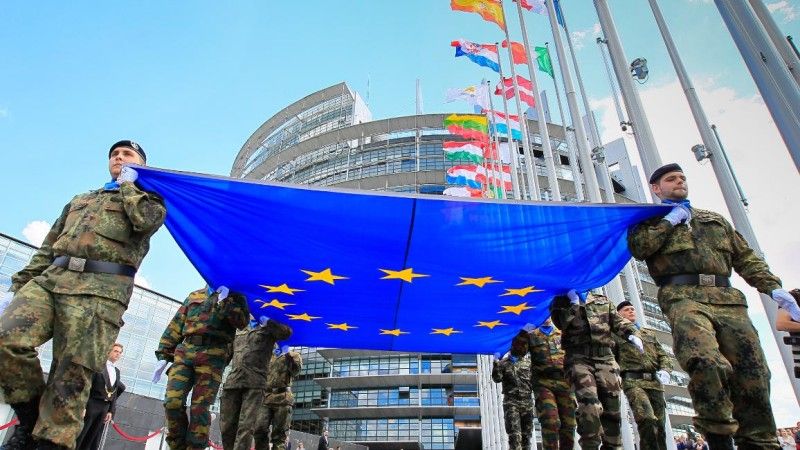
Photo. © European Union (2014) - European Parliament
The European Commission has proposed the first European Defence Projects of Common Interest. These are five large industrial projects intended to strengthen EU military capabilities in drones and counter-drone systems, maritime and seabed defence, space, air and missile defence, and the security of the eastern flank.
This is not another technical announcement from Brussels. The Commission is trying to show that Europe is starting to think about defence through large capabilities, joint production and long-term industrial investment. The EDPCIs are designed for projects too expensive or too complex for individual states to develop alone. On average, 18 Member States take part in each project, while Ukraine is involved in four of the five.
The priorities show where Europe sees its most serious gaps. The drone and counter-drone project may reach up to €5 billion by 2033. Integrated maritime and seabed defence may rise to €72 billion by 2045. Space-based capabilities may reach €24 billion by 2034. EU federated air and missile defence may reach €80 billion by 2040. The strongest political signal comes from Eastern Flank Watch, which aims to strengthen the security of the EU’s eastern border and may reach €100 billion by 2036.
The Commission links these initiatives to the European Defence Industry Programme. The initial support will be €325 million under the €1.5 billion EDIP framework. This will not fund the whole ambition, but it is meant to help establish the projects, coordinate participating states and start deployment. Further funding may later come through the European Competitiveness Fund.

Henna Virkkunen said that Europe must “move faster, produce more together and invest in our security”. Andrius Kubilius described the projects as a contribution to a European air, maritime and space shield, stronger drone and counter-drone capabilities, and the Eastern Flank Watch. He also pointed to a combined funding ambition of around €190 billion by 2036. This matters because Brussels is no longer speaking only about regulation, sanctions and internal market logic. It is increasingly using the language of production, defence readiness and industrial power.
For Poland, the most important projects will be Eastern Flank Watch and air and missile defence. These are the areas directly connected to the security of the EU border with Russia and Belarus, the protection of critical infrastructure, threat detection, military mobility and the ability to respond to pressure from the east. If these initiatives are to matter, they must strengthen frontline states and deliver equipment that can be used, not just produce another institutional map in Brussels.

The timing is political. Just before the NATO summit, the European Union is trying to show that it is entering the security debate with more than declarations. It wants to prove that it is taking greater responsibility for armaments, industry and the defence of the continent. This can strengthen NATO, but only if EU ambition becomes ready equipment for soldiers, European joint production, ammunition, drones, air defence and stronger capabilities on the eastern flank.


